
Yes, you can use azelaic acid and salicylic acid together, as long as you choose the right products and space them out. Salicylic acid clears pores, while azelaic acid calms inflammation and fades dark marks. Skip high-strength peels and follow any prescription label. Patch test first, then pair a salicylic cleanser with a leave-on azelaic treatment, or alternate nights.
TL;DR:
- For the gentlest routine, use a salicylic acid cleanser, rinse, wait five to ten minutes, then apply leave on azelaic acid, moisturizer, and morning sunscreen.
- If both formulas stay on the skin, separate them by 10 to 20 minutes; sensitive skin should use them on alternate nights.
- Start twice weekly, patch test each product first, and increase use only while skin remains calm; return to alternating nights if tightness or peeling develops.
- Prescription azelaic acid labels override general routine advice; Finacea users should avoid abrasives and peeling agents, while high strength acid peels belong with professionals.
Table of Contents
- What do the evidence and clinicians say about combining the two?
- How do you layer and time salicylic acid and azelaic acid?
- Which concentrations and formulations suit daily use?
- How can you reduce irritation when combining actives?
- When should you talk to a clinician?
- Why we build routines around cleanse, treat, repair
- Add the Cellura ClearMark Bar to your routine
- FAQ
- Sources
What do the evidence and clinicians say about combining the two?
Both ingredients have a long track record in acne care, and clinicians do pair them. The American Academy of Dermatology notes that salicylic acid unclogs pores and exfoliates, while azelaic acid unclogs pores, reduces acne bacteria, lowers inflammation, and treats post-acne dark spots. Those jobs overlap a little, but they are not identical, which is why the pairing makes sense on paper.
Here is what the research and guidance show:
- A split-face randomized trial, NCT03071549, applied a peel of 20% azelaic acid plus 20% salicylic acid to one side of the face and 25% trichloroacetic acid to the other, across four sessions two weeks apart.
- A Cochrane review describes both acids as established topical acne options, with evidence of mixed quality, and finds azelaic acid generally better tolerated than benzoyl peroxide.
- The AAD acne guideline lists both salicylic acid and azelaic acid among its topical acne options.
- The Finacea prescribing information advises avoiding abrasives and peeling agents with the prescription gel.
The Cochrane review finds azelaic acid generally better tolerated than benzoyl peroxide, which matters if you have been burned by harsher acne products. Tolerance is the real limiting factor when you stack actives, so the rest of this guide focuses on keeping irritation low.
How do you layer and time salicylic acid and azelaic acid?
The simplest approach is to make salicylic acid a short-contact product, like a cleanser, and keep azelaic acid as the leave-on treatment. A rinse-off step gives the product less contact with your skin than two leave-ons stacked together, which may reduce irritation.
- Cleanse with a salicylic acid cleanser, massage gently, then rinse with lukewarm water.
- Pat dry with a clean towel. Damp skin absorbs actives more aggressively, so let it dry fully.
- Wait 5 to 10 minutes before applying anything else.
- Apply a thin layer of azelaic acid over the affected areas.
- Seal with a barrier-repair moisturizer.
- Finish with sunscreen in the morning.
If both products are leave-on, you have two workable options. Use salicylic acid in the morning and azelaic acid at night, or wait 10 to 20 minutes between them, depending on how your skin feels.
For sensitive skin, alternate nights: salicylic acid one evening, azelaic acid the next, with moisturizer every day. Oily, resilient skin can usually handle the cleanser-plus-treatment routine nightly. Mild acne often does well with the alternating pattern, which still delivers both actives across the week.
Pro Tip: If your skin stings while layering, separate the products or use them on alternate nights. Products with a lower pH or a gel base may sting, so let your skin settle before applying another product.
For a deeper comparison of how the two acids differ on pores and pigment, see our salicylic versus azelaic breakdown.
Which concentrations and formulations suit daily use?
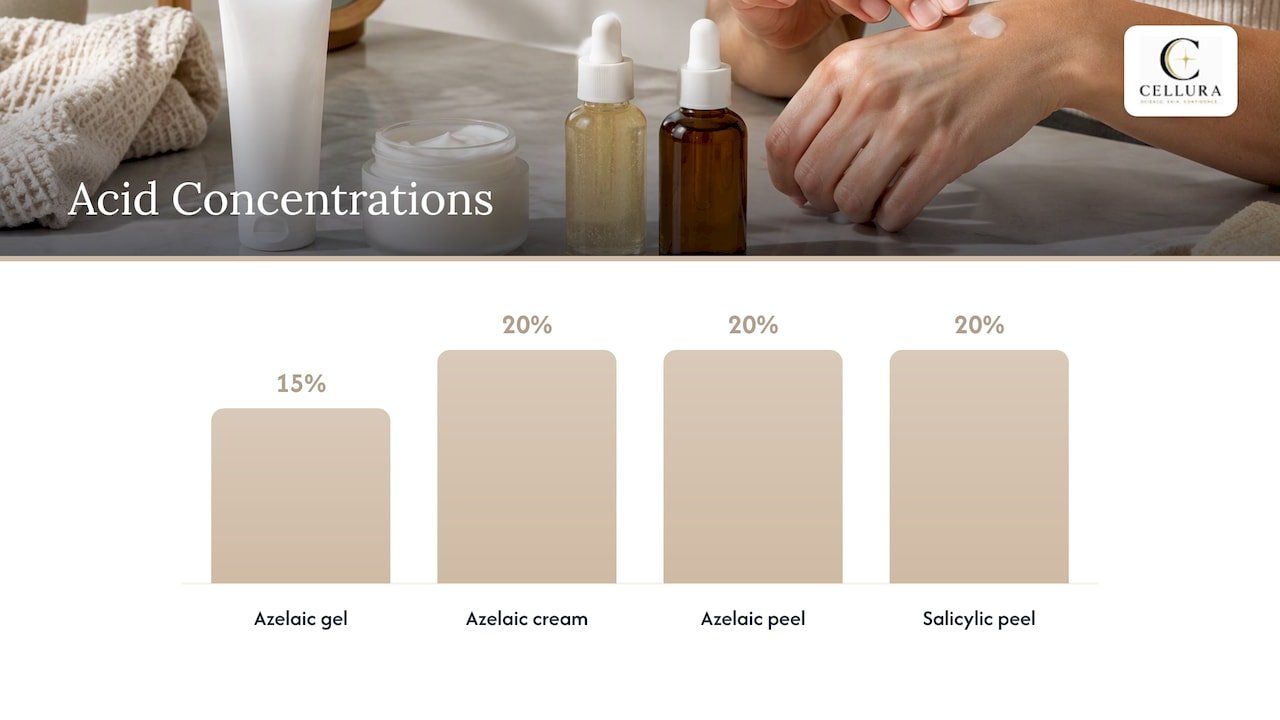
Strength matters more than almost anything else when you combine acids. Over-the-counter salicylic acid is available in cleansers, pads, and lotions, and professional peels use higher concentrations. Prescription azelaic acid comes as 15% gel or 20% cream, the latter indicated for mild-to-moderate inflammatory acne.
Keep these principles in mind:
- Choose the lowest strength that works for you and move up only if your skin stays calm.
- Treat the 20% azelaic plus 20% salicylic peel from the trial as a professional, short-contact procedure, not something to copy at home or repeat daily.
- Respect label language. The Finacea label tells users to avoid alcoholic cleansers, astringents, abrasives, and peeling agents, so a prescription gel changes what else belongs in your routine.
- Remember that azelaic acid’s low pH can cause itching, burning, or stinging, especially on broken or inflamed skin, according to the Azelex label.
A good rule of thumb: daily leave-on actives stay at over-the-counter or clinician-prescribed maintenance strengths, and anything stronger is reserved for a professional. If you want more on azelaic strengths specifically, our guide to 10% versus 20% azelaic acid covers what to expect at each level.
How can you reduce irritation when combining actives?
Most irritation comes from doing too much too soon, not from the acids themselves. A slow start protects your skin barrier and gives you a fair read on what each product is doing.
- Patch test first. Apply a small amount to a patch of skin, such as along the jawline or behind the ear, and check for a reaction before using it on your whole face.
- Ramp up gradually. Start twice a week, then add nights as your skin allows. Drop back to alternating nights if you notice tightness or peeling.
- Moisturize every day. Choose a fragrance-free, barrier-repair formula with ingredients like ceramides, squalane, or glycerin.
- Skip other exfoliants. Scrubs, glycolic toners, and retinoids on the same nights multiply the risk.
- Wear sunscreen every morning. Exfoliating ingredients make daily sun protection non-negotiable. A practical read on making SPF work with makeup is in this partner guide to daily SPF.
- Know when to stop. If you develop persistent burning, widespread redness, or blistering, stop using the products and seek immediate medical care.
Pro Tip: Change one product at a time before adding another. If a reaction appears, you will have a better chance of identifying which product caused it.
When should you talk to a clinician?
Some situations call for professional guidance before you combine anything. Prescription azelaic acid products come with instructions that override general skincare advice, and a clinician can tailor the plan to your skin.
- Follow the label on any prescription azelaic acid product. The Finacea label says to avoid peeling agents and to discontinue use if severe irritation develops.
- Check in with a clinician before combining high-strength topical agents, and before using acids during pregnancy or nursing.
- Tell your dermatologist or esthetician about every active you use if you are planning an in-office peel. If you are considering at-home professional care, a mobile skincare service can connect you with licensed estheticians, but share your full routine with them first.
- Loop in your prescriber when you start a new prescription-strength treatment so your whole regimen stays coordinated.
Why we build routines around cleanse, treat, repair
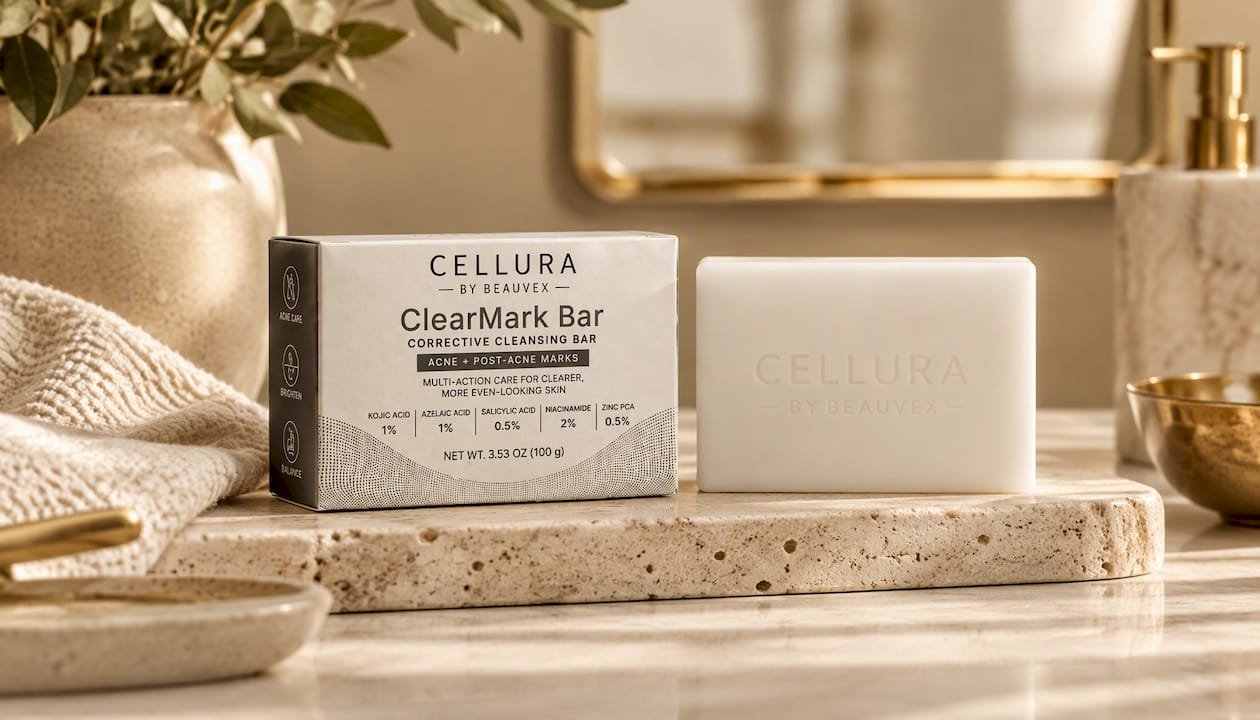
We think the safest way to combine actives is to give each one a clear job and keep the total irritation load low. That is why our ritual runs in three steps: cleanse, treat, repair. The cleansing step can carry salicylic acid exfoliation without leaving a leave-on layer sitting on your skin, which keeps your leave-on azelaic acid free to do the treatment work. A multi-active cleansing bar like our Cellura ClearMark Bar fits that role.
The repair step matters just as much. Pairing treatment with a barrier-support product keeps your skin tolerating actives long enough to see results, and for post-acne marks that means weeks, not days. We also publish ingredient concentrations and research references for each active, so you can judge a formula by its evidence rather than its marketing. Our Luminé Serum, aimed at lingering dark spots, slots into the same lower-irritation plan once your breakouts settle.
— Beauvex LLC
Add the Cellura ClearMark Bar to your routine
Our Cellura ClearMark Bar is a multi-active facial cleansing bar made with salicylic, azelaic, and kojic acid, designed to be the cleanse step in the routines above. Here is how it fits:
- Lather and massage gently, then rinse.
- Pat dry and wait 5 to 10 minutes.
- Apply your azelaic acid treatment, or alternate nights if your skin runs sensitive.
- Finish with moisturizer, plus sunscreen in the morning.
Ready to start? Pick up the bar from the Cellura line and begin with a patch test tonight.
This article is general information, not a substitute for advice from a qualified doctor. Consult a qualified healthcare professional about your own circumstances before acting on anything here.
FAQ
Is it okay to layer azelaic acid with salicylic acid?
Generally yes, when you keep one of them short-contact and watch your skin’s response. A salicylic cleanser followed by a leave-on azelaic treatment is the gentlest pairing. If you have a prescription azelaic product, check its label first.
Can azelaic acid be used to treat rosacea?
Azelaic acid is widely used for rosacea, and the 15% gel is a prescription product studied for it. Because rosacea skin is often reactive, talk to a clinician before adding salicylic acid or any other exfoliant to the routine.
Is azelaic acid better than benzoyl peroxide?
Not clearly. The Cochrane review found azelaic acid probably less effective than benzoyl peroxide for some outcomes but generally better tolerated. Which one suits you depends on how much irritation your skin can handle.
How long should I wait between salicylic and azelaic acid?
Wait 5 to 10 minutes after a salicylic cleanser, and 10 to 20 minutes if both products are leave-on. If your skin stings, lengthen the gap or switch to alternating nights.
Sources
- Combined Salicylic and Azaleic Acid Verus Trichloroacetic Acid 25% Peel in Treatment of Acne
- label
- Topical azelaic acid, salicylic acid, nicotinamide, sulphur, zinc and fruit acid (alpha‐hydroxy acid) for acne – PMC