
Salicylic acid works best on clogged, oily pores and blackheads because it dissolves the oil-based debris sitting inside them. Azelaic acid works best on inflamed, red, or discolored acne because it calms inflammation and blocks the pigment production that leaves marks behind. You can use both, on different days or split between morning and night, but start slowly and talk to a dermatologist if breakouts are severe or scarring.
TL;DR:
- Salicylic acid effectively clears blackheads and whiteheads by dissolving oil-based debris inside clogged pores, especially in oily skin.
- Azelaic acid reduces inflammation, redness, and hyperpigmentation, making it suitable for inflammatory acne and sensitive or rosacea-prone skin.
- Overuse of salicylic acid can cause skin dryness and increased sun sensitivity, requiring gradual introduction and daily sunscreen.
- Combining acids is safe when split by time of day or alternating nights, but stacking them together increases irritation risk.
- Both acids typically show noticeable results after 8 to 12 weeks of consistent use, with azelaic acid being safer during pregnancy.
Table of Contents
- Salicylic Acid vs Azelaic Acid at a Glance
- What Salicylic Acid Does and When to Use It
- What Azelaic Acid Does and When to Use It
- How to Choose Based on Your Skin’s Main Problem
- What the Clinical Evidence Actually Shows
- Combining or Alternating the Two Safely
- Three Sample Routines to Copy
- When Acids Alone Aren’t Enough
- Beauvex’s Take on Where These Acids Fit
- Try a Salicylic Cleansing Bar Built for Congested Skin
- Sources
Salicylic Acid vs Azelaic Acid at a Glance
The core difference comes down to where each acid works and what it targets. Salicylic acid is oil-soluble, so it slips past sebum and dives into the pore lining, breaking apart the mix of dead skin cells and oil that forms a blackhead or whitehead. Azelaic acid stays mostly on the surface, where it interrupts inflammatory signaling and inhibits tyrosinase, the enzyme that drives excess melanin production, according to a review of azelaic acid’s clinical applications. One acid unclogs; the other calms and evens tone.
Here’s how they stack up across the factors that actually matter when you’re choosing:
- Mechanism: Salicylic acid is a beta-hydroxy acid (BHA) that penetrates oil and loosens keratin plugs; azelaic acid is a dicarboxylic acid with anti-inflammatory, antimicrobial, and tyrosinase-inhibiting effects.
- Best for: Salicylic acid suits blackheads, whiteheads, and oily texture; azelaic acid suits inflammatory papules, redness, rosacea, and post-inflammatory hyperpigmentation.
- Tolerance: Salicylic acid can dry out skin and increase sun sensitivity; azelaic acid is generally gentler, though it can cause mild stinging or tingling on first use.
- Pigmentation benefit: Azelaic acid directly reduces excess pigment production; salicylic acid helps indirectly by clearing acne that would otherwise cause new marks.
- Concentrations: Salicylic acid typically runs 0.5% to 2% in leave-on products; azelaic acid is sold over the counter at around 10% and by prescription at 15% to 20%.
- Pregnancy: Azelaic acid is widely considered one of the safer topical acne options during pregnancy; salicylic acid in low leave-on concentrations is often used with a doctor’s guidance, but high-dose salicylic products are typically avoided.
What Salicylic Acid Does and When to Use It
Salicylic acid earns its reputation as a pore-clearing specialist because of one property: it dissolves in oil. That lets it travel into the sebum-filled pore rather than just sitting on top of skin, where it breaks down the bonds holding dead skin cells together and helps push out the debris that forms blackheads and whiteheads, per WebMD’s explainer on azelaic and salicylic acid. It’s a keratolytic, meaning it softens and sheds the outer layer of skin, which also smooths rough texture and reduces the look of enlarged pores over time.
You’ll find it in several forms:
- Leave-on serums and lotions, usually 0.5% to 2%, meant to stay on skin and work overnight or under sunscreen during the day.
- Cleansers and cleansing bars, often formulated at higher percentages but rinsed off within seconds, which limits penetration and irritation.
- Spot treatments, concentrated formulas dabbed directly on an active blemish.
- In-office peels, applied by a professional at concentrations far higher than anything sold for home use.
Salicylic acid is the better first pick if your main complaints are blackheads, whiteheads, oily shine, and visibly clogged pores rather than deep red inflammation. It’s less suited to rosacea-prone or very reactive skin, where its exfoliating action can trigger more redness than it resolves.
The tradeoffs are real. Overuse causes dryness, flaking, and a compromised moisture barrier, and any BHA increases how easily skin sunburns, so daily sunscreen isn’t optional while using it. The fix is pacing: start three nights a week, watch how skin responds over two weeks, and only increase frequency once there’s no persistent redness or peeling.
Pro Tip: If your skin flakes after starting salicylic acid, don’t stop cold. Drop back to twice a week and layer a plain moisturizer on top until the barrier settles, then build back up.
What Azelaic Acid Does and When to Use It
Azelaic acid works differently, and that difference is why dermatologists reach for it in cases where salicylic acid falls short. It’s a naturally occurring dicarboxylic acid with three jobs at once: it calms the inflammatory cascade behind red, angry breakouts, it has antimicrobial action against acne-related bacteria, and it inhibits tyrosinase, reducing the excess melanin production responsible for dark marks left behind after a pimple heals.
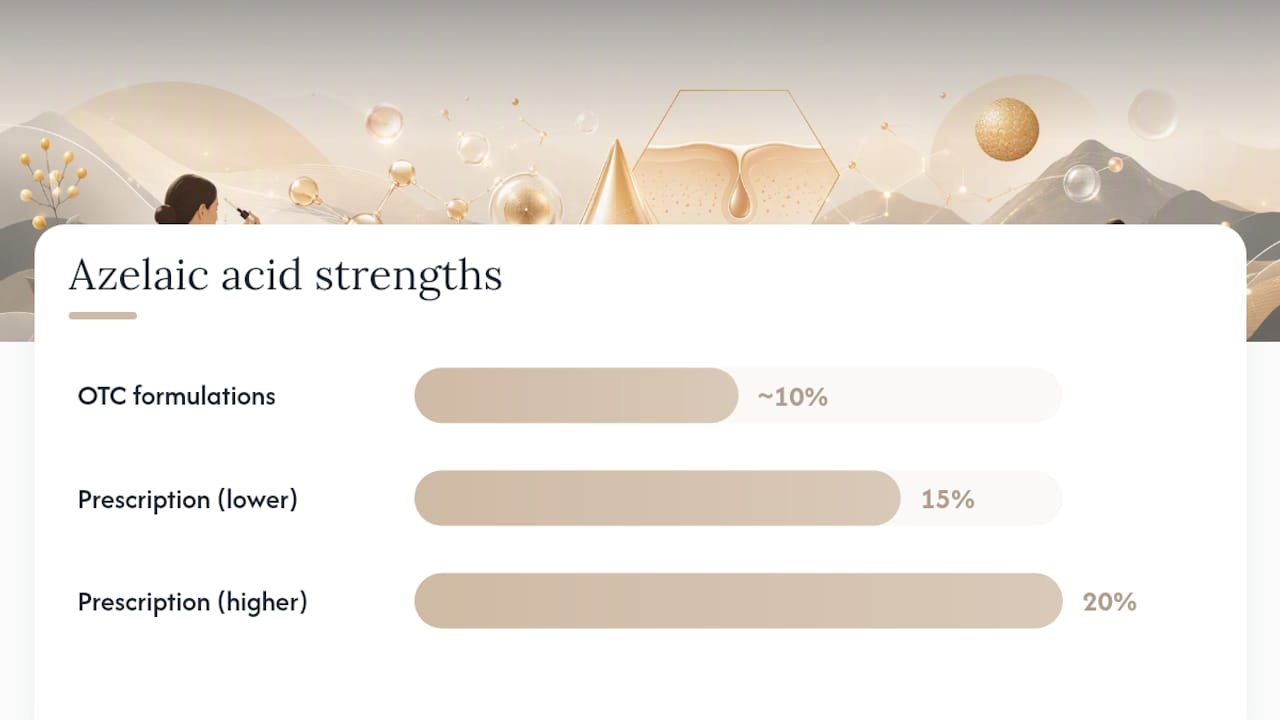
That combination makes it the more versatile pick for anyone dealing with more than one concern at once. Over-the-counter formulations generally sit around 10%, while prescription-strength versions reach 15% to 20% for more stubborn cases, particularly rosacea and melasma. British Vogue’s dermatology roundup on the two acids notes that experts consistently favor azelaic acid for its multi-tasking profile: it treats active inflammatory lesions, fades the resulting pigmentation, and tends to be gentler than most other actives with comparable results.
Where it shines:
- Inflammatory acne: reduces redness and swelling around active papules and pustules.
- Rosacea: an established prescription option for reducing facial redness and bumps.
- Post-inflammatory hyperpigmentation (PIH): fades dark marks left after acne clears, a concern our azelaic acid guide covers in more depth for readers weighing 10% against 20% strength.
- Sensitive or reactive skin: better tolerated by people who find salicylic or glycolic acid too harsh.
Most people tolerate azelaic acid well from the start, with only mild tingling in the first week or two. Introduce it every other night for the first two weeks, then move to nightly use once skin adjusts, and expect that initial tingle to fade as your skin builds tolerance.
How to Choose Based on Your Skin’s Main Problem
The right acid depends on what’s actually happening on your face right now, not on which one is trendier. Match the tool to the problem:
- Mostly blackheads, oily T-zone, clogged pores, minimal redness: Start with salicylic acid, 3 nights a week, building to nightly over 4 weeks. This is a comedonal acne profile, and salicylic’s oil-soluble action addresses it directly.
- Red, inflamed bumps with some pigmentation left behind after old breakouts: Start with azelaic acid, every other night for 2 weeks, then nightly. This inflammatory-plus-PIH profile is exactly what azelaic’s dual anti-inflammatory and tyrosinase-inhibiting action was built for.
- A mix of clogged pores and inflammatory marks, or acne-prone and pigment-prone at once: Use azelaic acid in the morning under sunscreen and salicylic acid at night, alternating with a plain moisturizer night if skin feels tight or reactive.
Anyone who is pregnant, breastfeeding, or on prescription acne medication should check with a clinician before adding either acid, since dosing and interactions vary by individual case. Patch test any new acid on the inner forearm for 48 hours before applying it to your face, and reintroduce it slowly if you’ve had reactions to exfoliating acids in the past.
What the Clinical Evidence Actually Shows
A 2020 Cochrane systematic review pooled 49 trials covering 3,880 participants and found the evidence quality for these two acids isn’t equal. Azelaic acid had moderate-quality evidence backing its use, while many salicylic acid trials were rated low to very low quality, largely due to small sample sizes and inconsistent trial design. That doesn’t mean salicylic acid doesn’t work. It means the research base behind it is thinner, so claims about its exact effect size deserve more caution than headlines usually give them.
One specific finding stands out: in some long-term trials, azelaic acid gel performed worse than benzoyl peroxide, while salicylic acid lotion performed comparably to tretinoin. Exact relative risk statistics from the trials are available in primary sources. Neither acid is a guaranteed win against every alternative, and a separate dermatology review of topical acne evidence echoed the call for better head-to-head trials before ranking these treatments with confidence.
What this means practically:
- Expect visible change over 8 to 12 weeks of consistent use, not days.
- Reported side effects across trials were mostly mild and temporary, things like stinging, dryness, or redness at the application site.
- Long-term data on both acids remains limited, so results can vary more than a confident product label suggests.
Combining or Alternating the Two Safely
You don’t have to pick one forever. Plenty of routines use both, just not stacked on top of each other in the same application. The safest structures:
- Split by time of day: azelaic acid in the morning under sunscreen, salicylic acid at night.
- Alternate nights: azelaic acid Monday, Wednesday, Friday; salicylic acid Tuesday, Thursday, Saturday; a rest night on Sunday.
- Spot treat only: azelaic acid as your everyday base, salicylic acid dabbed only on active blackheads or clogged spots.
Avoid layering either acid with strong retinoids or other exfoliating acids (glycolic, lactic) on the same night early on. That stacking multiplies irritation risk without multiplying benefit. Niacinamide and ceramide-based moisturizers pair well with both and help offset dryness, a pairing our guide on combining niacinamide and salicylic acid breaks down in more detail.
Pro Tip: When introducing a second acid to an existing routine, add it for one week at half the usual frequency before settling into a permanent schedule. Your skin barrier adjusts faster to a slow ramp than a sudden switch.
Three Sample Routines to Copy
- Oily, comedonal skin: Morning: gentle cleanser, lightweight moisturizer, SPF 30+. Evening: salicylic acid cleansing bar, followed by a plain moisturizer, building from 3 nights to nightly over 4 weeks.
- Mixed inflammatory and pigment-prone skin: Morning: cleanser, azelaic acid serum, vitamin C or niacinamide, SPF. Evening: gentle cleanser, salicylic acid spot treatment on active blemishes only, moisturizer.
- Sensitive, reactive, rosacea-leaning skin: Morning: cleanser, azelaic acid, ceramide moisturizer, SPF. Evening: cleanser, ceramide moisturizer only, azelaic acid every other night instead of nightly.
If you’re adding a retinoid later, introduce it only after your skin has tolerated one acid consistently for at least 4 weeks, and never apply a retinoid the same night as salicylic acid until your barrier is well established.
When Acids Alone Aren’t Enough
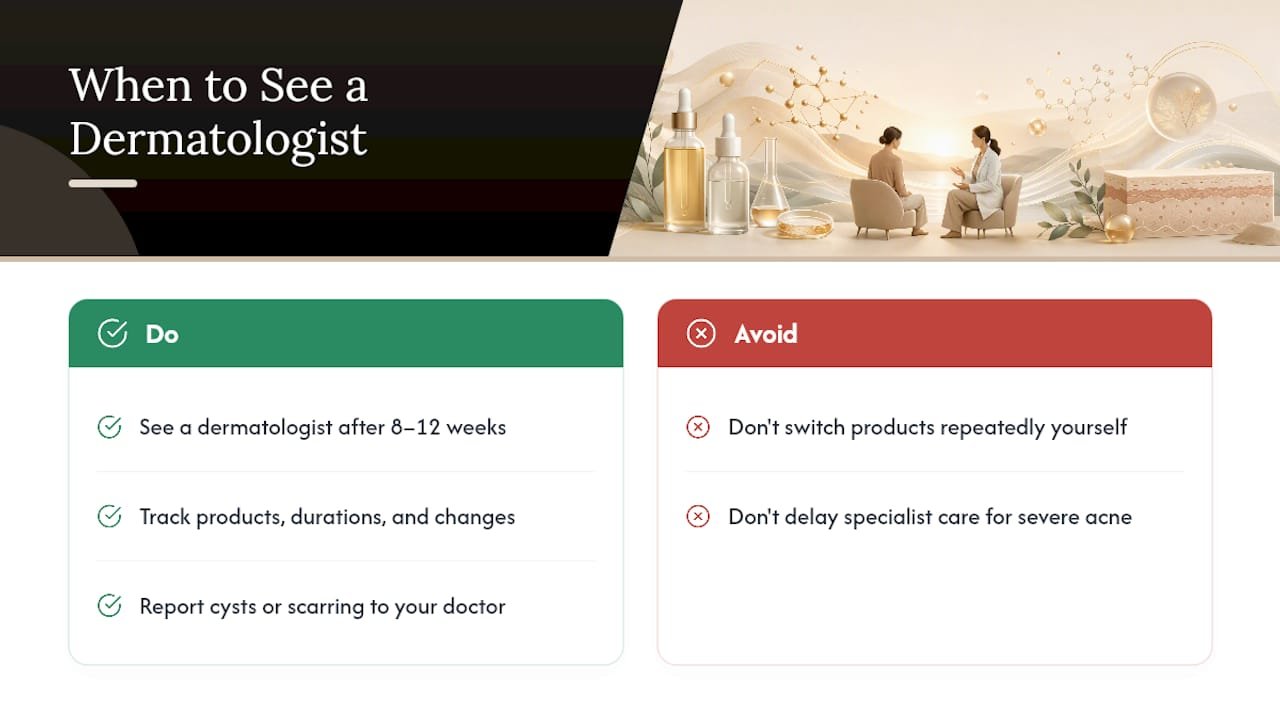
Topical acids are targeted tools, not a fix for every case. If breakouts are deep, cystic, leaving scars, or simply not responding after a full 8 to 12 week trial of consistent use, that’s the signal to see a dermatologist rather than switching products again on your own.
Clinical next steps commonly include prescription-strength retinoids, oral antibiotics or hormonal therapy, or in-office procedures for scarring. Before your appointment, track what you’ve used, for how long, and what changed, since experts note that moderate-to-severe acne usually needs more than topical acids alone to control it.
Beauvex’s Take on Where These Acids Fit
We built our three-step ritual around one idea: cleansing, treatment, and barrier support each play a distinct role, and pigmentation needs its own dedicated strategy rather than an acid picked at random. Salicylic acid earns its place in the cleansing step for congested, acne-prone skin, while azelaic acid’s pigment-focused action complements a treatment phase built around ingredients like tranexamic acid and alpha-arbutin. Ingredient transparency matters here because concentration determines outcome, not the ingredient name alone.
— Beauvex
Try a Salicylic Cleansing Bar Built for Congested Skin
If oily, blackhead-prone skin is your main frustration, a salicylic acid cleansing bar solves a real formulation problem: leave-on serums are strong but slow, while rinse-off cleansers can pack a higher percentage without the dryness risk of an all-day product. The Cellura ClearMark Bar combines salicylic, azelaic, and kojic acid in one rinse-off step, which means you get pore-clearing and tone-evening action in the same minute you’d normally spend on plain soap.
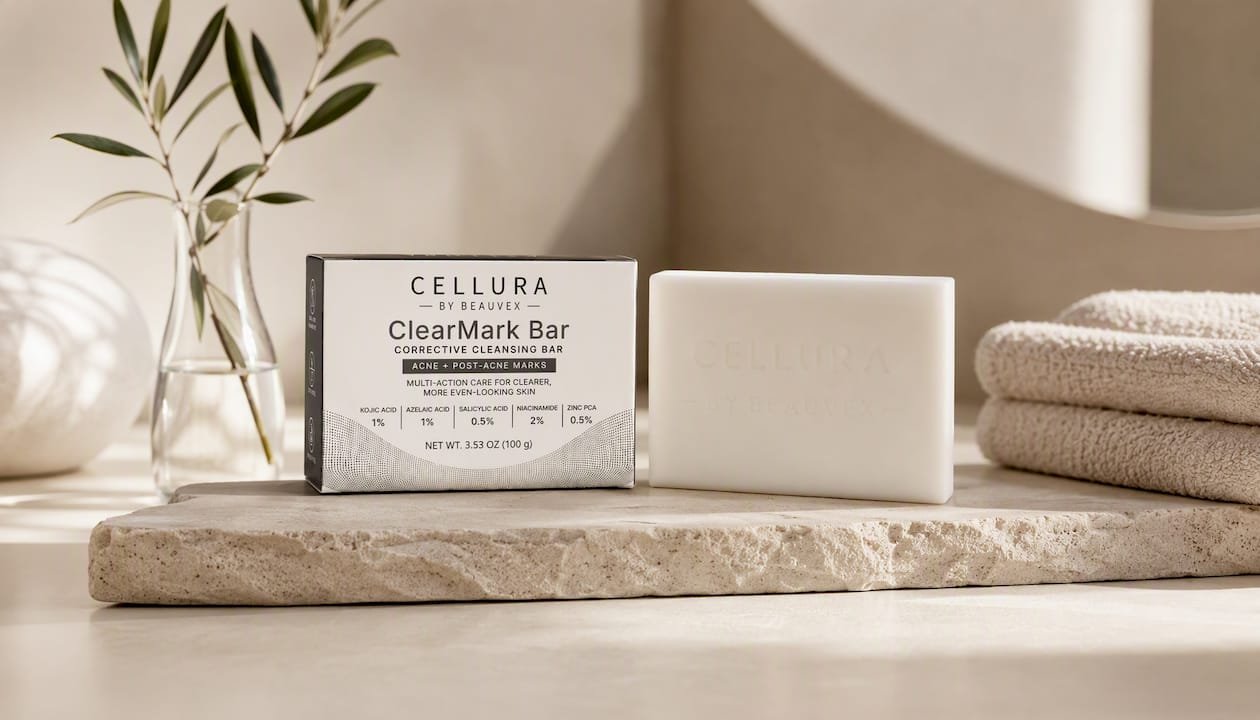
It slots directly into the routines above as your cleansing step, whether you’re following the oily/comedonal plan or the mixed inflammatory routine. The exact concentrations in each product are published, so you can judge for yourself whether they fit your skin’s needs rather than taking a label’s word for it. Check the ClearMark Bar product page to see current ingredient percentages and add it to your next order.
This article is general information, not a substitute for advice from a qualified doctor. Consult a qualified healthcare professional about your own circumstances before acting on anything here.
Sources
- Evidence‐based topical treatments (azelaic acid, salicylic acid, nicotinamide, sulfur, zinc, and fruit acid) for acne: an abridged version of a Cochrane systematic review
- Azelaic acid: properties and clinical applications
- Azelaic Acid for Your Skin: What to Know
- Azelaic Acid Vs Salicylic Acid: Which Is Best For Acne, Redness And Pigmentation? | British Vogue