
Benzoyl peroxide is usually the faster fix for red, inflamed, bacteria-driven breakouts, while azelaic acid tends to suit sensitive skin and does double duty on post-acne dark spots. For moderate to severe acne, dermatology guidelines often point toward combining topical agents rather than picking just one, which changes the calculus for a lot of readers weighing these two.
TL;DR:
- Combining benzoyl peroxide with topical antibiotics provides faster reduction of inflammatory lesions than using azelaic acid alone.
- Benzoyl peroxide typically shows visible results within two to four weeks, but has higher risks of dryness, peeling, and skin bleaching compared to azelaic acid.
- Azelaic acid is better suited for sensitive skin and dark spot fading, with milder irritation and a range of strengths from 10% OTC to 20% prescription formulas.
- Starting treatments at low strengths and gradually increasing use reduces irritation risks and improves adherence.
- A three-step routine of cleansing, treatment, and barrier support enhances tolerance and effectiveness for sensitive or inflamed skin.
Table of Contents
- Efficacy, speed, and tolerability side by side
- How each ingredient works and what strength to expect
- Matching the ingredient to your skin type and concerns
- Using benzoyl peroxide and azelaic acid safely
- What the research actually shows
- Choosing a routine that protects skin while it heals
- A cleanser built for sensitive, acne-prone skin
- Where these facts come from
- Sources
- FAQ
Efficacy, speed, and tolerability side by side
The two ingredients are not interchangeable, and the differences show up fastest in head-to-head trials. A randomized multicenter trial found that a combination of [benzoyl peroxide 3% plus clindamycin 1%] outperformed azelaic acid 20%](https://xerte.nottingham.ac.uk/USER-FILES/45684-msznkr-site/media/Paper 1_schaller_randomised trial_2016.pdf) on inflammatory lesion reduction at both week 4 and week 12, though azelaic acid still produced meaningful improvement on its own. That gap partly reflects the combination therapy itself, since pairing benzoyl peroxide with an antibiotic tends to hit acne from two angles at once rather than one.
A Cochrane review found benzoyl peroxide may work better than a placebo for acne, though the certainty of evidence on side effects and head-to-head comparisons is rated low to very low. That matters because tolerability, not raw lesion counts, is often what determines whether someone sticks with a routine long enough to see results.
- Speed: Benzoyl peroxide typically shows visible change within two to four weeks, largely because of its bactericidal action.
- Tolerability: Benzoyl peroxide carries a higher risk of dryness, peeling, and fabric bleaching, while azelaic acid tends to be gentler on sensitive skin.
- Availability: Benzoyl peroxide is widely sold over the counter, while azelaic acid ranges from 10% OTC formulas to 15-20% prescription strengths.
- Rule of thumb: Choose benzoyl peroxide when inflamed breakouts need fast antimicrobial control, and choose azelaic acid when sensitivity or lingering dark spots are the bigger concern.
How each ingredient works and what strength to expect
Azelaic acid works through several mechanisms at once. It has antimicrobial and anti-inflammatory effects, gently exfoliates the skin’s surface, and inhibits tyrosinase, the enzyme responsible for excess pigment production. That last property is why it shows up so often in discussions of post-acne dark spots. Over-the-counter versions usually sit around 10%, while prescription formulas reach 15% to 20%, as detailed in this guide to azelaic acid concentrations.
Benzoyl peroxide works differently: it releases oxygen free radicals that kill acne-causing bacteria and has a mild exfoliating effect on clogged pores. The FDA’s OTC acne monograph permits concentrations from 2.5% to 10% and requires warnings about irritation, sun sensitivity, and fabric bleaching.
- Gel and foam vehicles tend to dry the skin faster than creams, which raises irritation risk.
- Cream-based azelaic acid formulas are generally milder and better suited to reactive skin.
- Lower strengths of either ingredient can perform close to higher strengths while causing less irritation.
Matching the ingredient to your skin type and concerns
Benzoyl peroxide tends to suit people with red, inflamed papules and pustules who want a quick antimicrobial effect and can tolerate some dryness or occasional fabric bleaching. Azelaic acid is generally the better starting point for sensitive skin, rosacea-prone complexions, and anyone in a darker phototype who is specifically worried about post-inflammatory hyperpigmentation, since it treats active breakouts and fading dark marks at the same time, a point echoed in patient-facing guidance from the American Academy of Dermatology.
- Choose benzoyl peroxide first if your main issue is active, inflamed lesions and irritation is a secondary worry.
- Choose azelaic acid first if dark spots, redness, or sensitivity are as concerning as the acne itself.
- Consider combining or switching if moderate to severe acne persists after 8 to 12 weeks, and involve a clinician at that point.
Pro Tip: Patch test any new active on a small patch of skin for a few days and note any redness or stinging before applying it to your whole face.
Using benzoyl peroxide and azelaic acid safely
Both ingredients reward a slow start. Jumping straight to daily use at the highest strength is the most common way people talk themselves out of a treatment that would have worked.
- Start benzoyl peroxide at 2.5% once nightly, and only increase frequency or strength after your skin adjusts over one to two weeks.
- Start azelaic acid once daily, moving to twice daily only if there is no burning, stinging, or excess dryness.
- Apply sunscreen every morning, since irritated skin is more prone to sun sensitivity, a point the FDA monograph specifically flags for benzoyl peroxide users.
- Avoid layering both ingredients with another strong exfoliant, such as a high-strength retinoid or acid, on the same night, and see layering rules for actives if you are combining multiple treatments.
- Stop and consult a clinician if irritation persists beyond two weeks or if the skin breaks or blisters.
Dermatology guidelines from the American Academy of Dermatology recommend combination topical therapy for many acne cases, and specifically use benzoyl peroxide alongside topical antibiotics to reduce the risk of antibiotic resistance. That is one reason benzoyl peroxide shows up so often in prescription combination products even when azelaic acid might otherwise be the gentler pick.
What the research actually shows
The randomized trial comparing benzoyl peroxide plus clindamycin to azelaic acid found the combination reduced inflammatory lesions more at both the four and twelve week marks, though azelaic acid alone still delivered improvement without an antibiotic component. The Cochrane review cautioned that while benzoyl peroxide likely outperforms a placebo, the certainty of evidence around side effects and direct comparisons to other actives remains low to very low, so exact numbers should be read with some caution.
- The AAD’s updated acne guidelines list both benzoyl peroxide and azelaic acid among recommended topical options.
- Combination therapy is favored over single-agent treatment for moderate to severe cases.
- The FDA monograph requires benzoyl peroxide products to carry irritation and bleaching warnings on the label.
- Mayo Clinic notes azelaic acid also reduces post-inflammatory hyperpigmentation, with mild side effects like burning or dryness and visible improvement typically taking around a month.
Choosing a routine that protects skin while it heals
Picking an ingredient is only half the job. What happens around it, cleansing, barrier support, and consistency, determines whether skin actually calms down or stays inflamed. A three-step approach (cleanse, treat, support the barrier) gives irritation-prone skin room to adjust to an active like azelaic acid or benzoyl peroxide without breaking down further. Barrier support in particular tends to shorten the rough patch that comes with starting a new active, which is often the difference between someone sticking with a treatment and giving up on it after a week. Readers focused on fading marks that linger after breakouts clear may also want to look at how pigment-fading actives compare to azelaic acid’s tyrosinase-inhibiting effect.
— Beauvex LLC
A cleanser built for sensitive, acne-prone skin
If you’re leaning toward an azelaic-acid-forward routine because of sensitivity or dark spots, the cleansing step matters more than most people assume. The Cellura ClearMark Bar is a multi-active facial cleansing bar formulated with salicylic, azelaic, and kojic acid, built to handle the cleansing stage of a routine that pairs well with azelaic acid treatment products.
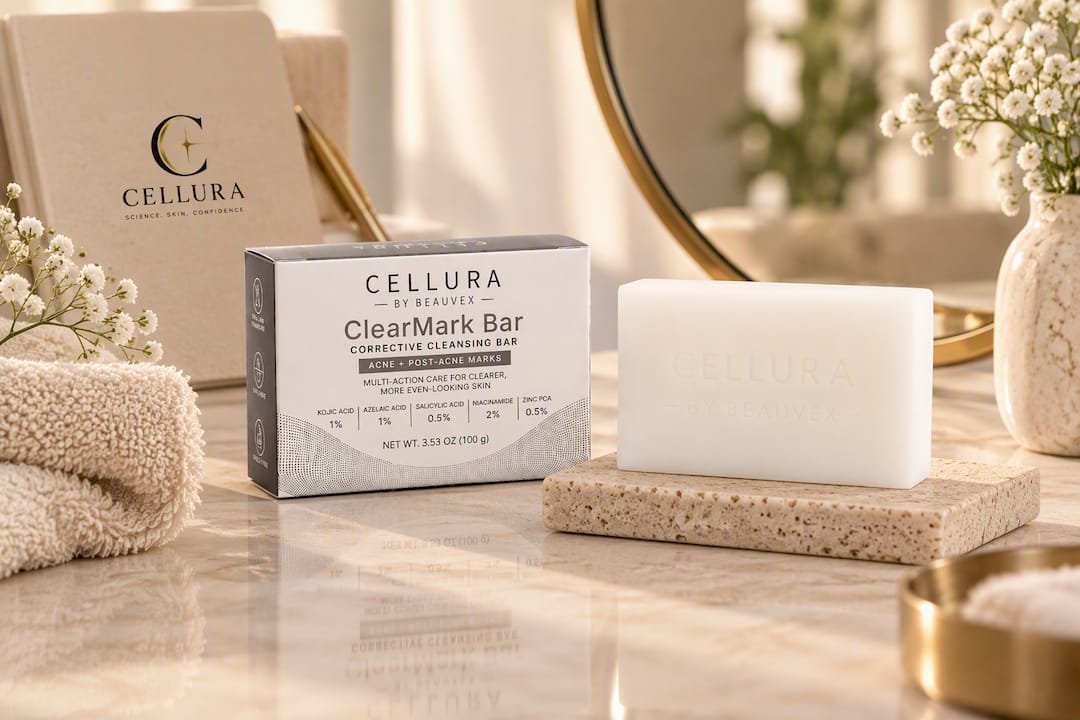
- It covers the cleanse step of a multi-part ritual, leaving treatment serums to do the targeted work.
- It suits acne-prone, sensitive skin that may also have dark spots left behind by past breakouts.
- Its azelaic and kojic acid content can complement an azelaic acid treatment step rather than competing with it, and it may be used alongside a benzoyl peroxide routine if overall irritation is monitored.
See the full Cellura line or check out the ClearMark Bar directly to see if it fits your routine.
Where these facts come from
- FDA OTC acne monograph
- AAD updated acne guidelines
- Randomized trial: BPO/clindamycin vs azelaic acid
- Cochrane review on benzoyl peroxide
- Mayo Clinic on azelaic acid
This article is general information, not a substitute for advice from a qualified doctor. Consult a qualified healthcare professional about your own circumstances before acting on anything here.
Sources
- American Academy of Dermatology issues updated guidelines for the management of acne
- FDA OTC monograph: Topical acne drug products for OTC human use
- Randomized trial comparing benzoyl peroxide/clindamycin with azelaic acid in mild-to-moderate acne
- Cochrane review assessing benzoyl peroxide for acne
- Azelaic acid (topical route) – Mayo Clinic
FAQ
What are the top 3 best acne treatments for most people?
Benzoyl peroxide, azelaic acid, and topical retinoids are the most consistently recommended options in dermatology guidance, and the American Academy of Dermatology often favors combining two of these rather than relying on one alone. Which combination fits best depends on skin sensitivity, pigmentation concerns, and acne severity.
Is it okay to use benzoyl peroxide and azelaic acid together?
Yes, many people use them at different times of day, such as benzoyl peroxide in the morning and azelaic acid at night, to limit combined irritation. Start with one application every other day of each and watch for excess dryness or stinging before increasing frequency.
What should you avoid pairing with azelaic acid?
Avoid layering azelaic acid with other strong exfoliants, like high-strength retinoids or acid toners, on the same night, since the combined effect raises irritation risk. Spacing actives to alternate nights, as outlined in these layering guidelines, tends to work better for sensitive skin.
Which is better for acne, a BHA like salicylic acid or azelaic acid?
Salicylic acid works mainly by exfoliating inside the pore to clear buildup, while azelaic acid combines mild exfoliation with antimicrobial and pigment-fading effects. For acne paired with dark spots, azelaic acid usually offers more overall benefit, while salicylic acid can be a good complement for oily, congested skin.