The fastest path to preventing post-acne dark spots is treating active breakouts early, wearing broad-spectrum sunscreen every day (a tinted mineral formula with iron oxides if you have medium to deep skin tones), and introducing one evidence-backed active like a retinoid or azelaic acid rather than several acids at once. Skipping any of these three steps gives inflammation and sun exposure room to darken marks that could have faded on their own.
TL;DR:
- Flat discoloration usually fades, while indented or raised scars reflect collagen damage and will not respond to pigment creams alone.
- Introduce one active at a time, wait two to three weeks before adding another, and reduce use if redness, burning, or peeling persists.
- Tinted mineral sunscreen with iron oxides blocks visible light, particularly for darker skin tones; choose SPF 30 or higher and reapply every two hours outdoors.
- Expect brightening in four to eight weeks, but full fading may take three to twelve months; see a dermatologist if marks persist or change rapidly.
Table of Contents
- PIH vs scarring: identify what you have and why it changes prevention
- Daily prevention routine that controls inflammation without irritating skin
- Ingredient primer: what works and how to use it safely
- Sun and visible-light protection: tinted sunscreens and practical regimen
- When to escalate: dermatologist visit and procedural options for stubborn spots
- What to expect over time: realistic timelines for fading dark spots
- Beauvex’s three-step evidence-aligned routine and product fit
- Skin barrier repair importance and how impaired barrier worsens post-acne dark spots
- Step-by-step skincare ritual integrating cleansing, treatment, and barrier support tailored to prevent dark spots
- Explanation of the mechanism of key actives like alpha-arbutin and tranexamic acid in disrupting pigmentation process
- Diet and lifestyle factors that may influence post-acne hyperpigmentation and skin healing
- Author perspective: consistency, patience, and choose evidence over hype
- Product spotlight: Cellura Luminé Serum and how it fits the routine
- FAQ
- Sources
PIH vs scarring: identify what you have and why it changes prevention
Not every mark left behind by a pimple is the same problem. Post-inflammatory hyperpigmentation (PIH) is flat discoloration caused by excess melanin after inflammation, and it shows up more frequently and more visibly in darker skin tones because those skin types produce more pigment in response to injury. True scarring, by contrast, involves a change in skin texture: an indentation or raised area from collagen damage.
- PIH looks flat and ranges from pink to brown to gray-black, and it usually fades without treatment given enough time.
- Scarring leaves a textural change (pits, raised tissue) that pigment creams alone will not resolve.
- Picking or squeezing a lesion drives both outcomes by deepening the injury and prolonging inflammation.
Whichever you have, the prevention logic is the same: calm inflammation fast, protect the skin barrier, and keep your hands off active lesions.
Daily prevention routine that controls inflammation without irritating skin
A routine built to calm acne without inflaming the skin further is the single best defense against new dark spots. Treating acne early with a non-comedogenic cleanser, a retinoid, and daily SPF 30+ sunscreen is what dermatologists recommend as the most effective prevention strategy.
- Cleanse gently twice daily with a non-stripping, non-comedogenic cleanser rather than a harsh scrub.
- Apply a topical retinoid at night as the backbone of acne control once your skin tolerates it.
- Add benzoyl peroxide or salicylic acid for active breakouts, starting benzoyl peroxide at 2.5% to limit irritation that can itself trigger pigmentation.
- Moisturize daily to support the barrier, since dry, compromised skin reacts more aggressively to active ingredients.
- Apply sunscreen every morning, rain or shine, as the final step before makeup.
Pro Tip: Swap pillowcases every few days and choose oil-free, non-comedogenic makeup so clogged pores don’t undo your routine overnight.
Behavior matters as much as products. Picking, popping, or aggressively exfoliating active lesions is one of the most preventable causes of lasting marks, because physical trauma increases both inflammation and melanin production.
Ingredient primer: what works and how to use it safely
A small set of actives has real evidence behind both acne control and pigment fading, and understanding what each does helps you avoid wasting money or irritating your skin.
- Retinoids normalize cell turnover and reduce inflammation, making them a nightly backbone ingredient and a long-term maintenance tool even after spots clear.
- Azelaic acid calms inflammation and inhibits the enzyme tyrosinase that drives pigment production; a systematic review found it improves both acne and PIH over 12 to 16 weeks at 15 to 20% concentrations, often working better in combination than alone.
- Niacinamide, vitamin C, salicylic acid, and tranexamic acid each target different parts of the pigmentation pathway and layer well together once your skin adjusts.
- Hydroquinone is effective at lightening stubborn pigment but is strong enough that it works best under dermatology supervision, especially for longer-term use.
Combination therapy often outperforms single ingredients for acne-related pigmentation, according to the same systematic review of clinical approaches, which found pairing a topical retinoid or azelaic acid with a pigment modulator consistently beat monotherapy across trials.
Introduce one new active at a time and give it two to three weeks before adding the next. If you notice persistent redness, burning, or peeling, drop back to every other night until your skin adjusts.
Sun and visible-light protection: tinted sunscreens and practical regimen
Ultraviolet light is not the only trigger for darker dark spots. Visible light, including the high-energy visible light emitted by screens and daylight, can also worsen pigmentation, and standard untinted mineral or chemical sunscreens often don’t block it effectively.
- Tinted mineral sunscreens containing iron oxides provide stronger protection against visible light than non-tinted formulas and are specifically recommended for people with medium to deep skin tones, who are more reactive to visible-light exposure.
- Choose SPF 30 or higher, with SPF 50 preferable when active hyperpigmentation is a concern.
- Reapply every two hours outdoors, or after sweating or swimming, since protection fades with wear and water exposure.
- Pair sunscreen with a vitamin C serum underneath for added antioxidant defense against light-triggered pigment.
Pro Tip: If white cast is the issue, look for tinted mineral formulas rather than untinted ones. The tint that bothers you cosmetically is the same iron oxide content doing the protective work.
Iron oxide concentrations are not standardized across brands, so combining tinted sunscreen with a hat or shade during peak sun hours adds a reliable physical layer of protection.
When to escalate: dermatologist visit and procedural options for stubborn spots
See a dermatologist if spots show no improvement after several months of consistent topical care, if you suspect textural scarring rather than flat pigment, or if a mark changes shape, color, or size rapidly.
- Chemical peels use acids to speed cell turnover and typically require a series of sessions spaced weeks apart.
- Microneedling creates controlled micro-injuries to stimulate collagen and can help texture-related scarring alongside pigment.
- Lasers and IPL target pigment or vascular components directly but carry a real risk of triggering new pigmentation in darker skin if settings aren’t conservative.
For medium to deep skin tones, conservative procedural settings paired with strict photoprotection before and after treatment meaningfully lower the risk of procedure-triggered PIH. Clinics experienced with Fitzpatrick IV through VI skin often combine topical lighteners with lower-energy procedural passes rather than relying on procedures alone.
What to expect over time: realistic timelines for fading dark spots
Patience matters more than intensity here. Early brightening often shows up around 4 to 8 weeks, more visible fading by 8 to 12 weeks, and many spots take 3 to 12 months to fully resolve depending on how deep the pigment sits and whether inflammation keeps recurring.
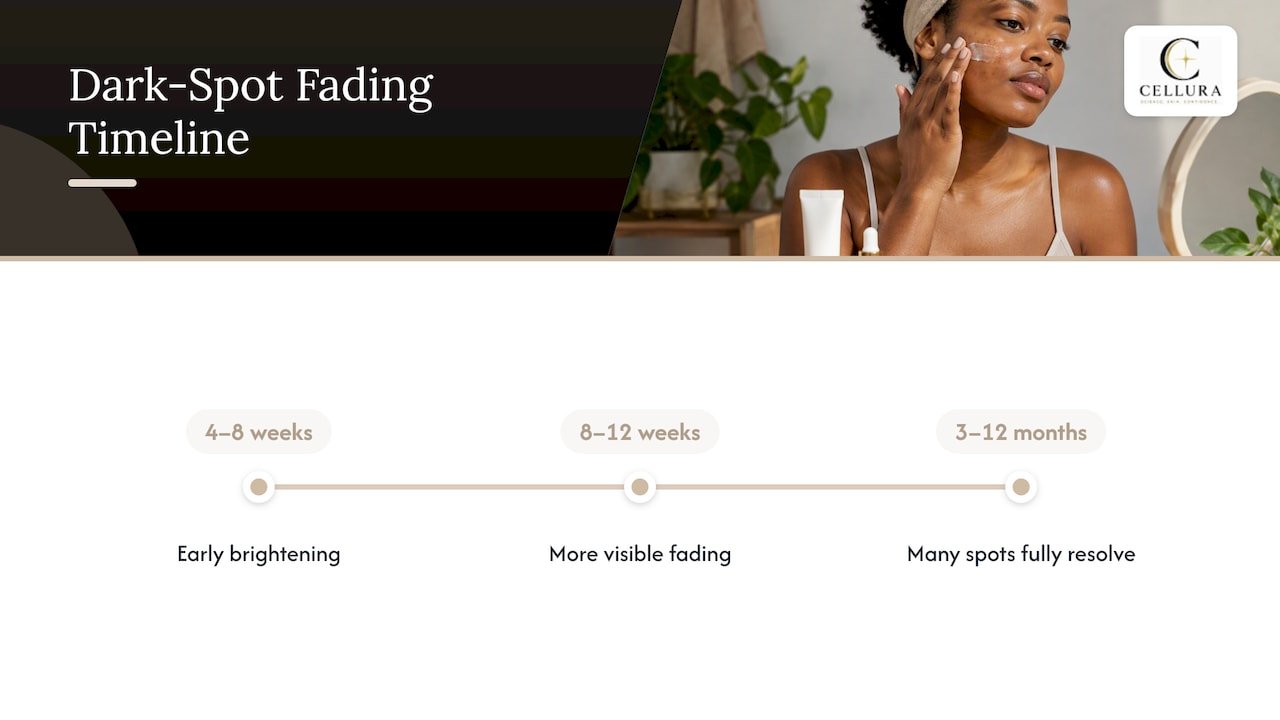
Hormonal fluctuations and repeated breakouts in the same spot can stall progress, which is why documenting change with consistent lighting and angle in photos helps you judge whether a routine is actually working before you abandon it for something new.
Beauvex’s three-step evidence-aligned routine and product fit
We built our three-step ritual around cleansing, treating, and supporting the barrier because acne and pigmentation need to be addressed together, not sequentially. Treating one while ignoring the other tends to stall progress.
Our Cellura Luminé Brightening Serum combines niacinamide, tranexamic acid, and alpha-arbutin to work on pigmentation at multiple points in the process rather than relying on a single mechanism. We publish exact concentrations for every active and disclose pregnancy-safe formulation details so you can evaluate the formula against the evidence yourself. We recommend introducing it after cleansing, patch testing first, and building up frequency gradually.
Skin barrier repair importance and how impaired barrier worsens post-acne dark spots
A compromised skin barrier makes every other prevention step harder. When the outer layer of skin can’t hold moisture or block irritants effectively, skin becomes more reactive, redness lingers longer, and active ingredients that would normally help can instead trigger the irritation that deepens pigmentation.
This is especially relevant for anyone using retinoids, acids, or benzoyl peroxide, since all three can thin or dry the surface layer if introduced too quickly. A weakened barrier also heals more slowly from acne lesions themselves, which extends the inflammatory window that produces excess melanin in the first place.
Supporting the barrier means layering a fragrance-free moisturizer with ceramides or similar lipids over active treatments, not skipping moisturizer because skin feels oily, and easing off actives temporarily if you notice persistent tightness, flaking, or stinging. A barrier that recovers quickly between flare-ups gives pigment-producing cells less reason to overreact, which is part of why combination routines that pair treatment with repair consistently outperform treatment alone.
Step-by-step skincare ritual integrating cleansing, treatment, and barrier support tailored to prevent dark spots
A ritual that separates these three functions, rather than throwing everything into one step, reduces the chance of irritation while still addressing acne and pigment together.
Start each session with a gentle, non-stripping cleanser to remove oil and debris without disturbing the barrier. Follow with a targeted treatment step: a retinoid at night, or a combination serum with actives like niacinamide and tranexamic acid during the day, applied to clean, dry skin before anything heavier. Finish with a barrier-supporting moisturizer or balm that locks in hydration and buffers the treatment step from causing unnecessary irritation.
In the morning, the same order applies but ends with sunscreen as the final layer, since skipping this step undoes the pigment-control work from treatment entirely. Consistency in this order, repeated daily rather than used sporadically, is what separates routines that visibly fade marks from ones that stall after a few weeks.
Explanation of the mechanism of key actives like alpha-arbutin and tranexamic acid in disrupting pigmentation process
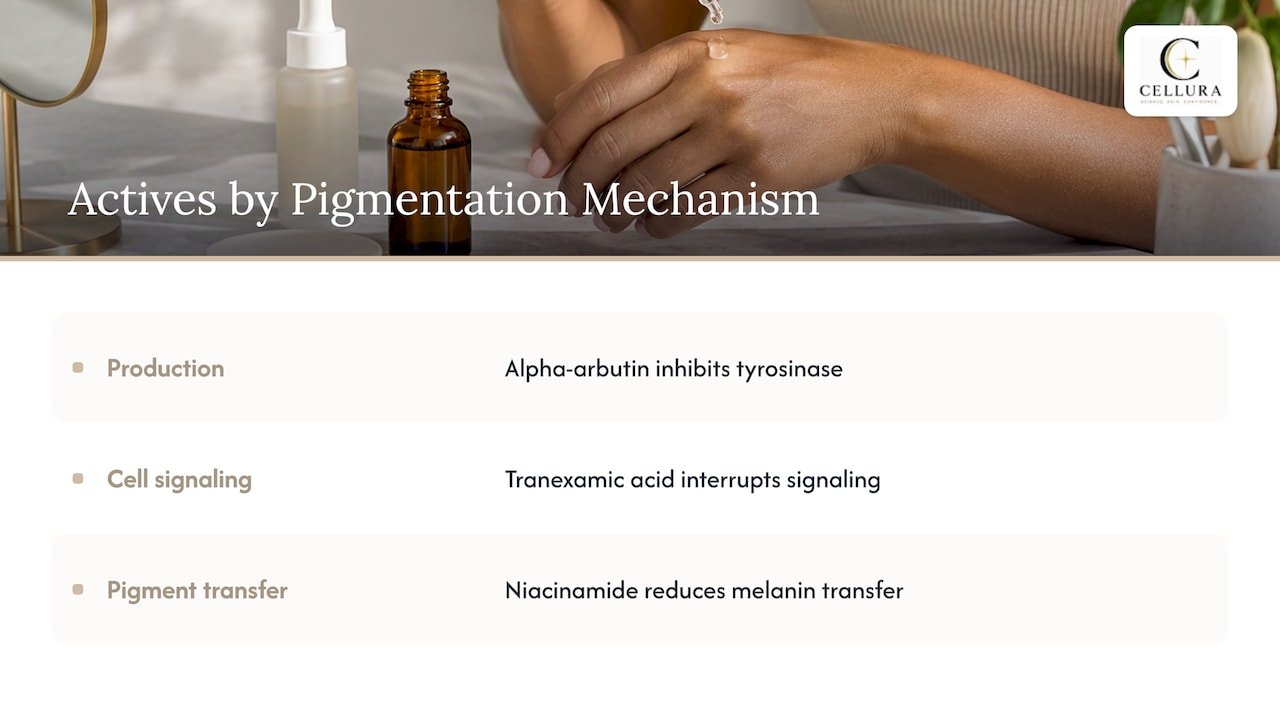
Alpha-arbutin works by inhibiting tyrosinase, the enzyme responsible for converting tyrosine into melanin, which slows new pigment production at its source rather than just lightening what’s already visible. Tranexamic acid interrupts a different step, reducing the signaling pathway between skin cells that gets triggered by inflammation and UV exposure, which is part of why it has gained attention specifically for inflammation-driven pigmentation like PIH.
Niacinamide complements both by reducing the transfer of melanin granules from pigment-producing cells to the surrounding skin cells, meaning less pigment reaches the visible surface layer even when production hasn’t fully stopped. Clinical trials support niacinamide at 4% for measurable pigmentation reduction, and topical tranexamic acid protocols at 5% have shown meaningful improvement in pigmentation scores over 12 weeks.
Because these three actives interrupt pigmentation at different stages (production, cell signaling, and transfer) rather than one mechanism alone, formulas that combine them tend to address stubborn spots more thoroughly than a single-ingredient approach, which is the logic behind most modern combination serums.
Diet and lifestyle factors that may influence post-acne hyperpigmentation and skin healing
Diet and lifestyle don’t replace topical treatment, but a few habits can support or undermine healing speed. Chronic high sugar intake and dairy have both been loosely associated with acne flares in some people, and more active breakouts mean more opportunities for new PIH to form, so managing diet triggers you’ve personally identified is worth doing alongside topical care.
Sleep and stress also play a role indirectly: poor sleep and elevated stress hormones can worsen inflammation and slow skin repair, which extends the window during which a healing lesion can darken. Staying hydrated and eating a diet with adequate protein supports general tissue repair, which matters for skin turnover speed.
Smoking has a well-documented negative effect on skin healing and circulation, both of which slow the fading process. None of these factors substitute for sunscreen, gentle care, and evidence-backed actives, but ignoring them can make an otherwise solid routine take longer to show results.
Author perspective: consistency, patience, and choose evidence over hype
Most people trying to fade dark spots make the same mistake: they chase intensity instead of consistency. Preventing inflammation prevents pigment, full stop. Introduce one active at a time, give it weeks rather than days, and see a dermatologist when a mark won’t budge or looks different from the rest. Results that last come from routines you can actually sustain for months, not from whatever produces the fastest visible change this week.
— Beauvex LLC
Product spotlight: Cellura Luminé Serum and how it fits the routine
If your routine already covers gentle cleansing, sun protection, and a retinoid, our Cellura Luminé Brightening Serum is built to layer in as the pigment-targeting step, combining niacinamide, tranexamic acid, and alpha-arbutin to work on discoloration from multiple angles at once.
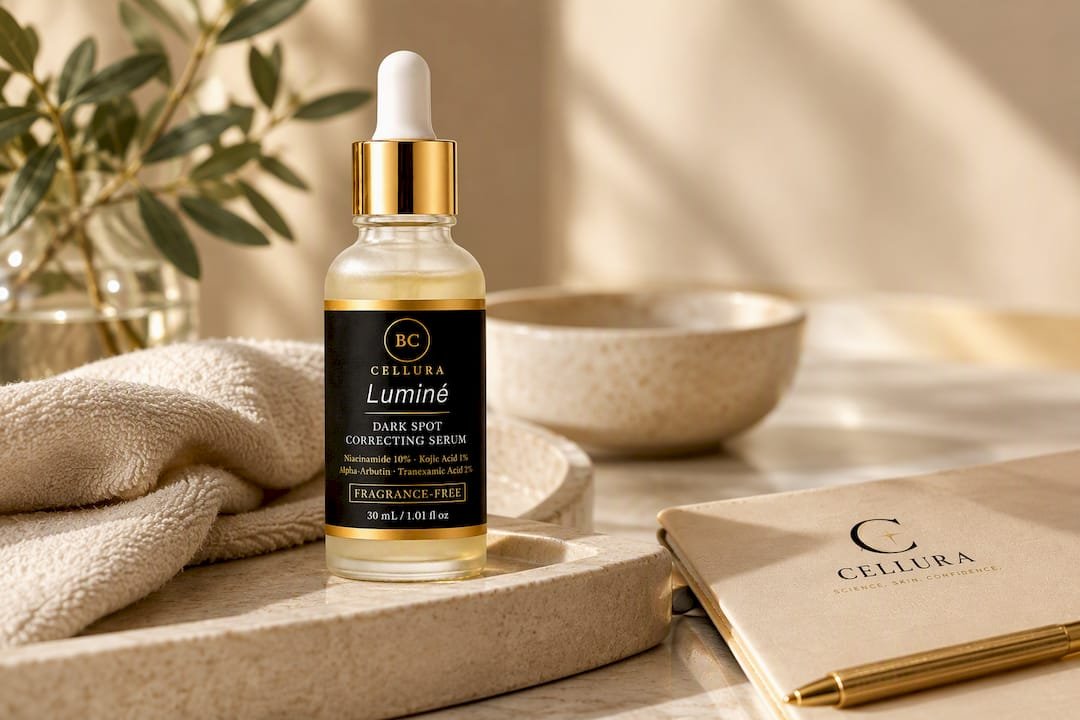
- Patch test on your inner arm for 48 hours before applying to your face.
- Pair it with daily sunscreen since no pigment serum outperforms consistent sun protection.
- Check with a dermatologist before combining it with prescription-strength actives like hydroquinone.
Explore the full Cellura line to see how the serum fits alongside our cleansing and barrier-support steps.
This article is general information, not a substitute for advice from a qualified doctor. Consult a qualified healthcare professional about your own circumstances before acting on anything here.
FAQ
How do I get rid of dark spots from post-acne?
The most reliable approach combines daily broad-spectrum sunscreen, a retinoid or azelaic acid introduced gradually, and patience, since most marks fade over 3 to 12 months rather than weeks. Avoiding picking and keeping the skin barrier supported speeds the process along.
How long do post-acne dark spots typically last?
Many spots show early fading within 4 to 8 weeks and more visible improvement by 8 to 12 weeks, but deeper pigment can take 3 to 12 months to fully clear. Depth of pigment and repeated inflammation in the same spot both extend the timeline.
Why am I prone to dark spots after breakouts?
Darker skin tones produce more melanin in response to inflammation, which is why post-inflammatory hyperpigmentation shows up more often and more visibly in medium to deep skin tones. Picking or aggressively treating active lesions also raises the risk regardless of skin tone.
Why do dark spots appear after acne clears?
Dark spots form because inflammation from a healing blemish triggers excess melanin production in the surrounding skin, a process called post-inflammatory hyperpigmentation. The mark isn’t new damage. It’s leftover pigment from the healing process that fades gradually once inflammation stops.
Sources
- Treat acne early — American Academy of Dermatology
- Clinical approaches in vogue for combination therapies for acne and post-inflammatory hyperpigmentation – Cosmoderma
- Visible light / iron oxides study (PubMed)