Yes, you can use niacinamide and salicylic acid together, and for oily or breakout-prone skin the pairing is one of the more sensible combinations you can build a routine around. The long-standing warning against mixing them comes from a laboratory scenario that has very little to do with how finished skincare behaves on your face.
Where the “never mix them” warning came from
The concern traces back to a real piece of chemistry. Niacinamide, also called vitamin B3, can convert into nicotinic acid, and nicotinic acid is known to cause a temporary flushing response in some people. Because exfoliating acids sit at a low pH, the assumption followed that combining the two would trigger that conversion on the skin.
In practice, that conversion requires sustained heat and time far beyond anything a serum or a cleansing bar experiences during a two-minute routine. Formulators treat it as a stability question for the product inside the bottle, not a safety question for the person using it. Dermatologists now routinely recommend the two ingredients alongside each other, and a large share of modern blemish-focused formulas include both in the same product.
The pH question, without the panic
Niacinamide is most comfortable in a near-neutral environment, roughly pH 5 to 7. Salicylic acid is a beta-hydroxy acid that needs a more acidic environment, usually somewhere around pH 3 to 4, because that acidity is what allows it to loosen the bonds between dead cells inside the pore.
Applying one directly over the other can briefly shift the pH of each layer. The realistic consequence is that one ingredient may work a little less efficiently for a few minutes. It is not damage, and it is not the flushing reaction the old myth predicts. If you want both performing at full strength, a short wait between steps or a split routine handles it completely.
Why the pairing makes sense for congested skin
The two ingredients solve different problems, which is exactly why niacinamide and salicylic acid together tend to work better than either one alone:
- Salicylic acid is oil-soluble, so it can travel into the lining of the pore and help clear the debris that builds up there.
- Niacinamide supports the skin barrier and helps improve the appearance of enlarged pores and excess surface shine.
- Because salicylic acid can leave skin feeling tight or dry, niacinamide is a useful counterweight in the same routine.
- Both are commonly used to help improve the look of the marks left behind after a breakout has healed.
| Niacinamide | Salicylic acid | |
|---|---|---|
| Ingredient type | Vitamin B3 derivative | Beta-hydroxy acid (BHA) |
| Preferred pH | Near neutral, about 5 to 7 | Acidic, about 3 to 4 |
| Solubility | Water-soluble | Oil-soluble |
| Main role | Barrier support, oil and tone appearance | Exfoliation inside the pore |
| Usual step | Serum or moisturiser | Cleanser or targeted treatment |
How to layer niacinamide and salicylic acid together
Split them between morning and night
The simplest approach: niacinamide in the morning, salicylic acid in the evening. Each ingredient sits at its own preferred pH, nothing competes, and your skin gets a rest between actives. This is the version most people should start with.
Use them in the same routine
If you prefer one routine, apply the salicylic acid first on clean skin, give it a minute or two to absorb, then follow with niacinamide. Acid first, barrier support second. Skipping the pause is not dangerous, it simply blunts the acid slightly.
Let one product handle both
The tidiest option is a formula where the pairing has already been balanced for you. The Cellura ClearMark Bar combines salicylic acid with niacinamide, azelaic acid, kojic acid and zinc PCA in a single cleansing step, which removes the layering question entirely. Because it rinses off, the contact time is short and the routine stays simple.
Who should go slowly
Skin that is already dry, reactive or mid-flare will not enjoy a new acid on top of everything else. Introduce salicylic acid two or three times a week and build from there. If you are also using retinoids or vitamin C, add one new active at a time so you can tell what your skin is responding to.
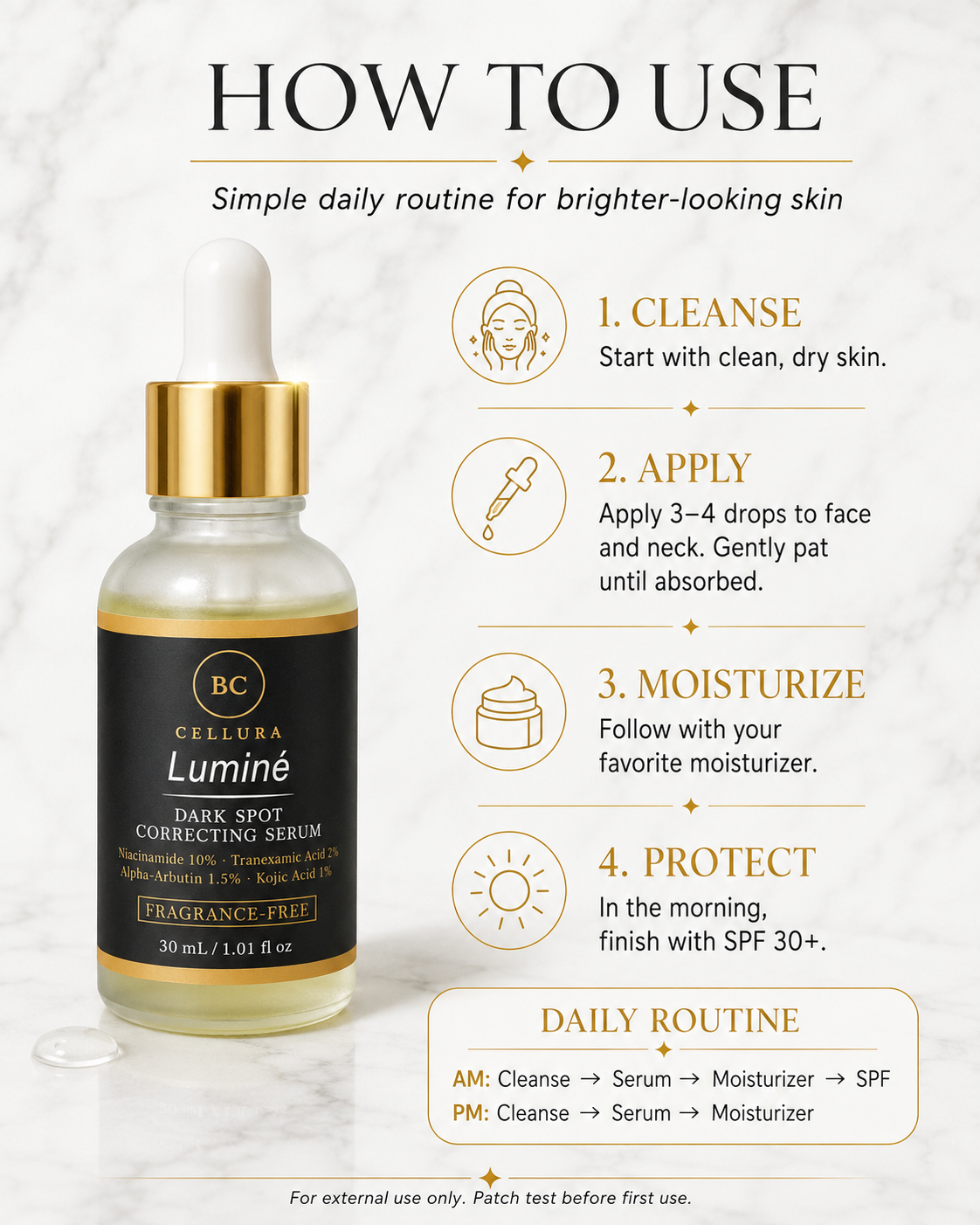
For a leave-on niacinamide step, the Cellura Lumine Brightening Serum pairs niacinamide with alpha-arbutin, kojic acid and tranexamic acid to help improve the appearance of uneven tone over time. If your main concern is the marks left after breakouts rather than active congestion, our guide to kojic acid for dark spots covers what to expect from that side of the routine.
Frequently asked questions
Can I use niacinamide and salicylic acid together every day?
Most people can use niacinamide daily. Salicylic acid is better introduced a few times a week and increased only if your skin stays calm. Daily use of both is realistic for oily skin, less so for dry or sensitive skin.
Do I have to wait between the two steps?
You do not have to, but one or two minutes lets the acid work at its intended pH before the next layer goes on. If you are short on time, applying them back to back is still fine.
Will the combination make my face flush?
Not from the chemistry itself. If you notice redness, it is far more likely to be ordinary irritation from over-exfoliating rather than the nicotinic acid conversion people worry about. Pull back the acid frequency and see whether it settles.
How long until I see a difference?
Congestion and texture usually respond first, often within a few weeks. Changes in the appearance of post-breakout marks follow your skin cell turnover and take considerably longer, so judge the routine over months rather than days.
Can I use them with retinol?
Niacinamide sits comfortably alongside retinol. Salicylic acid and retinol on the same night is a lot for most skin, so alternate evenings until you know how yours reacts.
Is a cleanser strong enough, or do I need a leave-on acid?
A salicylic acid cleanser is a gentle way to start, and for many people it is enough. If congestion persists after a couple of months of consistent use, a leave-on treatment is the logical next step.
Used sensibly, niacinamide and salicylic acid together are a low-drama pairing: one clears the pore, the other keeps the barrier comfortable while it happens. Patch test anything new, keep the routine short, and give it time.