Step one
ClearMark Bar
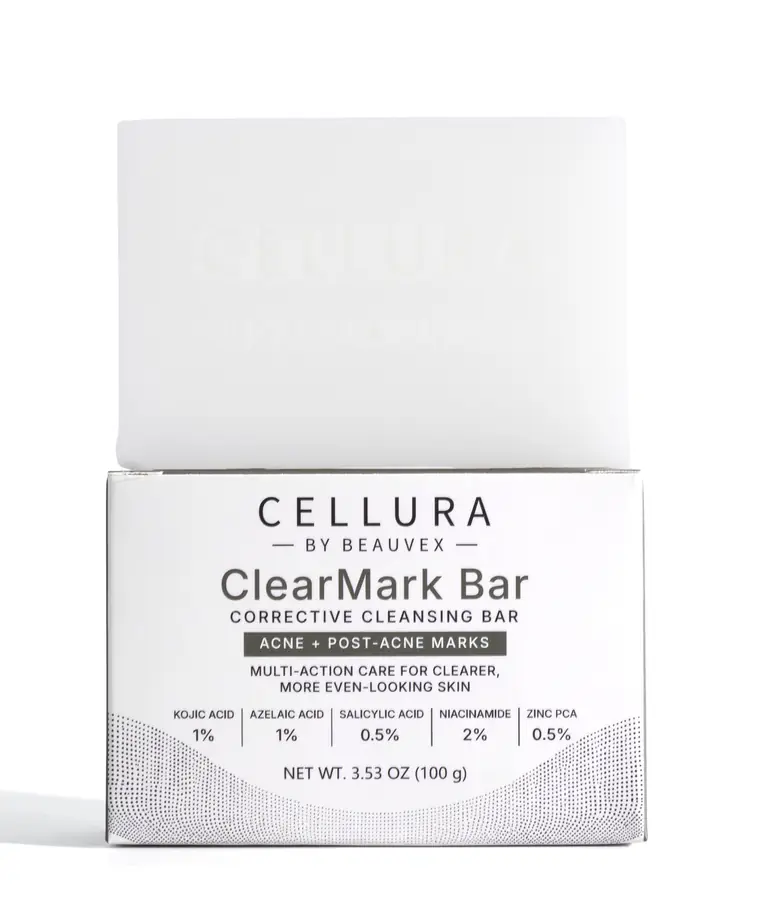
Salicylic, azelaic and kojic acid in a solid cleansing base. Clears the surface so the serum is not working through sebum and dead cells.
$14.99
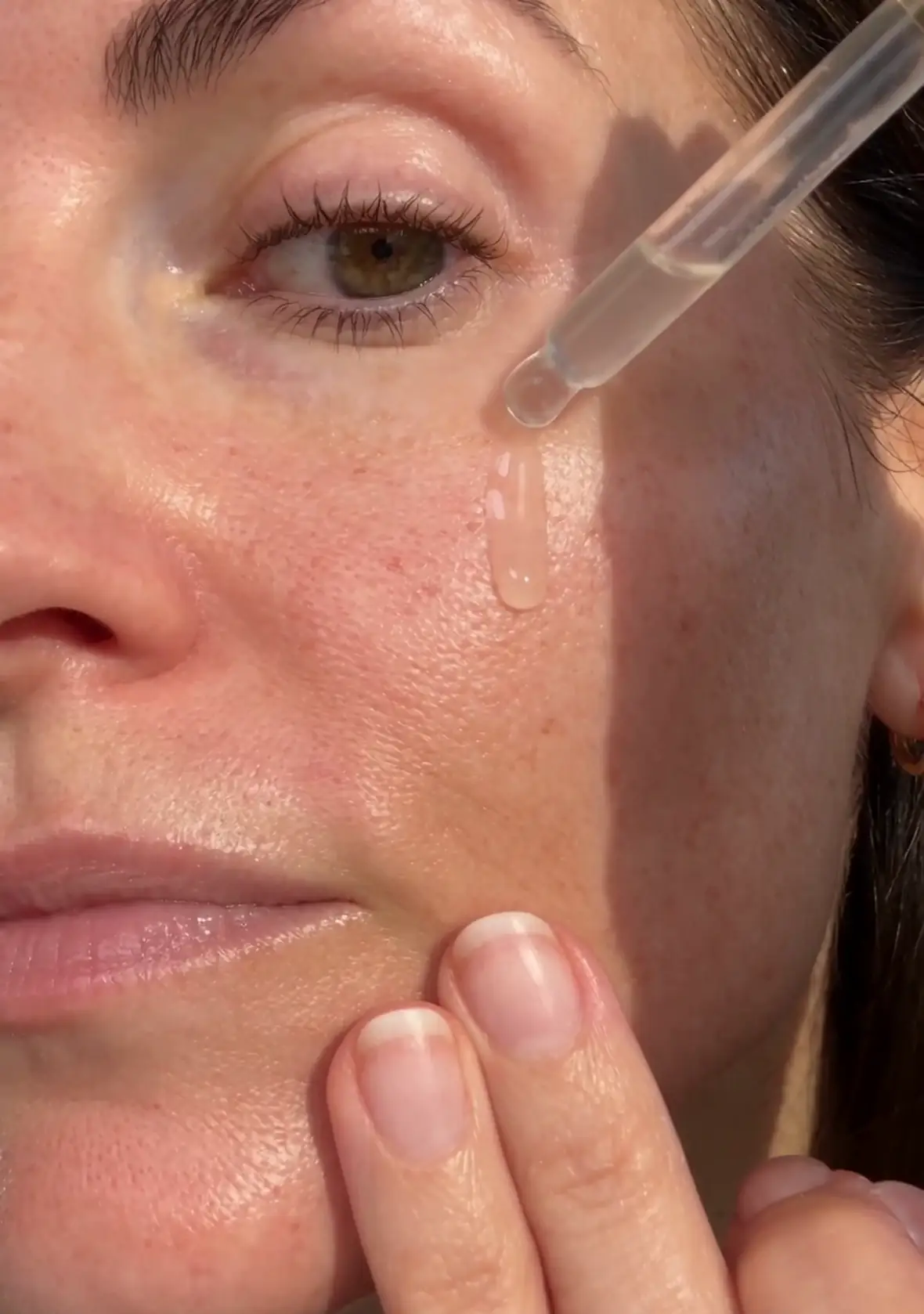
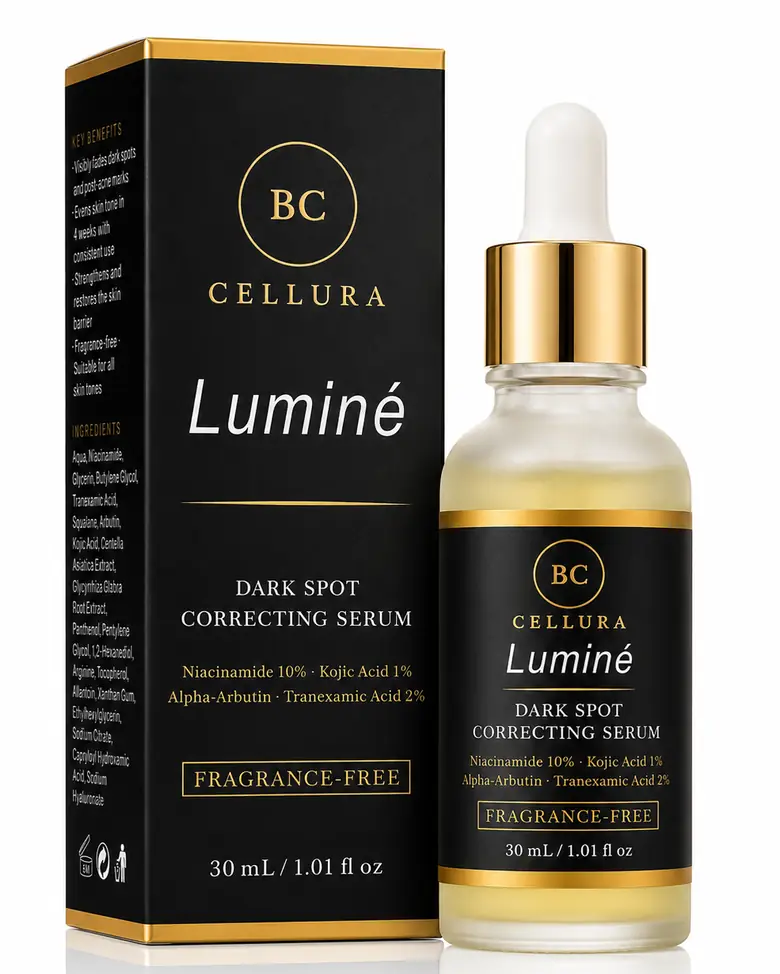
A single morning serum built to fade what the last five products left behind. Fragrance-free. 30 mL.
Salicylic, azelaic and kojic acid in a solid cleansing base. Clears the surface so the serum is not working through sebum and dead cells.
Niacinamide 10%, tranexamic acid 2%, kojic acid 1% and alpha-arbutin, with licorice root and centella. Four actives interrupting pigment formation at different stages.
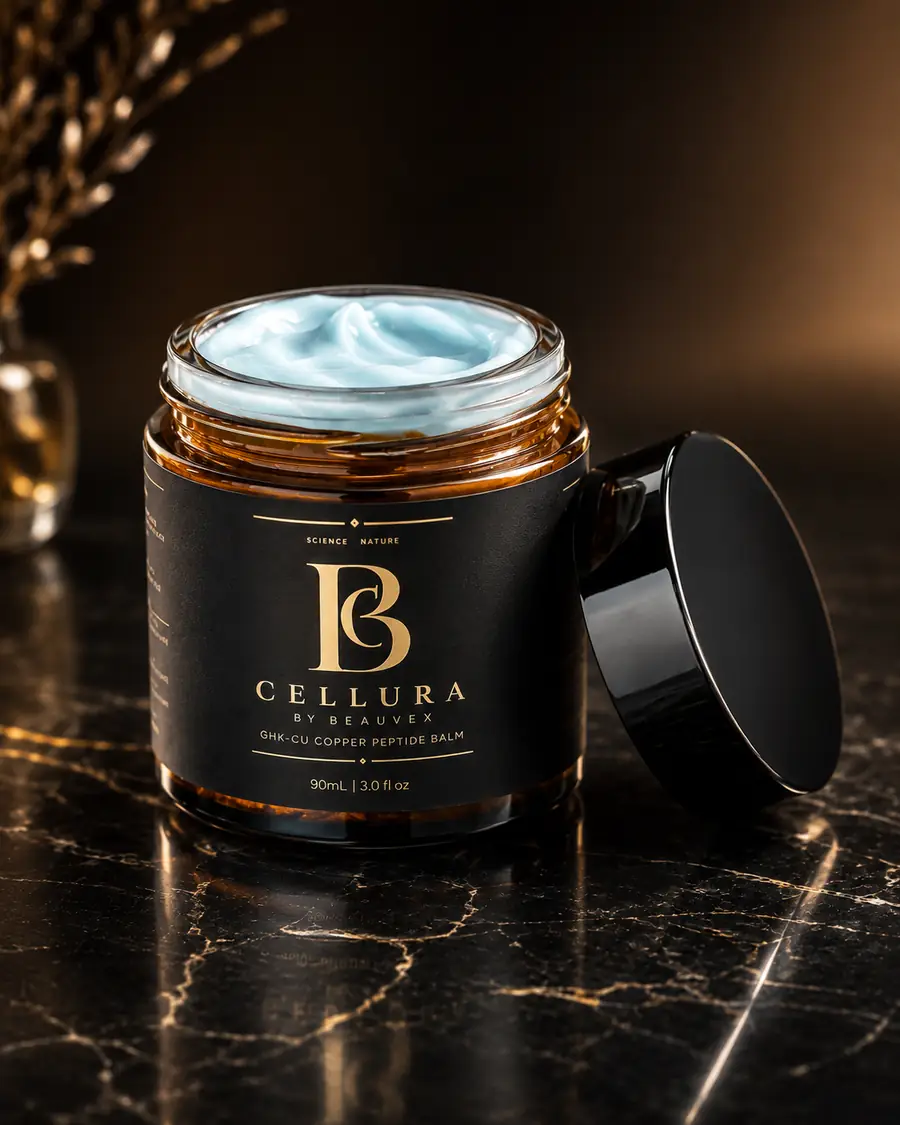
GHK-Cu copper peptide in tallow and squalane. Seals the routine and supports the barrier the acids just worked on. Not a brightener.
The complete ritual is $69.97 — $10.00 less than the three at their current prices.
Add the ritual — $69.97Post-acne marks begin as acne. The bar is the step that deals with the cause while the serum works on what it left behind.
Sixty seconds of contact, twice a day. A wash-off bar does groundwork, not correction — that is what step 02 is for.
A full dropper is a waste of good actives. Three drops covers a face; the fourth just sits on the surface and oxidises.
Damp skin pulls the serum in faster. Not wet — patted, still cool to the touch.
Rubbing drags at the barrier and spreads pigment-prone areas thinner. Press with flat fingers and let it set for thirty seconds.
Without daily SPF, brightening actives are working against a tap you left running. This is the step that decides whether the other three matter.
Each active in Luminé works on a different link in it. That is the whole reason for combining four rather than chasing one.
Sun, or the inflammation left behind by a breakout, signals skin to start making pigment.
Tyrosinase begins building pigment deeper in the skin.
The pigment is bundled up, ready to be passed upward.
Surface cells take delivery. Now the mark is visible.
Two of our four actives work at the same stage, so “four actives” means three points of interruption, not four. Nothing in this formula addresses Stage 3. We would rather tell you that than let you find it.
Our concentrations are not the concentrations in the published studies. Kojic acid has been studied at 2%; Luminé contains 1%. Niacinamide has been studied at 4%; Luminé contains 10%. Tranexamic acid has been studied at 2–5%; Luminé contains 2%. Alpha-arbutin has been studied at 5%; Luminé does not state its figure, so we will not invent one. We publish both numbers so you can judge for yourself.
The chain above is where each of these acts. What follows is what each one is, how it works, and what is actually known about it. Everything on these cards describes Luminé only.
Pigment is made in melanocytes, then passed to the surface cells you actually see. Niacinamide helps reduce that transfer, so less of it becomes visible. It also supports the skin barrier.
Alpha-arbutin acts on tyrosinase, the enzyme at the centre of melanin production, lowering how much new pigment gets made. Better at limiting what forms next than at clearing what is already there.
Tyrosinase depends on copper at its active site. Kojic acid binds that copper and lowers the enzyme’s pigment-making activity — a different route to the same enzyme arbutin works on. Held at the maximum EU and UK law allows in a face product.
UV and inflammation feed into plasmin-related signalling that drives pigment production. Tranexamic acid works on that pathway rather than on the enzyme itself. Its strongest topical evidence is in melasma; it may also help marks left by breakouts.
Four serums layered is four chances to skip the routine. One bottle is the version you keep doing at 7am.
Drag, scroll or use ← →
Full ingredient percentages, not just names. Graded evidence with linked sources. And the findings that do not flatter us — mechanism, the concentrations researchers studied, how long trials ran, and where the evidence is thin.
| Active | What it does | How it works | Studied concentration | In Luminé | Assessment window | Strength of evidence |
|---|---|---|---|---|---|---|
| 01 Niacinamide Vitamin B3 | Evens visible tone · supports the barrier Helps keep excess pigment from becoming visible at the surface, and supports a calmer, more resilient-looking complexion. | Reduces the transfer of melanosomes from pigment-producing cells to the surrounding skin cells you actually see. | 4%in a randomised trial · 2–5% common in topicals | 10%above the concentration used in the trial | 8wk | Moderate One small randomised trial against hydroquinone 4%, plus the 2002 study that established the mechanism. Less extensively trialled than prescription options. Navarrete-Solís et al., Dermatology Research and Practice (2011) — niacinamide 4% vs hydroquinone 4%, PMID 21822427 Hakozaki et al., British Journal of Dermatology (2002) — mechanism, PMID 12100180 |
| 02 Tranexamic Acid TXA | Targets the signals behind uneven tone Works on the processes that tell skin to make excess pigment — particularly where discolouration follows irritation or sun exposure. | Modulates the plasmin pathway and the downstream inflammatory signalling involved in melanin formation. | 2–5%topical formulations with clinical data | 2%within the range studied topically | 8–12wk | Moderate A 2026 review of topical and intradermal formulations reports pigment-score reductions comparable to hydroquinone, with first visible change around weeks 4–8. Formulas and study designs still vary widely. AlJabr et al., Journal of Cosmetic Dermatology (2026) — topical & post-inflammatory marks, PMID 41601401 González-Molina et al., J Clin Aesthet Dermatol (2022) — plasmin pathway |
| 03 Alpha-Arbutin Hydroquinone glycoside | Slows excess pigment production Supports a more even-looking tone by reducing one step in the skin’s pigment-making process. | Competitively inhibits tyrosinase, the enzyme at the centre of melanin synthesis. | 5%from a split-face trial pairing it with kojic acid 2% | Not disclosedno concentration is stated on the carton | ~12wk | Limited The 5% figure comes from a 27-person split-face pilot that paired alpha-arbutin with kojic acid 2%, so the two cannot be told apart. Evidence for alpha-arbutin on its own is thin. Tantanasrigul et al., Journal of Cosmetic Dermatology (2025) — n = 27, 12 weeks, PMID 39555866 Boo, Antioxidants (2021) — review, PMID 34356362 |
| 04 Kojic Acid From koji fermentation | Reduces pigment production Interrupts the skin’s melanin-making process, supporting the gradual fading look of dark marks over time. | Chelates the copper at tyrosinase’s active site, lowering the enzyme’s output. | 2%in trials — but EU and UK law caps face products at 1% | 1%the legal maximum for a face product in the EU and UK | 8–12wk | Moderate Controlled studies exist, but the strongest test it alongside another active. Since 2025 the EU and UK cap kojic acid at 1% in face products, below the concentration most trials used. Zilles et al., Experimental Dermatology (2022) — review, PMID 35960194 Commission Regulation (EU) 2024/996, Annex III — 1% max, face and hand products |
Studied concentrations and timelines describe published research — not necessarily the concentration or expected performance of this formula. Where a studied concentration sits above the legal maximum for a face product, the law is the binding number. Every source above is linked by DOI or PMID so you can read it yourself. Results vary by the type and depth of discolouration, the formula, skin type, consistency of use, and daily broad-spectrum sunscreen. Cosmetic product; not intended to diagnose, treat, cure or prevent any condition.
What follows is about rebuilding. Different job, different formula, different room entirely.
Grass-fed tallow, raw manuka, squalane and a copper tripeptide — in amber glass, 90 mL.
Methylene blue carries its own deep pigment. What you see in the jar comes from an ingredient doing a job, not from a colourant stirred in at the end.
A copper tripeptide suspended in tallow and squalane. The occlusive base is the point — it keeps the peptide sitting against skin instead of evaporating off it.
Amber glass, because light degrades what is inside it. A jar this size is a season of nightly use, not a sample sachet.
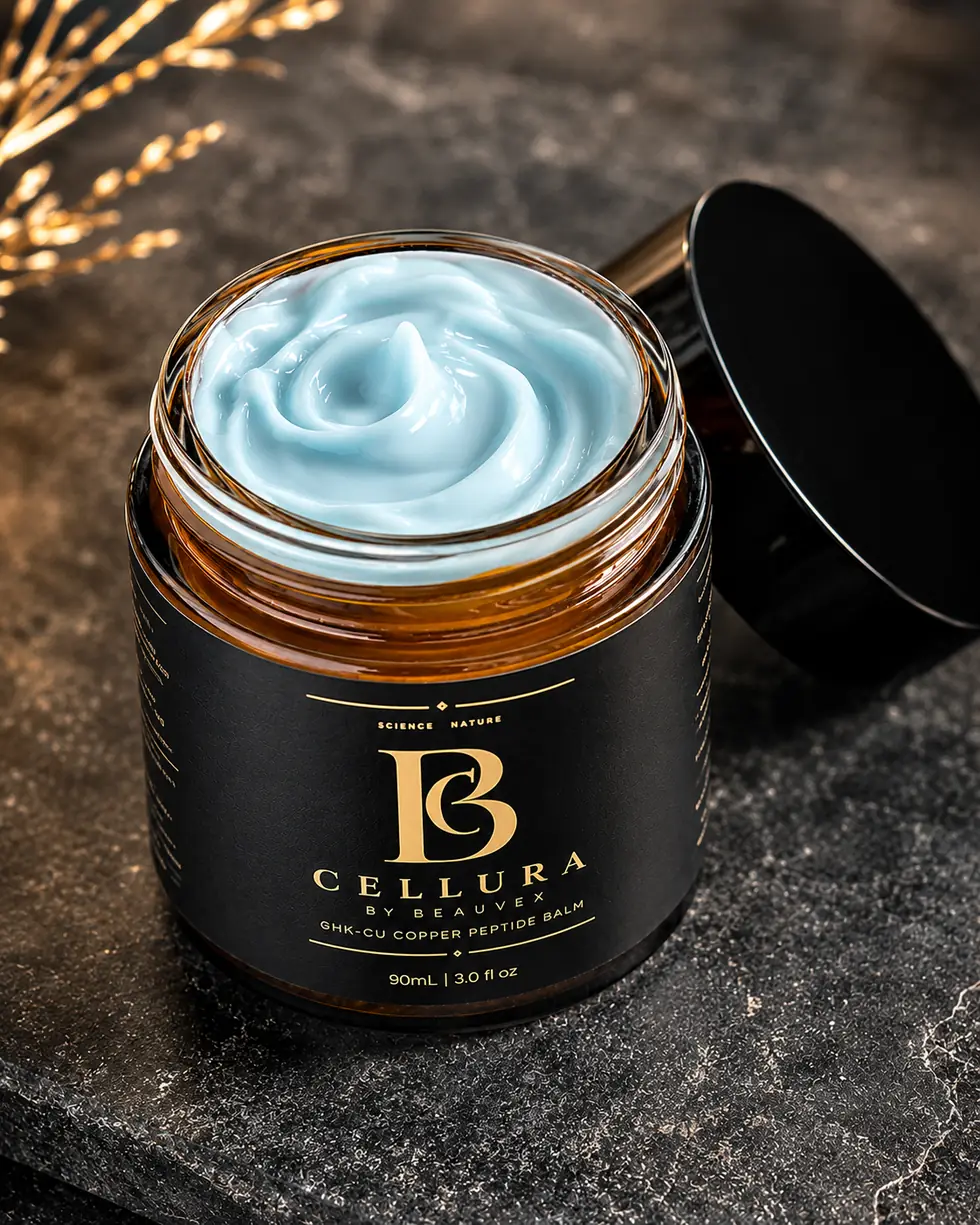
A balm can afford fewer actives than a serum, because the base is doing half the work. These six were chosen to hold each other up.
A copper tripeptide — glycyl-histidyl-lysine carrying a copper ion. Studied for skin repair and firmness.
Mostly oleic, stearic and palmitic acids. An occlusive that slows water loss — a different lipid profile from sebum, not a copy of it.
A humectant that pulls water into the outer layer. The manuka grade is what carries its antibacterial reputation.
A redox-active dye: antioxidant at low concentration, and the reason the balm is blue. It also stains.
Tocopherol. A lipid-phase antioxidant whose first job here is keeping the oils in the base from going rancid.
Hydrogenated squalene. An emollient that slows water loss without the weight of a heavier oil.
Ingredient descriptions are cosmetic only — nothing here is intended to diagnose, treat, cure or prevent any condition. Methylene blue is a pigment as well as an antioxidant: it can stain fabric, grout and light surfaces, so apply with clean hands and let it absorb before it meets a pillowcase.
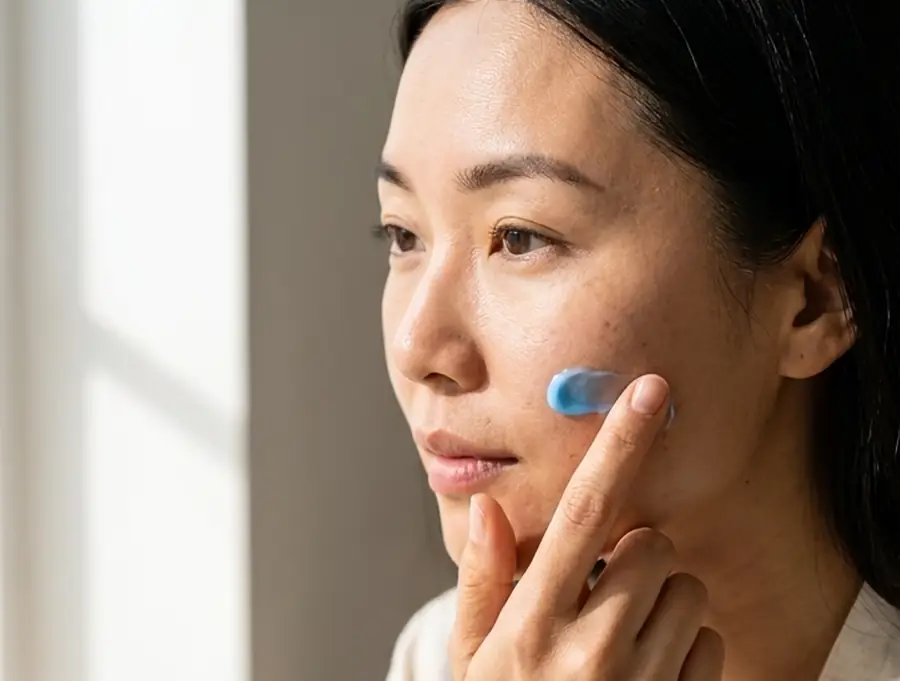
Two fingertips, warmed. Last step of the night, over everything else.
Night. Two fingertips. Over everything else.
Two that work in the morning, one that works while you sleep.
Pigment already at the surface has to complete its normal turnover, and nothing you apply meaningfully accelerates that. Overall clarity shifts first; discrete marks take longer because they are denser and often deeper. Eight to twelve weeks is the honest assessment window — every study we cite runs to at least eight.
Deeper pigmentation may not fully clear, regardless of ingredient.
Skin tolerance settles. If you are going to get irritation, it shows up here, not later.
Overall brightness shifts before any individual spot does. Most people notice it in photos, not the mirror.
Post-acne marks fade ahead of sun-related spots. Borders blur before the centre lightens.
Where older sun spots show real change, if the routine has been daily. Marks still visible here need more than a serum.
Sunscreen is not optional. Brightening actives slow pigment production; ultraviolet light triggers it. Used without daily broad-spectrum SPF you are running both at once, and UV usually wins. It is the single most common reason people conclude a product did nothing. We do not sell sunscreen — we are telling you anyway.
These timings describe a typical use pattern, not a guaranteed outcome. Results vary with skin type, how deep the discolouration sits, what caused it, and how consistently the serum is used. Cosmetic product — not intended to diagnose, treat, cure or prevent any condition.
Actives, one bottle
Added fragrance
Formulated pH
Roughly 10 weeks
Twelve weeks from today is a date on the calendar either way.