
Tallow balm can give very dry body skin rich, long-lasting moisture, but it is usually a poor fit for acne-prone, oily or sensitive facial skin. The same heavy occlusion that holds water in can also clog pores. Patch test on a small area first, and keep it to dry spots like elbows and heels.
TL;DR:
- A 2024 scoping review found tallow increases hydration, but moisturizers with glycerin or hyaluronic acid are more effective because tallow seals rather than adds moisture.
- Patch test a pea sized amount on your forearm or behind your ear, leave it on, and stop if redness, itching, burning, bumps, or swelling appears.
- Apply a thin layer to slightly damp body skin once or twice daily, focusing on your hands, elbows, knees, or heels.
- People with eczema, rosacea, active acne, or skin healing after a procedure should consult a clinician before trying tallow, since occlusion may worsen irritation.
- Choose fragrance free products with microbial or stability testing, storage guidance, and packaging that limits water exposure; discard balm if its smell or color changes.
Table of Contents
- What is tallow balm made of?
- What skin benefits can tallow balm realistically deliver?
- How do you use tallow balm safely?
- What are the risks of tallow balm?
- What do the research and experts say?
- How do you pick a safer tallow balm?
- Where we stand on tallow in skincare
- A barrier-support balm with every ingredient disclosed
- FAQ
- Sources
What is tallow balm made of?
Tallow balm is rendered beef fat, sometimes whipped or blended with other oils or butters to make it spreadable. Because its fats resemble the lipids found in human skin, it feels rich and sits on the surface rather than soaking in.
- Oleic acid: a monounsaturated fat that makes up a large share of tallow and gives it softness.
- Palmitic and stearic acids: saturated fats that give the balm its firm, waxy structure and help it form a protective film.
- Linoleic acid: present in smaller amounts, and one of the fats skin uses in its own barrier.
- Vitamins A, D, E and K: tallow carries trace amounts of these fat-soluble vitamins, but dermatology experts note there is not enough evidence that they reach the skin in a useful way from tallow.
That composition explains the behavior: lots of heavy fats, no water-binding ingredients. It seals moisture in but does not add any.
What skin benefits can tallow balm realistically deliver?
The most dependable benefit is immediate: a thick occlusive layer slows water loss, so rough skin looks plumper and feels softer soon after application. On very dry or cracked areas of the body, many people find that comfort worthwhile.
A 2024 scoping review found that tallow increases skin hydration, but it is generally less effective than moisturizers containing humectants such as glycerin or hyaluronic acid.
What the evidence supports, and where it thins out:
- Surface moisture: well supported as a short-term cosmetic effect, since occlusive fats reduce water evaporation.
- Barrier support for very dry body skin: plausible, and a small amount may be tolerated by people with very dry skin, according to a Scripps Clinic dermatologist.
- Antimicrobial or wound-healing effects: seen only in limited study contexts, including animal models, and not established for everyday use.
- Anti-aging or acne treatment: not proven. Tallow does not match retinoids or ceramide-based products for these goals.
If you are hoping tallow will fix wrinkles or breakouts, the research does not back that up. If you want an occlusive for rough heels, it can do the job.
How do you use tallow balm safely?
Start with a patch test, then keep your use small and targeted.
- Dab a pea-sized amount on your inner forearm or behind the ear.
- Leave it on without washing it off, and check for redness, itching, burning, bumps or swelling.
- If anything appears, stop and wash the area. If the patch stays calm, try a small amount on one dry body area.
- Apply a thin layer to slightly damp skin, such as right after a shower, so the balm seals in existing moisture.
- Use it once or twice a day on hands, elbows, knees and heels, and watch how your skin responds over a week.
Keep it away from your face unless you have non-acne, non-sensitive skin, and then use a very small amount on one area first. Our guide to tallow balm for the face goes deeper on that decision. A tallow balm maker’s walkthrough of patch testing is a useful second perspective, especially for eczema-prone skin.
Store balms with no preservatives in a cool, dry place, keep water out of the jar, and toss anything that smells rancid or changes color.
Pro Tip: Scoop with a clean spatula instead of your fingers, so bacteria and water from your hands never reach the jar.
What are the risks of tallow balm?
The biggest concern on the face is clogged pores. Dermatologists consistently describe tallow as comedogenic, and Tufts Medicine’s summary says it is highly comedogenic and may worsen acne. Natural labeling does not change that.
- Allergic reactions: many homemade and small-batch balms add essential oils to hide the smell, which raises the risk of allergic contact dermatitis.
- Contamination and spoilage: products without preservatives or microbial testing can grow bacteria or mold, especially when scooped with wet fingers.
- Weakened barriers: UCLA Health’s Dr. Delila Foulad cautions that tallow’s occlusive nature can compromise weakened skin barriers and may worsen inflammatory conditions such as eczema or psoriasis.
- Eczema claims: Children’s Hospital of Philadelphia notes the evidence for tallow treating eczema is limited, and that fatty acids like oleic acid can increase water loss in some models, which may worsen dryness.
If you have eczema, rosacea, active acne or skin recovering from a procedure, check with a clinician before trying it.
What do the research and experts say?
The picture is consistent across sources: tallow moisturizes, but the evidence for bigger claims is thin. The scoping review points to small studies and animal models, with few human trials and small sample sizes. Dermatologists quoted by NPR and Scripps stress that tested, fragrance-free alternatives are the safer choice for faces and chronic skin conditions.
Tallow’s popularity outpaces the science, and patients with chronic conditions should prioritize products with proven tolerability and safety profiles.
That is the position dermatologist Dr. Rajani Katta takes, and it fits what the research shows.
How do you pick a safer tallow balm?
Check a product against this list before you buy:
- Fragrance-free, with no added essential oils
- Properly rendered, with a clearly stated fat source
- A preservative system or clear storage and shelf-life guidance
- Evidence of microbial or stability testing
- Packaging that limits air and water, such as a tube or pump instead of an open jar
For faces and sensitive skin, humectant- and ceramide-based moisturizers, squalane, or dermatologist-recommended barrier ointments are better supported. Our skin barrier repair routine covers an evidence-based approach, and our comparison of petrolatum products helps if you only need an occlusive.
Pro Tip: Preservative-free balms last longer in the refrigerator, and a jar that smells sharp or like old oil should go in the trash.
Where we stand on tallow in skincare
We see tallow as a reasonable pick for limited body use, but not for the face or for chronic irritation and pigment concerns, where we favor barrier support. We also publish ingredient concentrations and research references for what we make, so you can judge a formula for yourself.
— Beauvex LLC
A barrier-support balm with every ingredient disclosed
If you want tallow-style comfort from a formulated product, our Cellura Balm — GHK-Cu Copper Peptide Balm supports the skin barrier with disclosed concentrations. Unlike raw tallow, it pairs its fats with GHK-Cu copper peptide and squalane.
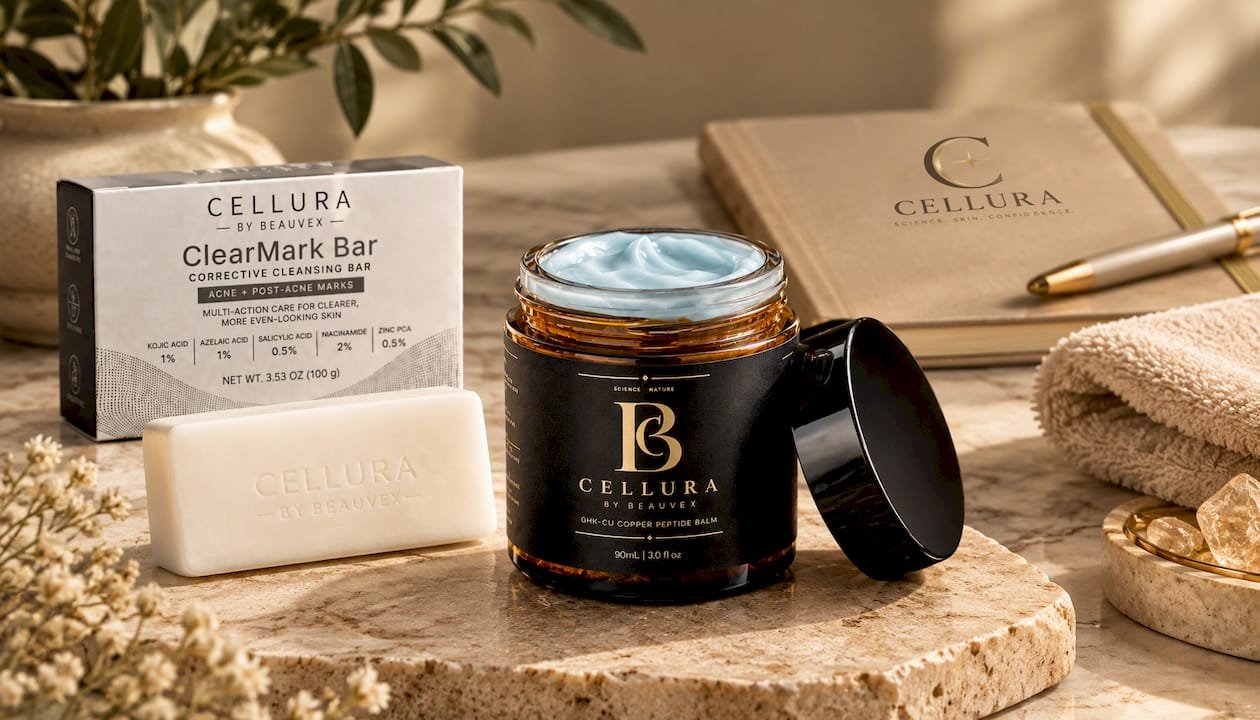
- Full ingredient concentrations listed on the product page
- Research references published for each active
- Part of the Cellura line, including the ClearMark Facial Cleansing Bar
Open the Cellura Balm page to read the formulation and references, then decide whether it fits your routine.
This article is general information, not a substitute for advice from a qualified doctor. Consult a qualified healthcare professional about your own circumstances before acting on anything here.
FAQ
Why are dermatologists wary of tallow on the face?
Tallow is heavily occlusive and often comedogenic, so it can clog pores and worsen breakouts. Dermatologists also point out that products are rarely tested for safety or contamination, and that fragrance additives raise allergy risk.
Can you use beef tallow on your face every day?
Most dermatologists advise against it, especially for acne-prone, oily or sensitive skin. If you want to try it, patch test first, use a very small amount, and stop at the first sign of irritation or new bumps.
Is tallow good for aging skin?
There is no good evidence that tallow reduces wrinkles. It can make skin look temporarily plumper by trapping moisture, but ingredients like retinoids and ceramides have far stronger support.
What are the disadvantages of tallow balm?
The main drawbacks are pore clogging, possible allergic reactions to added fragrance, and spoilage in untested products. It also lacks water-binding ingredients, so it moisturizes less effectively than humectant-based creams.
Sources
- Tallow, Rendered Animal Fat, and Its Biocompatibility With Skin: A Scoping Review – PMC
- What’s the deal with the beef tallow skincare trend? : NPR
- Beef Tallow in Skin Care: Safety, Benefits and Risks — Scripps Health
- Is beef tallow a good treatment for eczema? | Children’s Hospital of Philadelphia