
The fastest way to start repairing a damaged skin barrier is to stop everything that’s irritating it, switch to a gentle pH-friendly cleanser, apply a moisturizer built on ceramides plus a humectant, and wear sunscreen daily. Most people notice less stinging and flaking within one to two weeks, though full barrier restoration can take several weeks to a few months depending on how much damage occurred.
TL;DR:
- Using a gentle, pH-friendly cleanser and avoiding actives helps reduce irritation and supports the skin’s self-repair process.
- Restoring the lipid matrix with ceramide-rich moisturizers is crucial, as most people skip this step during barrier repair.
- Symptom relief can appear within one to two weeks, but fully repairing the barrier may take several weeks to months depending on damage severity.
- External factors like harsh cleansers, hot water, and environmental dryness significantly slow down the repair timeline and should be minimized.
- Stress and poor sleep directly impair barrier recovery by reducing lipid production and limiting overnight skin repair processes.
Table of Contents
- What Is the Skin Barrier and Why Does Repairing It Matter?
- How Can You Tell if Your Skin Barrier Is Damaged?
- What Causes Skin Barrier Damage in the First Place?
- How Do You Repair a Damaged Skin Barrier Step by Step?
- How Long Does Skin Barrier Repair Take?
- When Should You See a Dermatologist for Barrier Issues?
- Beauvex’s Three-Step Ritual: How to Apply It Safely
- Does Diet and Hydration Actually Affect Your Skin Barrier?
- Can Stress and Poor Sleep Slow Barrier Repair?
- What Are the Biggest Myths About Skin Barrier Repair?
- Clinician-Informed Fixes That Prevent Relapse
- Ready to Start Your Barrier Repair Routine?
- Sources
What Is the Skin Barrier and Why Does Repairing It Matter?
Dermatologists describe the outermost skin layer, the stratum corneum, using a “bricks and mortar” model. Corneocytes (dead, flattened skin cells) are the bricks. A lipid matrix composed of ceramides, cholesterol, and fatty acids acts as the mortar holding them together. When that mortar thins out, water escapes and irritants get in more easily.
The barrier actually works as four layers stacked together, and skin barrier repair means supporting all four:
- Physical layer: the corneocyte and lipid structure that blocks water loss and outside particles
- Chemical layer: the acid mantle, a slightly acidic surface film that keeps enzymes working properly
- Microbiologic layer: the resident bacteria and fungi that compete with harmful microbes for space
- Immunologic layer: immune cells in the epidermis that respond to threats before they spread
Disrupt the pH and you don’t just dry out skin. You throw off the enzymes that produce ceramides in the first place, which is why harsh, alkaline cleansers can quietly undermine barrier physiology even when skin looks fine on the surface.
How Can You Tell if Your Skin Barrier Is Damaged?
A compromised barrier tends to announce itself. Watch for these signs:
- Stinging or burning when you apply products that never used to bother you
- Persistent redness, especially across the cheeks or around the nose
- Flaking or rough patches that don’t respond to more moisturizer
- A tight, dehydrated feeling that returns within an hour of moisturizing
- New sensitivity to sun, wind, or fragrance
- Unexplained breakouts in skin that wasn’t previously acne-prone
One stinging product after retinol is localized irritation. Stinging from nearly everything, including plain water, signals broader barrier failure. If that’s you, stop layering actives immediately, skip anything with fragrance or alcohol, and hold off on exfoliation until the redness and flaking settle.
What Causes Skin Barrier Damage in the First Place?
Barrier damage rarely comes from one bad product. It’s usually cumulative:
- Harsh sulfate-based surfactants and alkaline bar soaps that strip lipids with every wash
- Hot water and long showers, which pull moisture out faster than lukewarm water
- Washing your face more than twice a day out of habit rather than need
- Stacking retinoids, AHAs, BHAs, and benzoyl peroxide in the same routine without spacing them out
- Cold, dry air or chlorinated pool water, both of which accelerate water loss
- Picking or popping blemishes, which creates literal breaks in the physical barrier
Repeated stripping overwhelms the stratum corneum’s own self-repair mechanisms before they get a chance to finish the job. That’s the pattern behind most “my skin suddenly can’t handle anything” complaints: it’s not one product, it’s a routine that never gave skin room to recover.
How Do You Repair a Damaged Skin Barrier Step by Step?
This is the part most routines get backward. People add serums to fix redness when the real fix is subtraction first, then targeted rebuilding.
- Pause every non-essential active. Retinoids, exfoliating acids, vitamin C at high strength, and anything with fragrance or denatured alcohol go on hold. This isn’t forever, just until symptoms calm down.
- Switch to a gentle, pH-friendly cleanser. A soap-free formula that doesn’t leave skin feeling tight preserves the acid mantle your skin needs for enzyme activity and microbiome balance. Cleanse once in the evening if mornings are calm; a splash of water is often enough.
- Layer in humectants. Glycerin and hyaluronic acid pull water into the surface layers and support your skin’s natural moisturizing factor. Apply to slightly damp skin so there’s water for them to grab.
- Replenish the lipid matrix. This is the step most people skip. Biomimetic moisturizers containing ceramides, cholesterol, and free fatty acids in ratios similar to healthy skin restore the actual mortar, not just surface hydration.
- Seal with an occlusive when water loss is high. If skin still feels tight or looks shiny-dry after moisturizer, a thicker balm or petrolatum-based product on top locks moisture in while lipid repair happens underneath.
- Protect daily. Broad-spectrum sunscreen every morning, and avoid the specific triggers you identified: hot showers, over-washing, harsh scrubs.
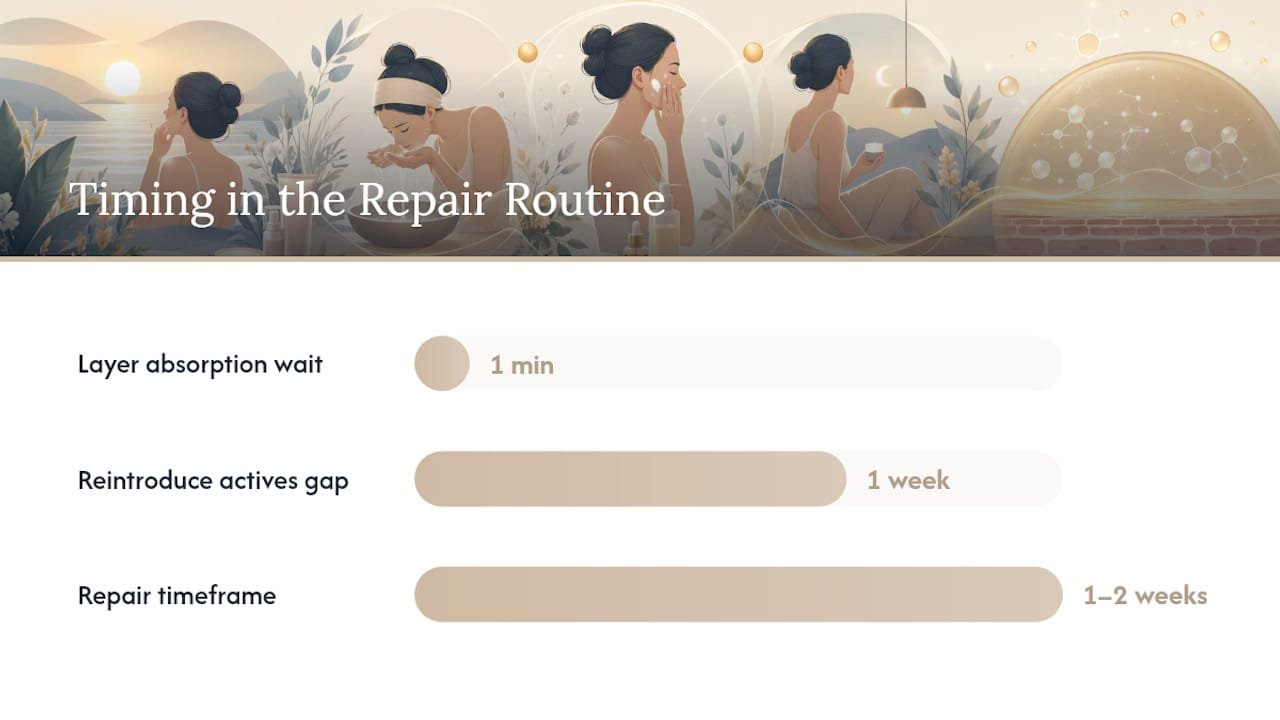
Pro Tip: Apply products thinnest to thickest, and give each layer sixty seconds to absorb before the next. Rushing the order is one of the most common reasons a barrier routine “doesn’t work.”
Reintroduce actives one at a time, roughly a week apart, and patch-test each new product on your inner forearm for several days before it touches your face.
How Long Does Skin Barrier Repair Take?
Symptomatic relief, meaning less stinging and visible flaking, often shows up within one to two weeks of consistent gentle care. Full structural repair is slower.
Clinical guidance points to a recovery window of several weeks up to three or four months for measurable barrier restoration, depending on how severe the damage was and how consistently you stick to the routine.
Age, existing skin conditions like eczema, and ongoing exposures (harsh weather, occupational hand washing) all slow the timeline. Track progress by how skin feels first, not just how it looks: fewer stinging episodes, less morning tightness, and longer stretches between flare-ups are the earliest reliable signals.
When Should You See a Dermatologist for Barrier Issues?
See a dermatologist if you notice signs of infection (warmth, pus, spreading redness), cracking that bleeds, inflammation that’s getting worse instead of better, or no improvement after several weeks of consistent gentle care. Clinicians may prescribe a short steroid course or recommend prescription barrier-repair devices for stubborn cases. Bring a list of every product you’ve used, roughly when symptoms started, and photos showing the progression.
Beauvex’s Three-Step Ritual: How to Apply It Safely
A barrier-first routine doesn’t mean skipping treatment forever. It means sequencing it correctly. This ritual follows the recommended order: cleanse, treat, seal.
- The ClearMark cleansing bar, formulated with salicylic, azelaic, and kojic acids, is designed to clear pores without overstripping when the bar itself is pH-balanced and used once daily during active repair.
- The Luminé Brightening Serum, with niacinamide and tranexamic acid, belongs later in the sequence, introduced only once stinging and flaking have resolved and after a seven-day patch test.
- The Cellura Balm, formulated with GHK-Cu copper peptide, squalane, and tallow, works as the occlusive final step for skin losing water fast, applied nightly while the lipid layer rebuilds underneath.
Exact ingredient concentrations and research behind each formula can help consumers decide whether a product is gentle enough for compromised skin.
Does Diet and Hydration Actually Affect Your Skin Barrier?
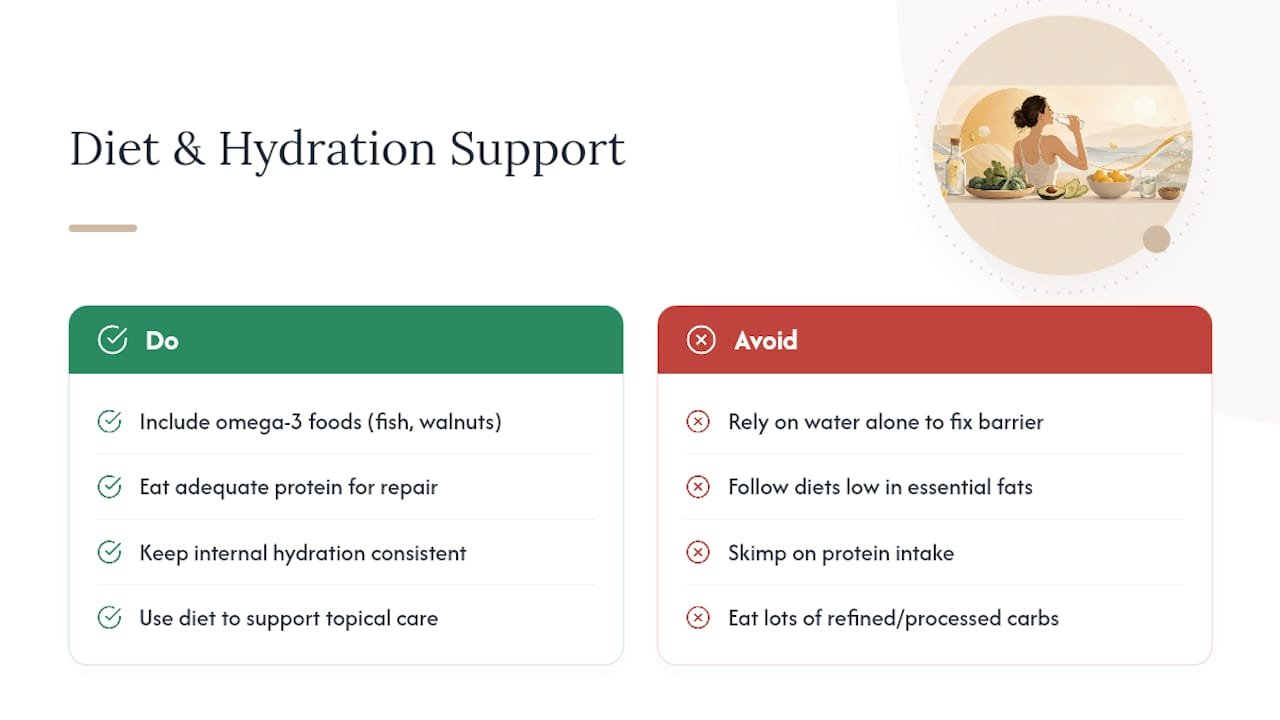
Drinking more water alone won’t rebuild ceramides, but chronic dehydration and poor nutrition do make barrier repair harder. Skin lipids come from dietary fat, so diets consistently low in essential fatty acids, particularly omega-3s found in fish, walnuts, and flaxseed, give your body less raw material to synthesize the ceramides and cholesterol your barrier needs.
Protein matters too. Corneocytes are held together partly by proteins like filaggrin, and inadequate protein intake can slow the skin’s ability to replace damaged cells on schedule. Sugar and highly processed foods don’t directly dissolve your barrier, but diets heavy in refined carbohydrates are linked to more systemic inflammation, which shows up in skin as slower healing and more reactive flare-ups.
Hydration works from the inside as one input among several, not a stand-alone fix. Skin cells need adequate water to function, but a dehydrated barrier is far more often the result of external water loss (through damaged lipids) than internal water shortage. That’s why a dehydrated-feeling face can exist in someone who drinks plenty of water: the problem is what’s letting the water escape, not how much you’re taking in. Treat diet and hydration as supporting factors that make topical repair work better and faster, not replacements for the cleanse-hydrate-seal routine itself.
Can Stress and Poor Sleep Slow Barrier Repair?
Yes, and the mechanism is more direct than most people assume. Elevated cortisol from chronic stress suppresses lipid synthesis in the epidermis, meaning your skin literally produces less of the ceramide and cholesterol mortar it needs while you’re stressed. That’s a measurable slowdown in the same repair process a good moisturizer is trying to support.
Sleep compounds the effect. Skin does much of its repair work overnight, including elevated blood flow and collagen production that don’t happen at the same rate during waking hours. Cut sleep short repeatedly and you’re shrinking the window your skin has to execute that repair, on top of whatever cortisol is already doing to lipid production.
The practical takeaway isn’t “fix your entire life to fix your skin.” It’s that a barrier routine will underperform if stress and sleep debt are constant. If your skin isn’t responding to a solid ceramide and humectant routine the way the timeline in this article suggests it should, look at whether sleep has been consistently short or stress has been chronically high before assuming the products are the problem.
What Are the Biggest Myths About Skin Barrier Repair?
The most persistent myth is that stinging or tingling means a product is “working.” It usually means the opposite: your barrier is compromised enough that ingredients are penetrating faster than they should, and that sensation is irritation, not efficacy.
A second myth is that more products speed up repair. Layering five serums onto compromised skin usually reintroduces the fragrance, alcohol, or active overload that caused the damage. Fewer products, applied consistently, outperform a crowded routine almost every time.
Third: “natural” or “clean” doesn’t automatically mean barrier-friendly. Essential oils and plant extracts marketed as gentle are common sensitizers, and a fragrance-free synthetic formula often does less damage than a botanical-heavy one.
Finally, many people believe occlusives like petrolatum “suffocate” skin or cause breakouts. Petrolatum is non-comedogenic and one of the best-studied ingredients for reducing water loss while lipid repair happens underneath. Skip it out of an outdated fear and you’re removing one of the more effective tools available.
Clinician-Informed Fixes That Prevent Relapse
Consistency beats novelty. Switching products every time skin looks slightly better is the fastest way back to square one. If symptoms return, don’t reach for a new serum: return to cleanse, hydrate, seal, protect, and reintroduce actives only after several calm days. Check frequency, order, and patch-test habits before blaming ingredients.
— Beauvex
Ready to Start Your Barrier Repair Routine?
This three-step ritual follows the sequence dermatology guidance recommends: cleanse gently, treat only once skin is stable, then seal. That’s a different starting point than routines built around whichever serum is trending, and it’s why the products publish their ingredient concentrations instead of asking you to take effectiveness on faith.
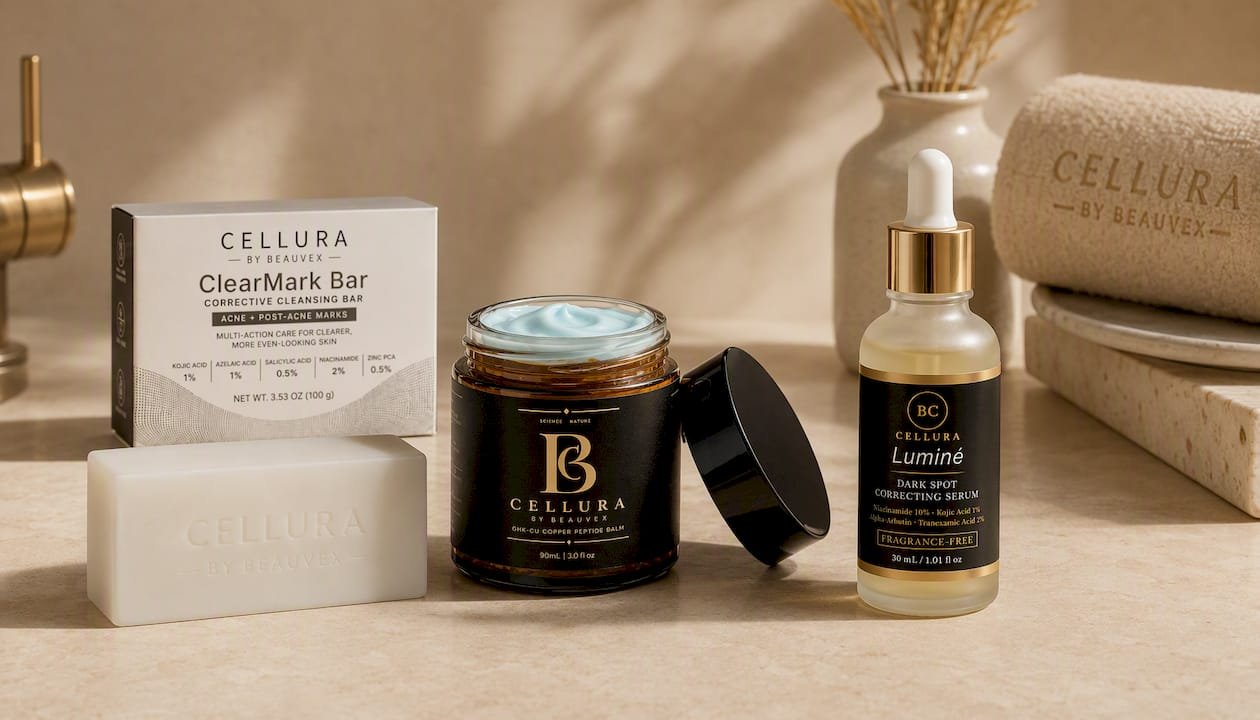
Start with the ClearMark cleansing bar each evening and the Cellura Balm nightly to rebuild your lipid layer. Run a seven-day patch test on your inner arm before either touches your face. Once stinging and flaking have settled for a week or two, introduce the Luminé Brightening Serum a few nights a week and watch how skin responds before increasing frequency.
Sources
For deeper reading beyond this guide: the PMC review on barrier physiology covers pH and enzyme function, the narrative review on barrier repair moisturizers details lipid-based formulations, and Cleveland Clinic’s barrier guide offers patient-facing symptom checklists.
This article is general information, not a substitute for advice from a qualified doctor. Consult a qualified healthcare professional about your own circumstances before acting on anything here.
- The Skin Barrier and Moisturization: Function, Disruption, and Mechanisms of Repair
- Skin 101: Understanding the fundamentals of skin barrier physiology
- Barrier repair moisturizers: role of components and clinical evidence (narrative review)
- How to tell if your skin barrier is damaged and what to do about it – Cleveland Clinic