
Tranexamic acid is the stronger pick for melasma and inflammation-driven dark spots, since it works on the vascular and inflammatory triggers behind those conditions. Alpha arbutin is gentler and better suited to superficial sun spots and long-term maintenance. Dermatology reviews on combination treatment back what most people discover on their own: pairing both actives in one routine, under daily broad-spectrum sunscreen, outperforms either ingredient used alone.
TL;DR:
- Tranexamic acid is most effective for melasma and inflammation-driven dark spots due to its ability to reduce vascular and inflammatory triggers.
- Alpha arbutin primarily targets surface melanin production, making it suitable for sun spots and long-term maintenance on sensitive skin.
- Combining both actives in a routine under broad-spectrum sunscreen outperforms using either ingredient alone for better results.
- Formulation quality, ingredient concentration, and proper delivery methods significantly influence real-world effectiveness over ingredient choice alone.
- Prioritizing sunscreen with visible-light protection is crucial, as UV filters alone do not sufficiently prevent melasma recurrence or dark spot formation.
Table of Contents
- Why Melasma and Post-Acne Dark Spots Need Different Approaches
- How Tranexamic Acid Works, and What the Evidence Shows
- What Alpha Arbutin Does and Who It Actually Suits
- Tranexamic Acid vs Alpha Arbutin: A Side-by-Side Comparison
- How to Layer Tranexamic Acid and Alpha Arbutin Safely
- Where Beauvex’s Formulas Fit This Framework
- What to Do Next If You’re Choosing Between These Actives
- What Most Guides Get Wrong About This Comparison
- A Multi-Active Serum Built Around This Exact Comparison
- Sources
Why Melasma and Post-Acne Dark Spots Need Different Approaches
Melasma and post-inflammatory hyperpigmentation (PIH) look similar on the surface, but they start from different places in the skin, which is exactly why one ingredient rarely fixes both equally well.
Melasma has a hormonal and vascular backbone. Estrogen fluctuations, sun exposure, and even visible light activate blood vessel signaling under the skin, which then pushes melanocytes into overdrive. DermNet NZ describes melasma as having both hormonal and vascular drivers, which is why sun and visible-light protection sit at the center of any treatment plan, not on the sidelines.
PIH works differently. It typically follows an injury, most often acne, where inflammation itself triggers melanocytes to overproduce pigment in the affected spot. The damage tends to sit closer to the surface, which is part of why PIH sometimes fades on its own, while melasma often does not.
The distinction matters for ingredient choice:
- Melasma responds better to actives that interrupt inflammation and vascular signaling upstream, before pigment production ramps up.
- PIH often responds to actives that block the pigment-producing enzyme downstream, since the trigger event has usually already passed.
- Treating the wrong mechanism can mean months of a product doing very little, even at a strong concentration.
How Tranexamic Acid Works, and What the Evidence Shows
Tranexamic acid (TXA) interrupts the plasmin pathway, which normally amplifies inflammation and vascular activity in skin exposed to UV light or hormonal shifts. By calming that pathway, TXA reduces the upstream signals that push melanocytes to overproduce pigment, making it especially useful for melasma and for post-acne marks tied to visible redness or inflammation.
Quick fact: Clinical formulations of topical tranexamic acid commonly land in the 2% to 5% range, and trials at these concentrations show measurable improvement in melasma, usually becoming visible within four to eight weeks of consistent use.
Formulation is where things get complicated. TXA is highly hydrophilic, meaning it does not cross the skin’s oily outer layer easily on its own. Formulators typically rely on penetration enhancers like propylene glycol or DMI, or encapsulate the molecule in liposomes, to get meaningful amounts past the stratum corneum. A product listing 5% TXA in a poorly designed vehicle can underperform a 3% version built with real delivery science behind it, which is worth remembering before choosing a product on concentration alone.
Safety-wise, topical TXA is generally well tolerated, with mild irritation being the most common complaint. Because tranexamic acid has documented anti-clotting effects when taken orally, anyone pregnant, breastfeeding, or with a personal or family history of clotting disorders should get medical clearance before starting it topically, even though systemic absorption from skin application is low. Research on TXA’s role in acne-related PIH is supportive but still lacks the volume of large head-to-head trials that would settle the question definitively.
Before buying any TXA product, check for:
- An explicit percentage on the label or ingredient page, not just “contains tranexamic acid”
- A vehicle description mentioning penetration enhancers or encapsulation technology
- Supporting actives like niacinamide that reinforce the barrier while TXA works
For a deeper look at how TXA performs across different skin concerns, this guide to tranexamic acid for hyperpigmentation breaks down the mechanism further.
What Alpha Arbutin Does and Who It Actually Suits
Alpha arbutin works downstream, directly inhibiting tyrosinase, the enzyme responsible for converting tyrosine into melanin. Less enzyme activity means less new pigment gets made, which makes alpha arbutin for skin concerns centered on surface-level, sun-driven spots a logical fit rather than a universal fix.
The Scientific Committee on Consumer Safety has assessed alpha arbutin as safe in face creams up to 2%, giving formulators and shoppers a clear ceiling to check labels against.
Results build slowly. Because alpha arbutin only slows new pigment production rather than addressing existing inflammation, visible fading in finished formulas often takes six to twelve weeks, longer for stubborn spots that have been present for years.
A few practical checks matter more than people expect:
- Confirm the INCI list says “alpha-arbutin” specifically, since some products list plain “arbutin” without specifying the isomer, and that ambiguity affects both potency and how the ingredient breaks down in skin.
- Skip products stacking multiple tyrosinase inhibitors at redundant concentrations, since layering several weak versions of the same mechanism rarely beats one well-dosed active.
- Watch for mild irritation, though alpha arbutin is one of the better-tolerated brightening actives on the market.
Alpha arbutin earns its place for people with sensitive skin who cannot tolerate stronger actives, for maintaining results after melasma has improved, or for treating mild sun-related spots that never involved much inflammation. If you’re wondering what alpha arbutin serum actually does over time, that timeline context helps set realistic expectations before you commit to a bottle.
Tranexamic Acid vs Alpha Arbutin: A Side-by-Side Comparison
Choosing between kojic acid vs tranexamic acid, or deciding whether alpha arbutin vs kojic acid fits your skin better, usually comes down to the same core question this table answers for TXA and alpha arbutin: what mechanism does your pigmentation actually need addressed?
| Factor | Tranexamic Acid | Alpha Arbutin |
|---|---|---|
| Primary mechanism | Inhibits plasmin, reducing inflammation and vascular pigment triggers | Inhibits tyrosinase, reducing new melanin production |
| Best for | Melasma, inflammation-driven PIH, recurrence prevention | Surface sun spots, sensitive skin, maintenance |
| Typical concentration | 2% to 5% | 1% to 2% |
| Onset of visible results | 4 weeks | 6 weeks |
| Irritation/photosensitivity risk | Low to moderate; caution with clotting history | Low |
| Routine role | Often evening, targets active pigmentation | Often morning, supports maintenance |
Three quick profiles make this easier to apply. A reader dealing with active melasma, especially with visible redness or a hormonal trigger like pregnancy or birth control, should prioritize tranexamic acid and treat sunscreen as non-negotiable. A reader working through post-acne dark spots benefits from TXA’s anti-inflammatory angle paired with a gentler downstream active. A reader who has already faded most of their pigmentation and just wants to hold the results steady is better served by alpha arbutin alone, since it is milder and easier to use indefinitely.
None of this works, though, if the finished product does not deliver the ingredient. A clinical analysis of topical actives makes the point plainly: vehicle, pH, and confirmed concentration decide real-world performance more than the ingredient name on the front of the bottle.
How to Layer Tranexamic Acid and Alpha Arbutin Safely
Building both actives into one routine takes some sequencing, but the payoff is worth the extra ten minutes of care.
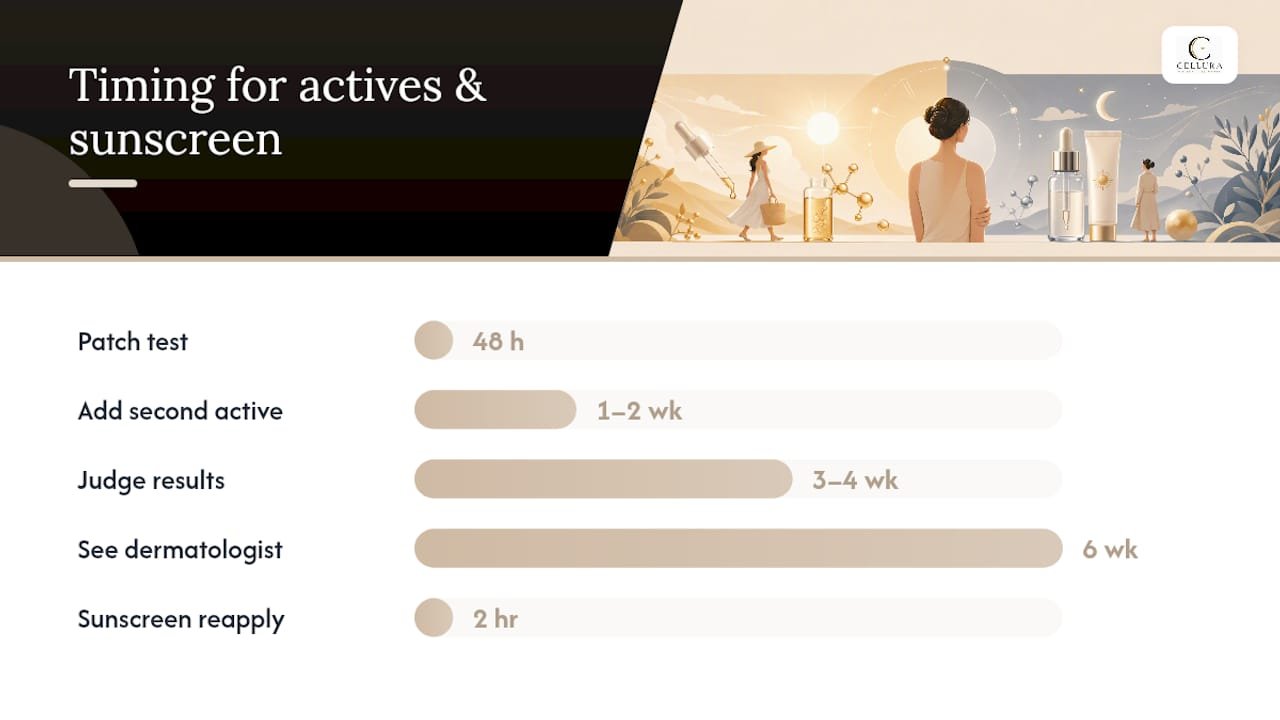
- Introduce one active at a time. Start with whichever ingredient targets your primary concern, wear it for one to two weeks, and only then add the second.
- Patch test on your inner forearm for 48 hours before applying either active to your face, especially if you have reactive or eczema-prone skin.
- Place alpha arbutin in the morning since it works on preventing new pigment during the day, and save tranexamic acid for the evening, when it can work alongside your skin’s overnight repair cycle.
- Ramp up frequency gradually, from every other night to nightly, watching for redness or excess dryness.
- Pair with a broad-spectrum sunscreen that includes iron oxides, since visible light contributes to melasma and standard UV filters alone do not block it.
- Reapply sunscreen every two hours if you’re outdoors, and treat this step as more important than either active you’re using.
Pro Tip: If your skin looks temporarily darker in the first two weeks of starting tranexamic acid or alpha arbutin, don’t panic. It’s often a sign of increased cell turnover pushing existing pigment to the surface before it sheds. Give it three to four weeks before judging results, and see a dermatologist if darkening persists past six weeks or comes with real irritation.
Avoid combining either active with strong exfoliating acids or retinoids on the same night when you’re first introducing them. For a full sequencing breakdown, this guide to applying skincare products in order covers where actives like these fit relative to moisturizer and sunscreen.
Where Beauvex’s Formulas Fit This Framework
Beauvex LLC built its three-step ritual, cleanse, treat, support, around the idea that finished-formula transparency matters more than ingredient buzzwords. The products are described with a focus on transparency regarding active ingredients, supporting a more informed application of the skincare routine.
The Cellura Luminé Brightening Serum combines niacinamide, tranexamic acid, and alpha arbutin in a single multi-active formula, pairing TXA’s anti-inflammatory action with alpha arbutin’s tyrosinase inhibition rather than asking you to choose one mechanism over the other.
Before buying, check the product page for details such as the presence of key ingredients, formulation information, and usage directions.
This formula is suitable for individuals looking for a multi-active brightening serum as part of their skincare routine.
What to Do Next If You’re Choosing Between These Actives
If you’re only treating one condition, favor tranexamic acid for melasma and reserve alpha arbutin for surface spots or maintenance once things have calmed down. If you want the most efficient routine, a combination formula under daily sunscreen beats either active running solo.
Before purchasing anything, confirm the label lists exact concentrations and a real vehicle strategy, not just an ingredient name. If melasma has resisted treatment for months, or dark spots keep recurring despite consistent use, a dermatologist visit is worth more than another product swap.
What Most Guides Get Wrong About This Comparison
Most articles comparing tranexamic acid vs alpha arbutin treat it like a boxing match, one ingredient has to win. That framing misses what the dermatological literature actually supports: melasma is multi-factorial, and treating it from a single angle tends to produce partial, fragile results that relapse the moment sun exposure increases.
The overrated variable in most buying decisions is concentration percentage in isolation. A 5% tranexamic acid serum in a formula with no penetration strategy can underperform a well-built 3% version, yet shoppers keep chasing the higher number. Vehicle and delivery science deserve at least as much attention as the number on the label.
What we’d prioritize first, before ingredient percentages, before routine sequencing, is sunscreen with visible-light protection. Skip that step and even a perfectly formulated combination product is fighting an uphill battle against fresh UV and visible-light triggers every single day. Get that right, then build the rest of the routine around it.
— Beauvex LLC
A Multi-Active Serum Built Around This Exact Comparison
Instead of choosing between tranexamic acid and alpha arbutin, the Cellura Luminé Brightening Serum puts both to work in one bottle, alongside niacinamide, so you get the upstream anti-inflammatory action and the downstream pigment-blocking effect without managing two separate products or guessing at layering order.

Pair it with the Cellura ClearMark Bar, formulated with salicylic, azelaic, and kojic acid, for a complete cleanse-and-treat routine aimed at post-acne dark spots. Before adding either to your cart, check the product page for the confirmed percentage of each active and the directions for morning versus evening use, exactly the checklist covered above. If you’re ready to see how the concentrations and formulation notes stack up, view the full product details and current bundle options on the Luminé Serum page now.
This article is general information, not a substitute for advice from a qualified doctor. Consult a qualified healthcare professional about your own circumstances before acting on anything here.
Sources
- Safety assessment of alpha-arbutin (SCCS/related literature) on PubMed
- DermNet NZ — Melasma
- Tranexamic Acid vs Alpha Arbutin | ProtoClinical