
The safest first move for sensitive skin hyperpigmentation is a conservative daily routine, not a new active, start with a fragrance-free cleanser, a barrier-repairing moisturizer, and a mineral SPF, ideally tinted with iron oxide, and let your skin calm for about two weeks. Add one gentle active such as niacinamide or azelaic acid afterward, patch-testing first. Expect early signs of fading within 4 to 8 weeks, with fuller results closer to 12 weeks, and hold off on lasers or peels until a simple topical plan has had its chance.
TL;DR:
- A gentle, non-irritating routine should be maintained for at least two weeks before introducing active ingredients for hyperpigmentation.
- Topical actives like niacinamide and azelaic acid are tolerated well when introduced gradually, with waiting periods of one week between new products.
- Improvement in pigmentation typically begins within four to eight weeks, with significant changes seen after 12 to 16 weeks of consistent treatment.
- Deep-seated dermal pigment is resistant to topicals and may require dermatologist evaluation and in-office procedures for meaningful results.
- Sun protection, stress management, and avoiding unnecessary inflammation are crucial for supporting topical treatment and preventing further darkening.
Table of Contents
- Why sensitive skin changes how you treat dark spots
- A minimal daily routine that calms skin first
- Choosing a gentle active and introducing it safely
- What to expect week by week, and when to adjust
- When procedures make sense, and when to see a dermatologist
- How diet and lifestyle habits factor into dark spots
- Telling hyperpigmentation apart from look-alike conditions
- Non-topical options that skip aggressive procedures
- A ready-made option that fits the gentle approach
- Why patience beats speed for sensitive skin
- FAQ
- Sources
Why sensitive skin changes how you treat dark spots
Not all hyperpigmentation sits at the same depth, and depth determines what actually works. Epidermal pigment, sitting in the skin’s outer layer, tends to respond well to topical actives. Dermal pigment, pushed deeper by chronic inflammation or melasma, resists topicals and often needs a dermatologist’s evaluation with tools like a Wood’s lamp or dermatoscope to confirm what you’re dealing with.
For reactive or sensitized skin, the bigger issue is usually postinflammatory hyperpigmentation (PIH), which forms as a direct consequence of irritation, breakouts, or barrier damage. That means the fastest way to prevent new dark spots is often simply to stop provoking inflammation in the first place.
- Epidermal pigment (surface-level) generally fades faster with gentle topicals.
- Dermal pigment sits deeper and resists most over-the-counter treatments.
- PIH is triggered by prior inflammation, so calming the skin barrier is itself a treatment.
- A dermatologist can use a Wood’s lamp or dermatoscope to assess pigment depth before you commit to a plan.
A minimal daily routine that calms skin first
Before adding any brightening active, your skin needs a stable baseline. This is the part people skip, and it’s usually why treatments fail or backfire into more irritation and more pigment.
Start with a fragrance-free, nonstripping cleanser used morning and night. Skip anything that foams aggressively or leaves skin feeling tight. Follow with a barrier moisturizer built around ceramides, glycerin, and lipids, and avoid common sensitizers like fragrance or essential oils, which can trigger the exact inflammation that causes PIH. During the day, mineral sunscreen with zinc oxide or titanium dioxide at SPF 30 or higher is non-negotiable, and a tinted version with iron oxide offers an edge because it also blocks visible light, a driver of pigment that plain mineral SPF doesn’t fully address.
- Cleanse with a fragrance-free, nonstripping formula twice daily.
- Moisturize with ceramides and humectants, skipping fragrance and essential oils.
- Apply mineral SPF 30+ every morning, choosing a tinted iron oxide formula when possible.
- Hold this routine alone for at least two weeks before introducing any active.
Pro Tip: If your skin still looks slightly pink or feels tight after two weeks on this baseline, give it another week before adding anything new.
Choosing a gentle active and introducing it safely
Once your skin has settled, pick one active and move slowly. Layering several brightening ingredients at once is a common reason sensitive skin flares, which then creates more PIH instead of fading it.
Niacinamide is usually the gentlest entry point, and a concentration around 5% is a reasonable starting dose for sensitive skin. Azelaic acid is a strong alternative with both anti-inflammatory and pigment-reducing effects, and it’s generally well tolerated, though very reactive skin can still feel some stinging. Tranexamic acid and cysteamine have solid clinical support as pigment-fading agents, and cysteamine in particular benefits from a short-contact approach, applying it for about 15 minutes before rinsing, which reduces irritation while preserving results. If you want gentle exfoliation, low-strength mandelic acid is kinder to a reactive barrier than glycolic or lactic acid at higher concentrations.
- Niacinamide: start around 5%, well tolerated by most sensitive skin.
- Azelaic acid: anti-inflammatory and pigment-reducing, occasional stinging possible.
- Tranexamic acid and cysteamine: strong evidence base; cysteamine works well with short-contact use.
- Mandelic acid: the gentlest common exfoliant if you need one at all.
A gel serum combining tranexamic acid, niacinamide, and hydroxy acids showed measurable reductions in brown spots and melanin index after about four weeks, with sustained results through nearly three months and very good tolerability, according to a 2024 clinical study.
Before committing to any new active, patch-test on your inner forearm for 24 to 48 hours. For stronger agents, use the short-contact method: apply for 15 to 30 minutes, then rinse, and extend wear time only once your skin shows no reaction over several uses.
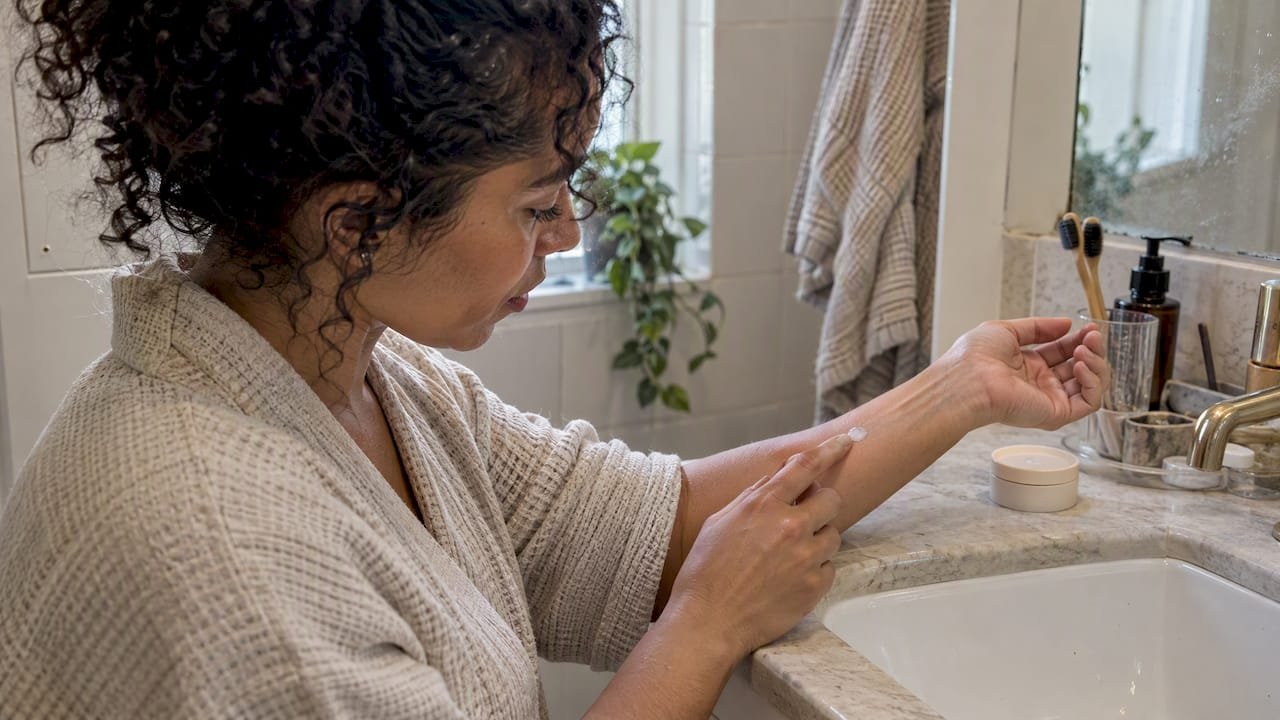
Pro Tip: Introduce one new active at a time and wait at least a week before judging whether it’s working or irritating.
What to expect week by week, and when to adjust
Patience matters more than most people assume with pigment correction. Visible fading rarely happens overnight, and treating too aggressively too early is the most common way sensitive skin ends up with more discoloration, not less.
- Weeks 4 to 8: early improvement is realistic for many gentle topical regimens, based on clinical timeline reviews.
- Weeks 12 to 16: this is where controlled studies typically confirm statistically significant pigment reduction, so it’s a fair checkpoint for your own results.
- Throughout: photograph the same target spot in the same lighting every one to two weeks rather than judging by memory.
- At week 12: if you see no change, or your skin looks worse than when you started, that’s the signal to stop self-treating and get a dermatologist’s opinion.
When procedures make sense, and when to see a dermatologist
Lasers and chemical peels are often marketed as fast fixes, but for sensitive skin they carry a real risk of making pigment worse. Current EADV guidance recommends prioritizing topical depigmenting agents and treating aggressive procedures as a second-line option specifically because reactive skin can respond to injury with paradoxical, deeper pigmentation.
That doesn’t mean procedures are off the table forever. Once a topical routine has calmed your skin and controlled pigment to some degree, an experienced provider might consider controlled chemical peels, microneedling, or selective laser treatments as a next step.
- See a dermatologist if pigment worsens after a cautious, well-tolerated topical routine.
- Seek care for flares that don’t heal or that spread beyond the original area.
- Get evaluated if symptoms suggest rosacea, eczema, or dermatitis rather than simple pigment, since these need their own medical treatment.
How diet and lifestyle habits factor into dark spots
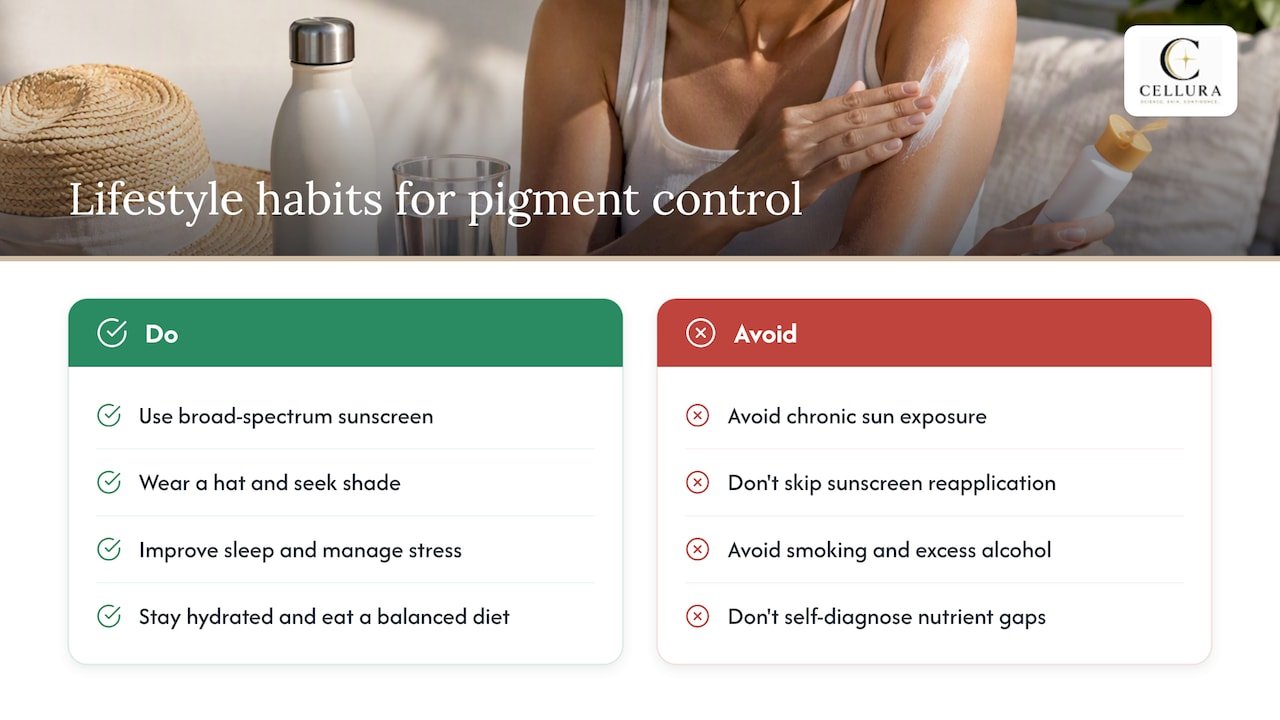
What you eat and how you live doesn’t replace a topical routine, but a few habits can make pigment control easier or harder. Chronic sun exposure is the most direct lifestyle driver of new pigment, so habits like wearing a hat, seeking shade during peak hours, and reapplying sunscreen matter as much as the product you choose. Sleep quality and stress also play into how reactive your skin is day to day: poor sleep and high stress are commonly linked to more visible inflammation, which, as covered above, is often the direct trigger for new postinflammatory pigment in sensitive skin.
Smoking and high alcohol intake are generally associated with slower skin healing and more visible inflammation, both of which can work against a fading routine. On the positive side, a diet with adequate hydration and a reasonably balanced intake of vitamins and antioxidants supports general skin repair, though no specific food reliably fades existing dark spots on its own. If you suspect a nutrient gap is affecting your skin, that’s a conversation for a doctor rather than a guess, since self-diagnosing deficiencies from skin appearance alone is unreliable.
The practical takeaway is to treat lifestyle as a supporting layer around your topical routine, not a substitute for it. Sun protection, stress management, and basic sleep hygiene reduce the odds of new inflammation-triggered spots forming while your existing pigment fades.
Telling hyperpigmentation apart from look-alike conditions
Not every dark or discolored patch on sensitive skin is hyperpigmentation, and treating the wrong condition with brightening actives can make things worse. Melasma, for instance, often appears as more symmetrical, blotchy patches on the face and is driven by hormonal and sun triggers rather than a single inflammatory event, which is why it sometimes needs a different, more cautious approach than simple post-acne marks.
Conditions like rosacea or eczema can also mimic pigment changes, especially post-inflammatory redness that lingers and looks brownish on deeper skin tones. The difference usually comes down to texture and history: true hyperpigmentation is typically flat and tied to a clear prior injury or breakout, while rosacea tends to come with visible redness, bumps, or flushing, and eczema usually brings dryness, scaling, or itch alongside the discoloration.
If you’re not sure which you’re looking at, or if a patch comes with itching, scaling, or visible bumps rather than a flat tone change, that’s worth a dermatologist visit before you start layering actives meant for pigment alone.
Non-topical options that skip aggressive procedures
For readers who want to do more than wait but aren’t ready for lasers or peels, a few non-aggressive tools exist as a middle ground. LED light therapy, particularly red and near-infrared wavelengths, is sometimes used to support skin healing and calm inflammation without the downtime or irritation risk of a procedural treatment, making it a reasonable adjunct for reactive skin.
Low-level or cold laser devices, distinct from the ablative or resurfacing lasers used for aggressive pigment correction, are another gentler category some providers use to support skin repair. These tools are generally positioned as supportive rather than primary pigment treatments, and they work best alongside, not instead of, a solid topical routine and daily sun protection.
None of these replace the basics. A calm barrier, consistent mineral SPF, and one well-chosen topical active will do more for most sensitive-skin hyperpigmentation than an occasional LED session, but they’re a reasonable option if you want a non-irritating addition to your routine.
A ready-made option that fits the gentle approach
If you’d rather not build a multi-active routine from scratch, Cellura Luminé Brightening Serum combines niacinamide, tranexamic acid, and alpha-arbutin in one formula, the same category of actives covered above for gentle pigment correction. This serum is accompanied by ingredient information and research references to help you understand what you’re applying rather than guessing from a marketing label.
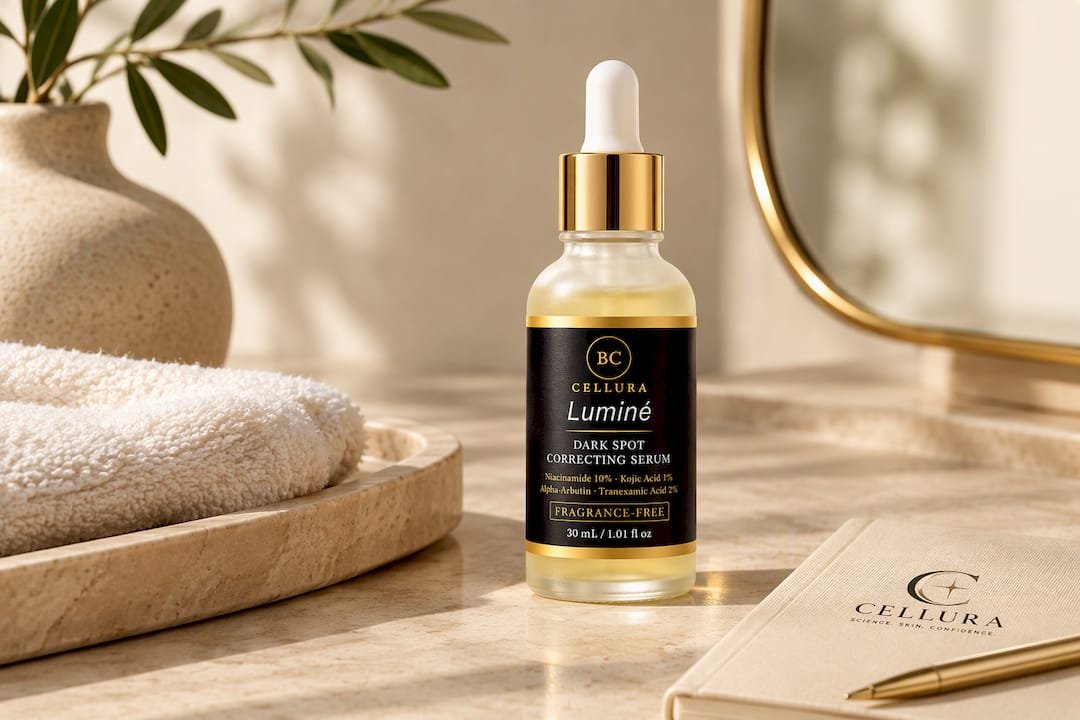
We recommend introducing it the same way you’d introduce any new active: patch-test for 24 to 48 hours, start with short, infrequent applications, and pair it with a barrier-supporting moisturizer and mineral SPF during the day. For a full three-step approach, cleansing, treatment, and barrier support, the complete Cellura line is built around that same sequence.
| Step | Purpose | Product type |
|---|---|---|
| Cleanse | Remove buildup without stripping the barrier | Gentle cleansing bar |
| Treat | Target pigment with multimodal actives | Luminé Brightening Serum |
| Protect | Support barrier recovery | Barrier balm |
Pro Tip: Apply Luminé after cleansing on fully dry skin, then follow with a barrier moisturizer to buffer any initial sensitivity.
Clinical trials on multimodal tranexamic acid and niacinamide formulas report statistically significant pigment reduction with good tolerability over 16 weeks, a timeline worth keeping in mind as you evaluate any serum, including this one, against published evidence.
Start with the Cellura Luminé Serum on its own, or explore the full ritual on our Cellura product page.
Why patience beats speed for sensitive skin
Most people treating hyperpigmentation want faster results than their skin can safely deliver, and that mismatch is what causes more damage than the original dark spot ever did. A calm barrier and a realistic 12-week horizon consistently outperform aggressive, stacked routines on reactive skin. When pigment doesn’t respond, or when your skin reacts in ways that don’t match a simple post-acne mark, a dermatologist’s input is worth more than another product.
— Beauvex LLC
FAQ
How do you treat hyperpigmentation on sensitive skin?
Start with a fragrance-free cleanser, barrier moisturizer, and daily mineral sunscreen, then add one gentle active like niacinamide or azelaic acid after your skin has calmed for about two weeks. Patch-test any new active first and watch for early improvement around 4 to 8 weeks.
What fades hyperpigmentation the fastest without irritation?
Multimodal topical formulas combining tranexamic acid and niacinamide have shown statistically significant pigment reduction with good tolerability in clinical trials. Short-contact application of stronger actives like cysteamine can also speed results while limiting irritation risk.
What vitamin deficiency is linked to excessive hyperpigmentation?
Hyperpigmentation is far more often caused by sun exposure, inflammation, or hormonal triggers than by a single nutrient gap, so there’s no reliable vitamin test based on skin appearance alone. If you suspect a deficiency, a doctor can check with bloodwork rather than guesswork.
Are Korean skincare methods effective for fading hyperpigmentation?
Many Korean skincare routines emphasize the same principles covered here: layered hydration, consistent sun protection, and gradual introduction of brightening actives like niacinamide. There’s no single technique unique to one region that outperforms a barrier-first, evidence-based routine for sensitive skin.
Sources
- Management of Melanin Hyperpigmentation Disorders — EADV guideline (Medscape reference)
- Clinical timelines for topical treatments (PubMed indexed review)
- Hyperpigmentation: Looking beyond hydroquinone — Journal of Cosmetic Dermatology (2022/2023)
- Efficacy and tolerability of a depigmenting gel serum comprising tranexamic acid, niacinamide and hydroxy acids (2024)