The debate over niacinamide vs vitamin C for dark spots comes down to one thing: the two ingredients fade pigment by different mechanisms, so the better choice depends on what caused your dark spots and how reactive your skin is. Both are well-studied, widely available, and useful — but they are not interchangeable.
How Niacinamide Works on Dark Spots
Niacinamide is a form of vitamin B3. Rather than blocking pigment production at the source, it interferes with the transfer of melanosomes — the little packets of pigment — from melanocytes into the surface skin cells where you actually see them. Less pigment reaching the surface means marks look lighter over time.
Research published in the British Journal of Dermatology found that a 5% niacinamide formula reduced the appearance of hyperpigmentation over an eight-week period. Niacinamide also supports the skin barrier, helps calm visible redness, and helps regulate the look of oil — which matters, because a lot of dark spots are the aftermath of inflammation rather than sun exposure.
Practically speaking, niacinamide is the low-drama option. It is stable, does not need a low pH to work, does not oxidise in the bottle, and is generally well tolerated even by sensitive skin.
How Vitamin C Works on Dark Spots
Vitamin C — usually L-ascorbic acid — works further upstream. It inhibits tyrosinase, the enzyme that kicks off melanin synthesis, so less pigment gets made in the first place. It is also a potent antioxidant, which helps defend skin against the free-radical damage that drives new sun spots, and it plays a role in collagen support.
Vitamin C tends to deliver a visible overall brightening effect somewhat faster than niacinamide, particularly on surface-level sun-induced pigmentation and general dullness. The trade-offs are real, though: L-ascorbic acid is notoriously unstable, oxidises on exposure to air and light (that is the yellow-brown bottle everyone recognises), needs an acidic pH to stay effective, and can sting or flush reactive skin.
Niacinamide vs Vitamin C for Dark Spots: Side by Side
The table below sets out niacinamide vs vitamin C for dark spots across the factors that actually change your result: mechanism, realistic timeline, tolerability and formula stability.
| Niacinamide | Vitamin C (L-ascorbic acid) | |
|---|---|---|
| Main action | Blocks pigment transfer to surface cells | Inhibits tyrosinase, slowing pigment production |
| Typical timeline | Around 8-12 weeks of consistent use | Often visible brightening in 4-8 weeks |
| Best suited to | Post-acne marks, redness-prone and sensitive skin | Sun spots, dullness, antioxidant defence |
| Irritation risk | Low | Moderate, especially at higher percentages |
| Formula stability | High — pH flexible, does not oxidise readily | Low — light and air sensitive, needs low pH |
| Extra benefits | Barrier support, oil regulation, calming | Antioxidant protection, collagen support |
Which One Fits Your Skin?
There is no universal winner in niacinamide vs vitamin C for dark spots. The right pick depends on what caused the pigment and how much irritation your skin will tolerate. General guidance on managing pigmentation is also available from the American Academy of Dermatology.
Marks left behind by breakouts
Post-inflammatory hyperpigmentation — the flat brown or purple marks acne leaves behind — usually responds better to niacinamide, because it addresses the pigment and the inflammation driving it at the same time. Pairing it with a gentle exfoliating cleanser helps; our Cellura ClearMark Bar combines salicylic, azelaic and kojic acids with niacinamide and zinc PCA for exactly this situation. If you want the detail on one of those actives, we covered kojic acid for dark spots separately.
Sun spots and general dullness
If your concern is scattered sun-related spots and an overall lack of clarity, vitamin C has the edge — especially used in the morning under sunscreen, where its antioxidant behaviour adds a second layer of defence.
Melasma and hormonal pigmentation
Melasma is stubborn and easily aggravated by heat and irritation, so the gentler, anti-inflammatory profile of niacinamide is usually the safer starting point. It is also commonly paired with tranexamic acid and alpha-arbutin rather than used alone.
Sensitive or easily flushed skin
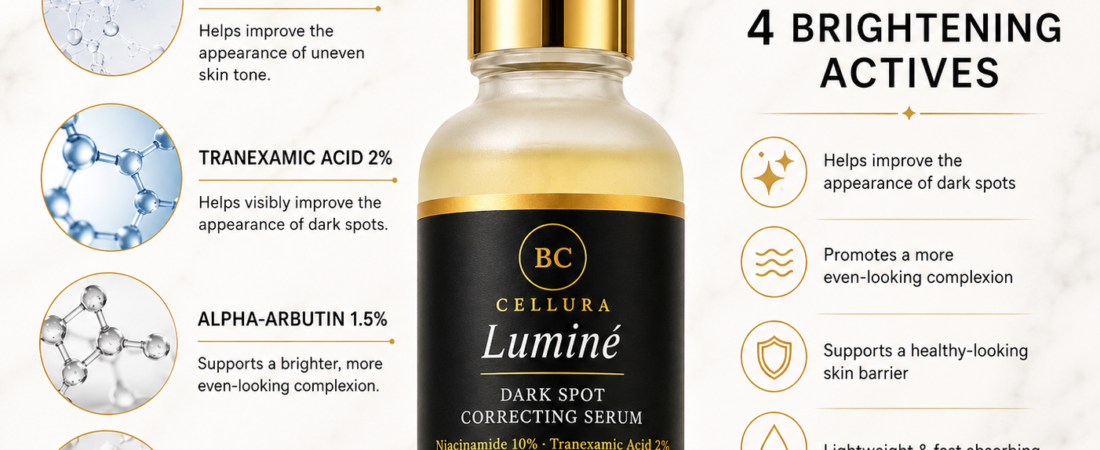
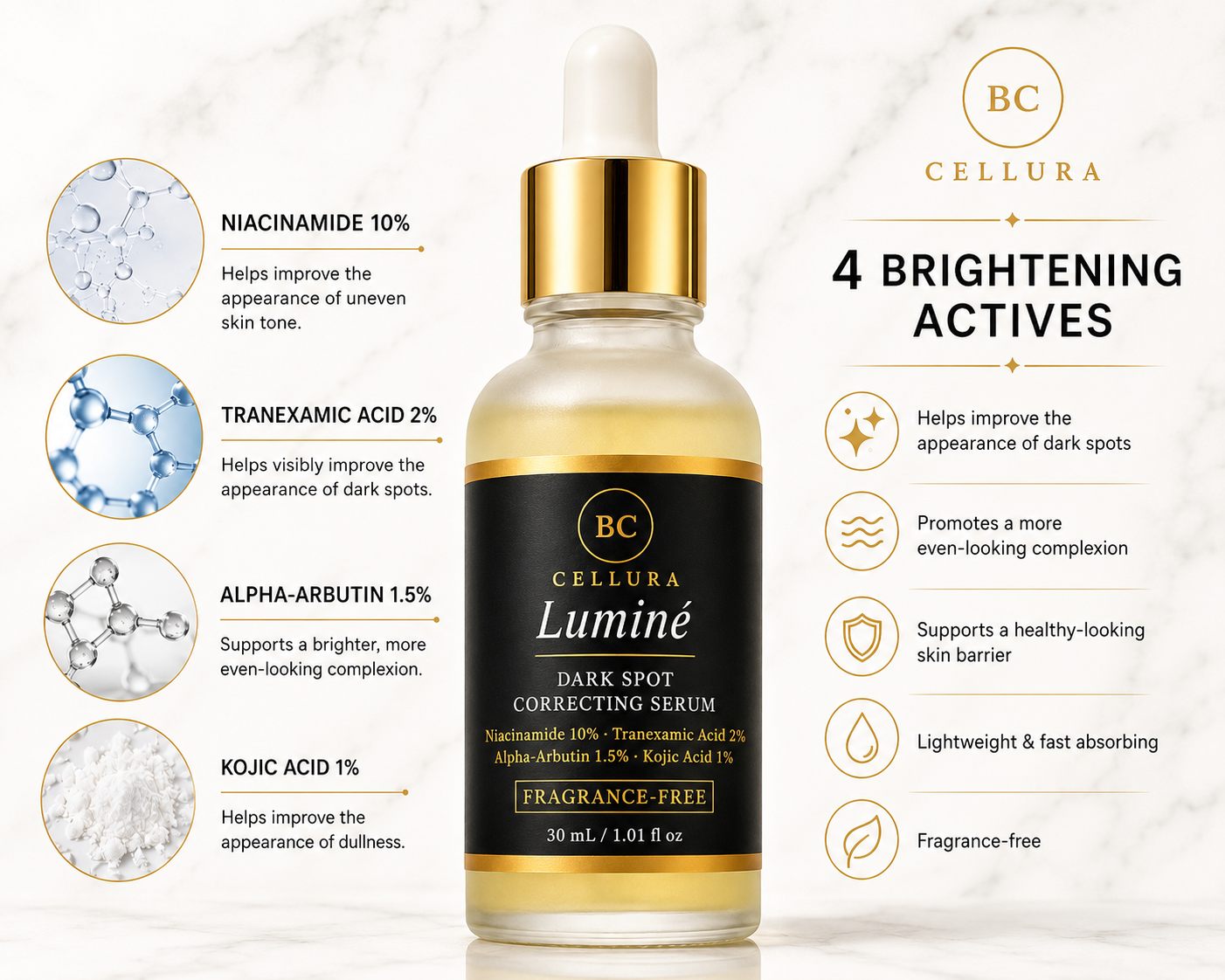
If high-strength vitamin C stings, there is no prize for persevering. A multi-active niacinamide formula is a reasonable alternative. Cellura Luminé Brightening Serum pairs niacinamide with alpha-arbutin, kojic acid and tranexamic acid, so it approaches uneven tone from several angles without relying on a low-pH vitamin C base.
Can You Use Niacinamide and Vitamin C Together?
Yes. The old warning that the two “cancel each other out” traces back to decades-old laboratory work done under heat and conditions that do not reflect modern cosmetic formulas. In practice, dermatologists routinely recommend them together, and many current products contain both.
If you would rather keep things simple, two easy approaches work well:
- Vitamin C in the morning under sunscreen, niacinamide-based serum at night.
- Layer them in the same routine, applying the thinner, more acidic product first and waiting a minute before the next step.
Whichever route you take, daily broad-spectrum sunscreen does more for dark spots than any serum. Without it, new pigment forms as fast as the old pigment fades.
The Short Answer
If you want the one-line version of niacinamide vs vitamin C for dark spots: niacinamide is the safer, steadier choice for post-acne marks and sensitive skin, vitamin C is the faster brightener for sun-related pigment, and using both — alongside daily SPF — is a perfectly reasonable plan.
Frequently Asked Questions
Can I use niacinamide and vitamin C together in the same routine?
Yes. Apply the lighter, lower-pH product first, give it a minute to settle, then follow with the other. If your skin is reactive, split them between morning and evening instead.
How long until I see a difference in my dark spots?
Give either ingredient at least 8 to 12 weeks of consistent daily use before judging it. Pigment sits at different depths, and surface marks clear well before deeper ones do.
Which should I choose if I only want one product?
If your marks came from breakouts or your skin flushes easily, start with niacinamide. If your marks came from sun exposure and your skin tolerates actives well, start with vitamin C.
Can I use niacinamide if I have oily, acne-prone skin?
It is one of the better-suited ingredients for that skin type. Niacinamide helps improve the appearance of enlarged pores and excess shine while working on existing marks.
Do I still need sunscreen while using a brightening serum?
Always. Daily SPF is the single most important step for uneven tone. Skipping it will undo the progress either ingredient makes.
What if my vitamin C serum has turned orange or brown?
That colour change indicates oxidation. The product is past its useful life and should be replaced — oxidised vitamin C is no longer doing the job you bought it for.