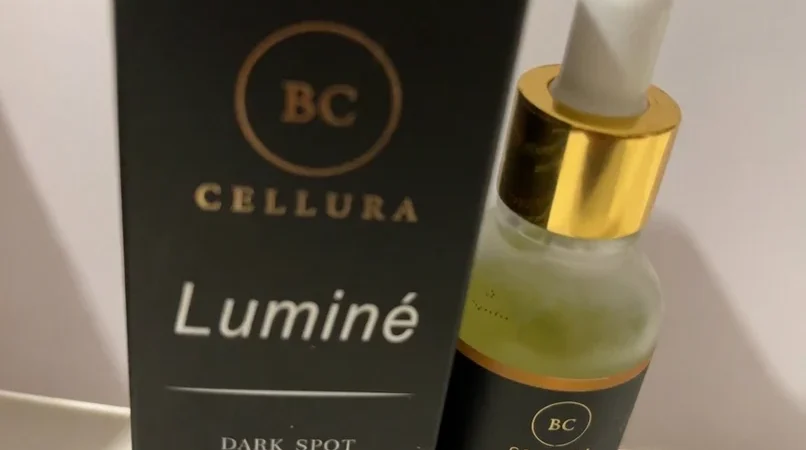
Most product pages list ingredients and stop there. They name the actives, cite a percentage, and leave you to guess what any of it actually does for your skin. This page takes a different approach. We want to explain what a niacinamide brightening serum can realistically do, why Luminé pairs niacinamide with three other actives, and what a fair timeline for results looks like.
What a Niacinamide Brightening Serum Is Actually For
A brightening serum is not a bleaching agent. It doesn’t erase pigmentation overnight. What it can do is help even out tone over time. That means softening the look of dullness, fading the marks a breakout leaves behind, and calming the patchiness that comes from sun exposure or age.
These are different problems than deep or medical pigmentation, like melasma or conditions rooted in hormonal or vascular causes. Those often need a dermatologist’s guidance and sometimes prescription treatment. A serum can support the skin’s surface tone. It isn’t a substitute for medical care when pigmentation is severe or changing shape.
If you’re searching for the best serum for uneven skin tone, it helps to be clear about which “uneven” you mean. Surface dullness and post-breakout marks respond well to consistent topical care. Deeper or stubborn discoloration usually needs more than a serum can offer alone.
Who Notices a Difference (and Who Might Not)
People with mild-to-moderate dullness, faint acne marks, or general unevenness from sun exposure tend to notice the clearest change. Think of someone dealing with a recent breakout and overall dull skin. That’s the everyday case this kind of serum targets, not someone managing a severe or diagnosed pigmentation disorder.
If your main concern is a stubborn dark patch that hasn’t moved in years, or a condition a dermatologist has already flagged, a serum is unlikely to be the whole answer. It may still play a supporting role. But expectations should stay realistic from the start.
Inside Luminé: What Niacinamide, Arbutin, Kojic Acid, and Tranexamic Acid Each Do
Luminé was formulated with a small, deliberate list of actives: niacinamide, alpha arbutin, kojic acid, and tranexamic acid. We chose each one for how it works alongside the others on tone, not to pad out the ingredient label with names that sound impressive but overlap in function.
Niacinamide, a form of vitamin B3, supports the skin barrier and helps even tone with regular use. Dermatologists have long described it as well-tolerated, which is part of why it anchors most brightening formulas. It’s rarely the whole story on its own, though. That’s why Luminé builds around it rather than relying on it alone.
Alpha arbutin works on a different part of the same problem. It comes from bearberry plants and works gently to interrupt the process that produces excess pigment, without the irritation some older brightening ingredients can cause.
Why These Four Actives Are Paired Together
Each of these ingredients targets tone through a slightly different mechanism. Niacinamide supports the barrier and general evenness. Arbutin works on pigment production at a gentler pace than older brightening agents. Kojic acid and tranexamic acid, described below, add their own angles.
The idea isn’t to stack four versions of the same ingredient and call it more effective. It’s to combine complementary mechanisms so the formula addresses tone from more than one direction, without asking the skin to tolerate an overwhelming ingredient list.
How Kojic Acid and Tranexamic Acid Support the Formula
A kojic acid serum for dark spots works because kojic acid, derived from fungi, has long been used to help fade the look of discoloration. It’s effective in modest concentrations, which is how Luminé includes it. Higher concentrations can increase the chance of irritation. Daily use calls for a formula that keeps the amount measured rather than maximized. People with sensitive skin should still patch-test first and watch for any reaction, especially in the first few weeks.
Tranexamic acid benefits a brightening serum in a different way. Doctors originally used it in medical settings for other purposes. It has since found a place in skincare for its ability to help calm the look of stubborn discoloration, including the kind linked to inflammation. Niacinamide supports overall barrier and tone. Tranexamic acid adds a more targeted effect on marks that tend to resist other ingredients. It’s not a replacement for niacinamide. It’s a complement to it.
A Brightening Serum with Niacinamide and Arbutin: What to Expect Over Time
Visible improvement in tone evenness from ingredients like niacinamide and arbutin typically takes several weeks of consistent use, not days. That’s worth stating plainly upfront, because a lot of serum marketing implies faster change than skin biology allows.
Skin renews itself on its own schedule. Pigment-related change happens gradually as new cells reach the surface. A brightening serum with niacinamide and arbutin works with that timeline. It doesn’t override it.
A Realistic Timeline for Visible Change
Most people using Luminé consistently, once or twice daily, start noticing subtler changes around the four-to-six-week mark. More visible evenness builds over eight to twelve weeks. Skin is not a light switch. Progress tends to show up gradually, often first noticed by others before you clock it yourself in the mirror.
The best way to judge progress is with photos taken in consistent lighting, roughly every two weeks, rather than daily mirror checks. Daily comparisons are too close together to reveal real change. They tend to lead to frustration, or to giving up on a product that just needed more time.
How to Add Luminé to a Simple, Consistent Routine
Consistency matters more than complexity here. Luminé is built to fit into a short routine, not to be one more step buried in a ten-product regimen.
Layering with Cleanser, Moisturizer, and SPF
Start with a clean face. Beauvex pairs Luminé with the ClearMark cleansing bar as the two-step foundation of a simplified routine. That reflects the brand’s stance against crowded regimens with more steps than most people can realistically keep up.
After cleansing, apply Luminé to slightly damp skin and let it absorb for a minute or two. Follow with a moisturizer to lock in hydration, since some of the actives can feel drying on their own for certain skin types.
In the morning, sunscreen is non-negotiable. Niacinamide, arbutin, kojic acid, and tranexamic acid all work on tone. None of them protect against the sun exposure that causes new discoloration in the first place. Skipping SPF undoes a meaningful part of what the serum is trying to do. The Skin Cancer Foundation and most dermatology bodies recommend daily broad-spectrum sunscreen as a baseline step for anyone addressing tone or pigmentation concerns.
Once daily is enough to start. Most people can build up to twice daily as their skin adjusts. There’s no need to add more products or double up on actives to see change. A short, repeatable routine, done consistently, beats a long one done sporadically.
Choosing a Clean Brightening Serum Without Overpromising
“Clean” gets used loosely in skincare marketing, often without much behind it. For us, it means a formula built from a short list of purposeful ingredients, without unnecessary fillers, and with clear labeling about what’s actually inside.
A clean brightening serum should list its actives at meaningful concentrations, not bury them under a long list of ingredients used mostly for texture or scent. Transparency also means the brand can explain why each ingredient is there, not just that it’s there.
Questions to Ask Before Buying Any Brightening Serum
Before buying any brightening serum, it’s worth asking a few direct questions. Does the brand explain what each ingredient does, or just list it? Are the claims specific and modest, or vague and sweeping? Is there a realistic timeline mentioned anywhere, or only promises of fast results?
Watch for red flags: phrases promising results in days, claims of erasing all pigmentation, or ingredient lists so long that no single active could be present at a useful concentration. A serum that’s honest about its limits is usually more trustworthy than one that isn’t.
If you’re weighing a niacinamide brightening serum against other options, the clearest signal is whether the brand is willing to explain its formula plainly, rather than let the ingredient list do the talking on its own. If you’d like to see how Luminé fits into your own routine, we’re glad to walk through it. No pressure, just clarity.