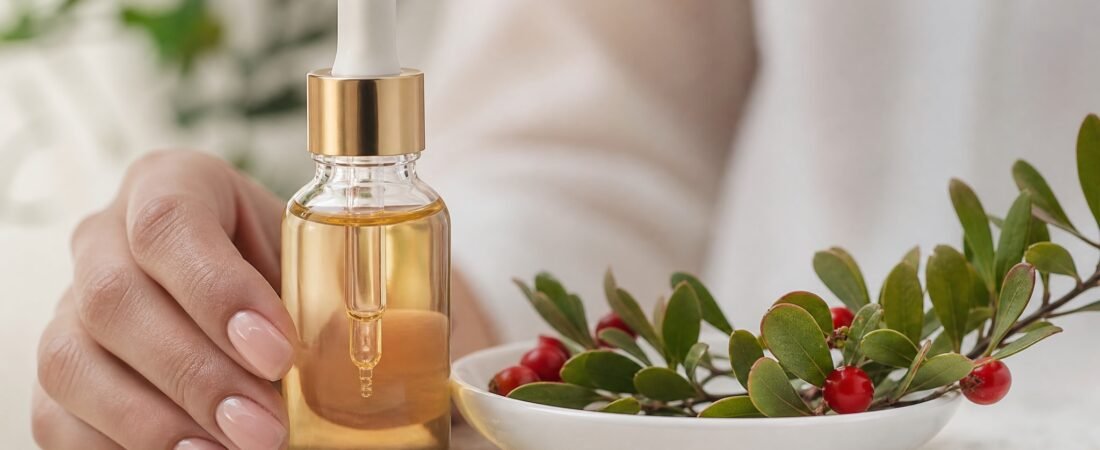
Hyperpigmentation demands patience, yet the skincare industry often sells speed. We understand the frustration of treating dark spots that linger long after breakouts heal or sun exposure fades. An effective arbutin serum for hyperpigmentation works with your skin’s biology rather than forcing rapid changes that compromise barrier health.
We formulate with intention. We believe lasting clarity comes from consistent, gentle intervention, and that approach requires honest expectations about timelines and ingredient synergy. You deserve a routine grounded in transparency, not exaggerated promises that lead to disappointment.
How Arbutin Serum Addresses Hyperpigmentation
Arbutin is a tyrosinase inhibitor. It reduces melanin production at the source instead of stripping existing pigment through harsh exfoliation. That means you prevent new discoloration while natural turnover fades current marks gradually.
Dermatological consensus holds that tyrosinase inhibitors like arbutin need at least two full skin turnover cycles before they show visible improvement in post-inflammatory hyperpigmentation. We respect this timeline because it reflects how healthy skin actually behaves.
The Mechanism of Tyrosinase Inhibition
Tyrosinase is the enzyme that converts tyrosine into melanin inside your skin cells. Arbutin binds to this enzyme and blocks its activity, which slows the synthesis of excess pigment before it reaches the surface. This preserves your moisture barrier while it addresses discoloration at a cellular level.
Unlike acids that dissolve surface layers, arbutin intervenes upstream in the melanogenesis pathway. You get targeted treatment without the inflammation that often triggers rebound pigmentation in reactive skin.
Alpha Arbutin vs Beta Arbutin Stability
In comparative biochemical studies, alpha arbutin shows significantly higher inhibitory activity against human tyrosinase than beta arbutin does, which is why it’s become the industry standard for topical brightening. The alpha form is synthesized to stay molecularly stable and consistently potent across batches. Natural beta arbutin, by contrast, can degrade when it’s exposed to heat or light.
We chose alpha arbutin because efficacy depends on the molecule staying active until it penetrates your skin. A serum that degrades in the bottle can’t deliver reliable results, no matter its initial concentration.
Realistic Timelines for Visible Brightening Results
Meaningful fading takes consistent use over months, not weeks. Your skin renews itself on a fixed biological schedule, and no formula changes that.
We refuse exaggerated timelines. We believe trust is built through honest communication about biological processes, not instant-gratification promises. You can read more about our stance against hype to understand why we anchor our claims in dermatological reality. Patience isn’t a flaw in the product. It’s a feature of safe formulation.
Why Skin Turnover Dictates Progress
Your epidermis replaces itself roughly every twenty-eight days, though the cycle slows with age and environmental stress. Pigment trapped in deeper layers has to travel to the surface and shed naturally before you see it clear. Push that process too hard and you damage the barrier, which creates new inflammation and worsens discoloration over time.
Supporting your skin’s natural rhythm yields brightness that holds once you stop treatment. Biological limits are non-negotiable, so we design around them.
Tracking Changes Without Exaggeration
Subtle shifts in tone uniformity show up before dramatic spot fading does. Watch for overall luminosity before you expect individual marks to vanish completely. Photographing your skin monthly in consistent lighting reveals progress that daily mirror checks miss, because your eyes adapt to gradual change.
Gradual improvement is a sign of healthy barrier function. It’s what separates honest results from marketing claims that lean on temporary irritation or optical illusions. You’re building long-term resilience alongside cosmetic correction.
Comparing Alpha Arbutin vs Kojic Acid and Other Actives
Alpha arbutin sits in a moderate range: it balances efficacy with tolerability better than many traditional brighteners for daily maintenance. Kojic acid can work, but it often carries a higher risk of sensitivity when used alone at high concentrations, which makes it hard to sustain long-term.
You need an active you can use consistently without cycling off due to irritation. Our comparison of alpha arbutin vs kojic acid covers these trade-offs in more detail for anyone weighing their options.
Synergy with Niacinamide and Tranexamic Acid
Single ingredients rarely solve complex pigmentation, because melanin formation involves multiple pathways that need coordinated intervention. Luminé Brightening Serum formulates arbutin alongside niacinamide and tranexamic acid to address pigmentation at three distinct stages of the melanogenesis pathway, rather than leaning on one mechanism alone.
Niacinamide prevents pigment transfer to surface cells. Tranexamic acid calms the vascular inflammation that fuels melasma. Learn more about daily niacinamide application to see how this supporting active maintains barrier strength during treatment.
Multi-pathway targeting lets each ingredient work at a lower concentration and still stay effective, without overwhelming sensitive skin.
Gentleness Profile for Sensitive Skin
Arbutin doesn’t alter skin pH or trigger photosensitivity, which makes it compatible with compromised barriers that can’t tolerate hydroquinone or strong acids. You can maintain treatment through seasonal transitions and hormonal fluctuations without constant adjustment.
Gentle doesn’t mean weak. It means sustainable enough to prevent the relapse that follows aggressive cycling. Sensitivity often comes from formulation imbalance rather than the active itself, so supporting ingredients matter as much as the primary brightener.
Formulation Matters: Beyond Single-Ingredient Hype
A hero ingredient on the front label tells you nothing about bioavailability, stability, or the support it gets from the rest of the formula. We prioritize transparent ingredient lists and sustainable packaging over isolated actives marketed at arbitrary percentages. Your skin responds to the complete formulation, not the marketing claim.
Supporting Ingredients in Luminé Brightening Serum
Luminé Brightening Serum combines arbutin with humectants and barrier-repair lipids so it penetrates without dehydrating skin. Hydration supports enzymatic function and cellular turnover, so the moisturizing agents in this formula are functional, not just sensory additions.
Every inclusion serves a purpose tied to efficacy or tolerance. We test the final product as a whole system, because that’s what you apply to your face each morning.
Clean Formulas Without Harsh Chemicals
Clean formulation means leaving out known irritants and destabilizing preservatives that trade long-term skin health for short-term shelf appeal. Sustainable packaging also protects ingredient integrity from oxidation while cutting environmental waste that would contradict our values.
You shouldn’t have to choose between effective skincare and ethical consumption. Intentional design runs from the molecular level to the vessel that holds it.
Integrating Arbutin Serum Into a Simple Routine
Consistency matters more than complexity when you’re treating hyperpigmentation. Build arbutin into a streamlined regimen you can maintain indefinitely. Apply the serum after cleansing on slightly damp skin to help absorption, then follow immediately with moisturizer to seal it in.
A minimalist cleanse and brighten routine cuts decision fatigue and helps you keep the steps that actually drive results.
Morning and Evening Application Order
Use arbutin twice daily. Tyrosinase inhibition needs a sustained presence to keep suppressing melanin production through the day and night. Layer it before heavier creams but after water-based toners, so it isn’t blocked from penetrating.
You don’t need to buffer it unless your skin signals discomfort in the first two weeks. Consistent timing trains your habit as much as your skin’s response.
Essential Sun Protection Pairings
Sun protection is non-negotiable during treatment. UV exposure activates tyrosinase and can undo weeks of inhibitory work in minutes of unprotected exposure. Broad-spectrum sunscreen completes the brightening protocol: it prevents new pigment formation while arbutin addresses the discoloration already there.
Skip SPF and even the best arbutin serum for hyperpigmentation becomes functionally useless, regardless of formulation quality. Think of sunscreen as the active partner in your treatment, not an optional accessory.
Understanding Arbutin Serum Side Effects and Safety
Arbutin serum side effects are generally mild and manageable when you introduce it thoughtfully into an established routine. Some users notice transient dryness or slight tingling during the first week as their skin adjusts. These sensations usually signal adaptation, not damage, but they’re worth watching.
Mild irritation or dryness should prompt a frequency adjustment rather than immediate discontinuation. Try every-other-day application until comfort returns. Watch for persistent redness, itching, or burning, which point to true intolerance and mean you should stop and see a professional.
Most perceived side effects resolve with better moisturization or slower integration, not product abandonment. You know your skin’s signals better than any general guideline, so adjust accordingly.
Choosing the Best Arbutin Serum for Consistent Use
The best arbutin serum for 2026 is the one you’ll actually use for six months, not the one with the highest percentage or the trendiest packaging. Selection criteria should center on formulation balance, packaging integrity, and brand transparency, not viral status or isolated concentration claims.
Long-term adherence depends on sensory enjoyment and trust in intentional design as much as it depends on biochemical efficacy. Ask whether the brand communicates honestly about timelines and limitations before you invest your money and hope.
Formulation coherence matters more than ingredient count, because synergistic combinations outperform stacked actives that compete for absorption or destabilize each other. Airless pumps and opaque bottles protect alpha arbutin from degradation better than droppers in clear glass do, so packaging choices directly affect whether the product still works by the final dose. You pay for stability whether the brand invests in it or not.