
Alpha arbutin slows the production of new melanin by blocking tyrosinase, while niacinamide interrupts the pigment already made from reaching the skin’s surface by inhibiting melanosome transfer. Neither ingredient works alone as well as the two combined, since they act at different stages of the same pigmentation process. Most people using a consistent routine start noticing change within 8 to 12 weeks, though some niacinamide formulations show measurable shifts sooner.
TL;DR:
- Alpha arbutin inhibits melanin production, while niacinamide blocks melanosome transfer, making their combination more effective than using either alone.
- Most users see measurable pigmentation reduction within 8 to 12 weeks, with melasma responding more slowly than post-inflammatory hyperpigmentation.
- Alpha arbutin is safe up to 2% in face creams, but watch for contamination; niacinamide tolerates concentrations between 2% and 5%, with minimal side effects.
- Apply both ingredients in a routine that involves cleansing, layering serums, and waiting a few minutes before moisturizer and SPF, avoiding strong acids in the same step.
- For stubborn post-acne marks, a product like Beauvex’s Luminé Serum, which combines niacinamide, tranexamic acid, and alpha arbutin with transparent concentrations, can be an effective option.
Table of Contents
- Mechanisms compared: production vs transfer
- Clinical evidence and realistic expectations
- Safety and formulation guidance
- Can you use them together? Layering rules and routine examples
- Pick by concern: which ingredient fits your goal
- How Beauvex applies combined-mechanism design
- Short-term tactics vs long-term maintenance
- Trying the Cellura Luminé Brightening Serum
- Sources
- FAQ
Mechanisms compared: production vs transfer
Dark spots form in three stages. Melanocytes produce melanin (melanogenesis), package it into melanosomes, then hand those melanosomes off to surrounding skin cells called keratinocytes, where the pigment becomes visible as a spot. Alpha arbutin and niacinamide intervene at different points in that chain, which is why dermatology reviews often pair them rather than pick one.
Alpha arbutin binds to tyrosinase, the enzyme that drives melanin synthesis, and reviews describe it as having stronger tyrosinase inhibitory activity than natural arbutin, making it a more potent option in formulations aimed at hyperpigmentation, according to a review of alpha-arbutin’s therapeutic potential. Niacinamide, by contrast, works downstream: it slows the transfer of melanosomes from melanocytes to keratinocytes and carries anti-inflammatory properties that help calm skin already irritated by breakouts.
- Alpha arbutin: reduces how much new pigment gets made in the first place.
- Niacinamide: reduces how much of that pigment actually reaches visible skin layers.
That distinction matters for spot type. Arbutin tends to suit spots still forming or worsening, since it targets production. Niacinamide often helps more with post-inflammatory marks left behind after acne, since it addresses both transfer and the inflammation that triggered the discoloration.
Clinical evidence and realistic expectations
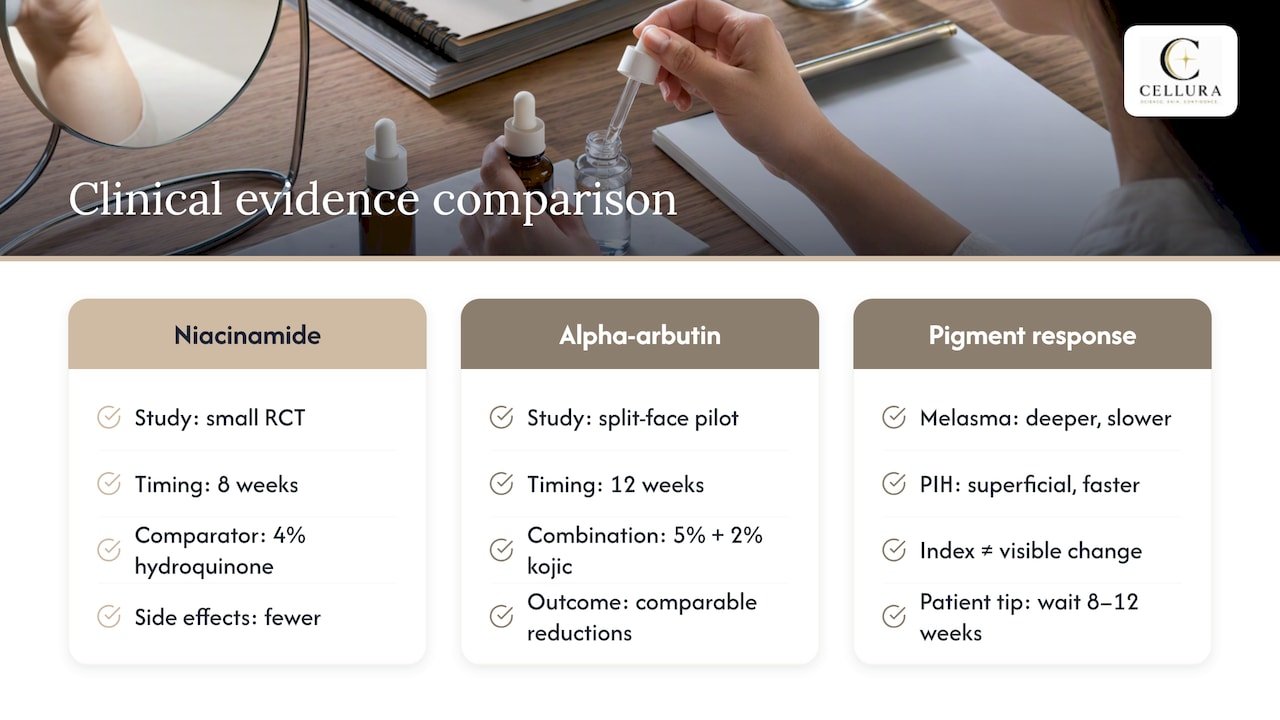
Trial data for both ingredients exist, though study sizes and endpoints vary. A small randomized trial comparing 4% niacinamide with 4% hydroquinone in melasma patients found both improved pigment over eight weeks, with niacinamide causing fewer side effects. Newer in vitro and clinical work suggests niacinamide’s effect on melanosome transfer can be enhanced by formulation pH, with low-pH niacinamide formulations showing greater reductions in facial spots than neutral-pH versions.
A split-face pilot study found alpha-arbutin 5% combined with kojic acid 2% produced comparable reductions in melanin index and mMASI scores to a triple combination cream over 12 weeks, with fewer side effects, according to research on alpha-arbutin combination therapy. That timeline tracks with what most arbutin-based regimens need: measurable change tends to show up between 8 and 12 weeks, sometimes longer depending on concentration and what it is paired with.
Study populations matter too. Melasma, which involves deeper dermal pigment, often responds more slowly and less completely than post-inflammatory hyperpigmentation (PIH) from acne, which tends to sit closer to the skin’s surface. A drop in an objective measure like melanin index does not always translate to a change a person notices in the mirror, so patience through the full 8 to 12 week window matters more than checking daily.
Safety and formulation guidance
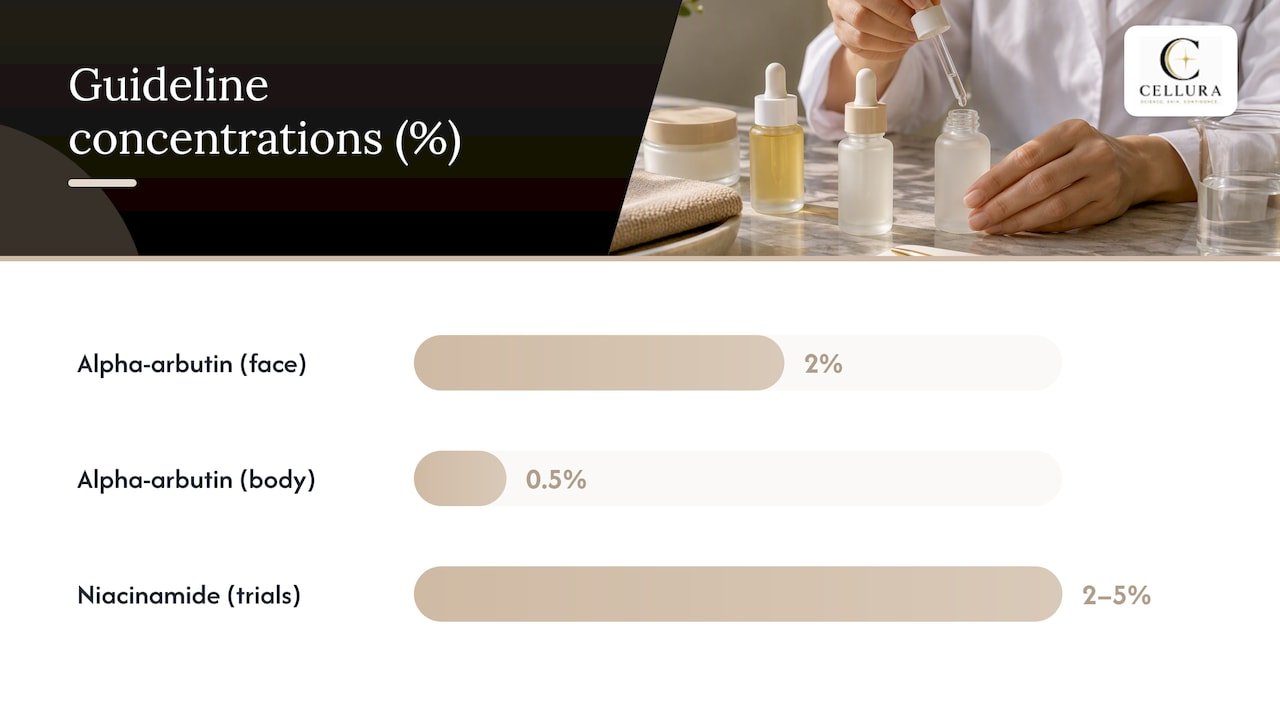
Regulatory bodies have set clear boundaries for alpha arbutin. The SCCS safety opinion concluded that alpha-arbutin is safe in face creams up to 2% and in body lotions up to 0.5%, while also flagging hydroquinone contamination as a concern in poorly manufactured products. Niacinamide has a wider margin: most clinical trials use concentrations between 2% and 5%, and tolerability is generally good, though higher percentages can cause temporary tingling or flushing in sensitive skin.
- Check the label for the exact percentage rather than trusting “brightening” marketing claims alone.
- Avoid products that pair high-percentage actives with very low pH without any buffering system.
- Watch for signs of hydroquinone contamination in cheaper arbutin products, since the SCCS opinion specifically raises this issue.
Pro Tip: Patch-test any new alpha arbutin or niacinamide product on your inner arm for three days before applying it to your face, especially if you have reactive or eczema-prone skin.
If irritation persists past a week of use, or if spots darken instead of fading, stop and consult a dermatologist rather than layering on more products to compensate.
Can you use them together? Layering rules and routine examples
Alpha arbutin and niacinamide are chemically compatible and commonly formulated into the same serum or applied in sequence without conflict. Because they act at separate stages of pigmentation, using both gives broader coverage than relying on either alone.
- Cleanse first, then apply any water-based, lightweight serum before heavier creams so the actives absorb properly.
- Apply niacinamide and alpha arbutin in the same step if they are combined in one product, or apply the thinner formula first if using two separate serums.
- Wait a few minutes before layering a moisturizer or SPF on top to avoid pilling.
- Avoid combining either ingredient with strong AHAs, BHAs, or unbuffered low-pH vitamin C in the same application, since the resulting irritation can undo any brightening benefit.
- If your skin feels tight or tingly after layering, drop back to alternating nights until your barrier adjusts.
A simple morning routine might run: cleanser, niacinamide and alpha arbutin serum, moisturizer, sunscreen. Evenings can follow the same order, swapping sunscreen for a barrier-supporting cream.
Pick by concern: which ingredient fits your goal
Not every dark spot responds the same way, so the right pick depends on what caused it.
- Post-acne PIH: Niacinamide is often favored first for its transfer-blocking and anti-inflammatory action; adding alpha arbutin reinforces the effect by cutting production of new pigment.
- Sunspots and melasma: A combination approach paired with daily sunscreen tends to perform best, since melasma involves deeper pigment that responds slowly; persistent cases may need a dermatologist’s input on prescription options.
- Sensitive or reactive skin: Start with lower concentrations of niacinamide before introducing arbutin, since niacinamide is generally the gentler of the two.
- General tone maintenance: Lower, steady doses of both ingredients used consistently over months work better than sporadic high-strength applications.
Whatever the starting point, patch test first, commit to eight to twelve weeks before judging results, and adjust concentration rather than switching products entirely if progress stalls.
How Beauvex applies combined-mechanism design
Beauvex built its Luminé Serum around the same production-and-transfer logic outlined above. The formula combines niacinamide, tranexamic acid, and alpha-arbutin to interrupt pigmentation at multiple points rather than relying on a single mechanism, part of the brand’s broader three-step ritual of cleansing, treatment, and barrier support aimed at post-acne discoloration.
Beauvex publishes exact ingredient concentrations and research references for each active in the formula, which matters because concentration, not just ingredient names on a label, determines whether a product can plausibly deliver the effects seen in clinical studies. That transparency lets buyers check a formula’s claims against the same kind of data cited throughout this article, rather than taking brightening claims at face value.
Short-term tactics vs long-term maintenance
Sunscreen is not optional in any brightening plan: new pigment forms fastest under UV exposure, undoing weeks of progress in days. Short-term adjuncts like AHAs or vitamin C can accelerate results, but maintenance calls for lower-irritation actives like niacinamide once spots fade, to avoid rebound pigmentation. Persistent or deep, bluish-toned spots that resist months of topical treatment usually signal dermal pigment, which is a cue to see a dermatologist rather than escalate an over-the-counter routine. Readers considering in-office treatments alongside topicals can review pre- and post-procedure guidelines from a professional aesthetic clinic before combining the two.
— Beauvex LLC
Trying the Cellura Luminé Brightening Serum
If you want the production-and-transfer approach described above in one formula, the Cellura Luminé Brightening Serum combines niacinamide, tranexamic acid, and alpha-arbutin with published concentrations rather than vague “brightening complex” labeling.
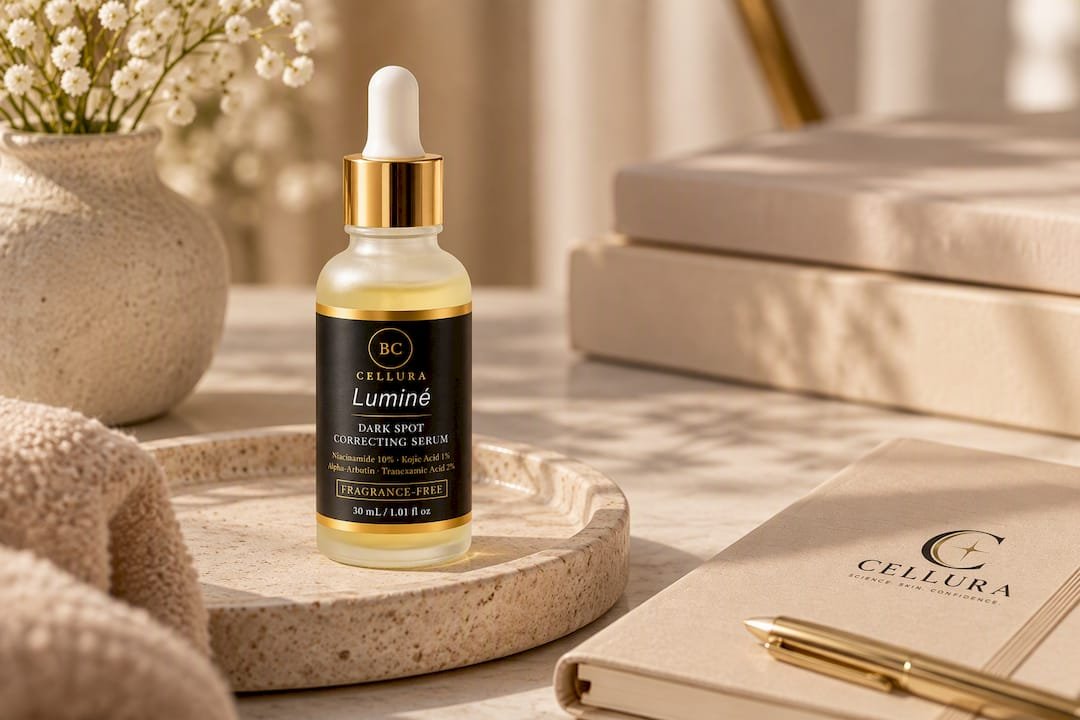
It suits anyone dealing with stubborn post-acne marks who wants to evaluate a product against real research rather than marketing copy. Patch test it first, then work it into the evening step of your routine, following the same layering order covered earlier.
| Ingredient | Role in Luminé Serum |
|---|---|
| Niacinamide | Inhibits melanosome transfer, reduces inflammation |
| Alpha-arbutin | Inhibits tyrosinase, slows melanin production |
| Tranexamic acid | Targets pigmentation pathway alongside the above actives |
Transparent ingredient concentrations let you judge a formula against the same research you’d check for any active on its own.
The Luminé Serum is described as publishing concentration levels and research references for its ingredients, a transparency practice intended to help buyers evaluate efficacy claims directly rather than relying on marketing language.
Browse the full Cellura line if you’re building a complete routine around post-acne discoloration.
This article is general information, not a substitute for advice from a qualified doctor. Consult a qualified healthcare professional about your own circumstances before acting on anything here.
Sources
- Safety of alpha-arbutin and beta-arbutin in cosmetic products – Public Health
- Synergistic effects of niacinamide and low pH on melanin synthesis, melanocyte function and hyperpigmentation: In vitro and clinical insights
- The Efficacy of Topical Cosmetic Containing Alpha‐Arbutin 5% and Kojic Acid 2% Compared With Triple Combination Cream for the Treatment of Melasma
- Niacinamide versus hydroquinone in melasma patients (trial)
FAQ
Which is more effective, alpha arbutin or niacinamide?
Neither is universally more effective since they work on different stages of pigmentation: alpha arbutin slows melanin production while niacinamide blocks its transfer to visible skin layers. Research suggests combining them addresses more of the pigmentation process than either used alone.
Can I apply niacinamide and alpha arbutin together?
Yes, the two ingredients are chemically compatible and are often formulated into the same serum or applied in sequence. Apply lighter, water-based formulas first and avoid layering both with strong acids or unbuffered vitamin C in the same step.
Which product is best for removing dark spots?
The best choice depends on your spot type and skin sensitivity, but formulas combining niacinamide, alpha-arbutin, and tranexamic acid target pigmentation at multiple stages, as seen in the Cellura Luminé Brightening Serum. Always check the labeled concentrations rather than relying on brightening claims alone.
How long does it take for alpha arbutin to work on hyperpigmentation?
Clinical research on alpha-arbutin combination regimens shows measurable improvement in melanin index and pigmentation scores over 12 weeks of consistent use. Visible cosmetic change can lag behind these objective measurements, so most people should expect to wait the full 8 to 12 week window before judging results.