
Yes, over-exfoliating can cause post-inflammatory hyperpigmentation: stop every active ingredient immediately and protect your skin with a tinted mineral sunscreen of SPF 30 or higher. Barrier repair typically begins within days and takes about 2 to 4 weeks for most skin, while the resulting dark spots often need 3 to 12 months to fade with consistent care.
TL;DR:
- Tightness after cleansing, stinging from familiar products, waxy shine, persistent redness, flaking, or sudden bumps signal damage; pause actives when two signs appear.
- Hidden exfoliation can come from acid cleansers, toners, retinoid moisturizers, and scrubbing tools; stacking them or scheduling peels too close increases irritation risk.
- After moisturizer no longer stings, reintroduce one active at a low concentration, patch test first, and wait two to four weeks between additions.
- Niacinamide and azelaic acid are gentler options for pigment prone skin; visible improvement often takes eight to twelve weeks, and spots may fade for months.
- Light peels and microneedling can trigger pigment, especially in darker skin; use them with dermatologist guidance, and reserve oral tranexamic acid for specialist care.
Table of Contents
- Why over-exfoliation leads to hyperpigmentation
- How to recognize the early signs of over-exfoliation
- What to do in the first 7 to 14 days of recovery
- How to prevent a repeat cycle and reintroduce actives safely
- Treating existing hyperpigmentation: what works and how long it takes
- How the Cellura ritual fits a recovery-first routine
- Our take: patience beats aggression
- Start your recovery-first routine with Cellura
- FAQ
- Sources
Why over-exfoliation leads to hyperpigmentation
Acids like AHAs and BHAs, along with physical scrubs, strip away the outer layer of dead skin cells and deplete the lipid mortar that holds your barrier together. Once that mortar thins out, irritants and UV light penetrate more easily, and your skin reacts with inflammation. That inflammation signals nearby melanocytes to produce more pigment, which is how a single rough week of exfoliating can leave behind a dark patch that lingers for months.
The damage rarely comes from one product. It usually comes from stacking several exfoliating steps, or from combining frequent at-home acids with professional peels scheduled too close together.
Common hidden sources of extra exfoliation include:
- Cleansers containing salicylic acid or glycolic acid, often unlabeled as “exfoliants”
- Toners and essences with lactic acid or fruit enzymes layered under a separate serum
- Retinoid-containing moisturizers used alongside a separate exfoliating treatment
- Exfoliating devices, brushes, or washcloths used on top of chemical actives
People with darker phototypes face a higher baseline risk for post-inflammatory hyperpigmentation because their melanocytes tend to respond more aggressively to any inflammatory trigger, including irritation from over-exfoliation.
How to recognize the early signs of over-exfoliation
Catching the damage early gives your skin a chance to recover before pigment sets in. Rate your skin against this checklist, and pause every active the moment you notice two or more of these signs.
- Tightness or a pulling sensation that shows up within an hour of cleansing
- Stinging or burning when you apply a moisturizer or serum that never bothered you before
- A waxy, shiny look that can be mistaken for a healthy glow but actually signals lipid loss
- Persistent redness that does not fade between applications
- Flaky or rough patches, often around the nose, cheeks, or chin
- Small, bumpy breakouts that appear suddenly, a paradoxical reaction tied to barrier damage and compensatory sebum production
If you check two or more boxes, stop every exfoliating product and treat your skin as compromised for at least a week.
What to do in the first 7 to 14 days of recovery
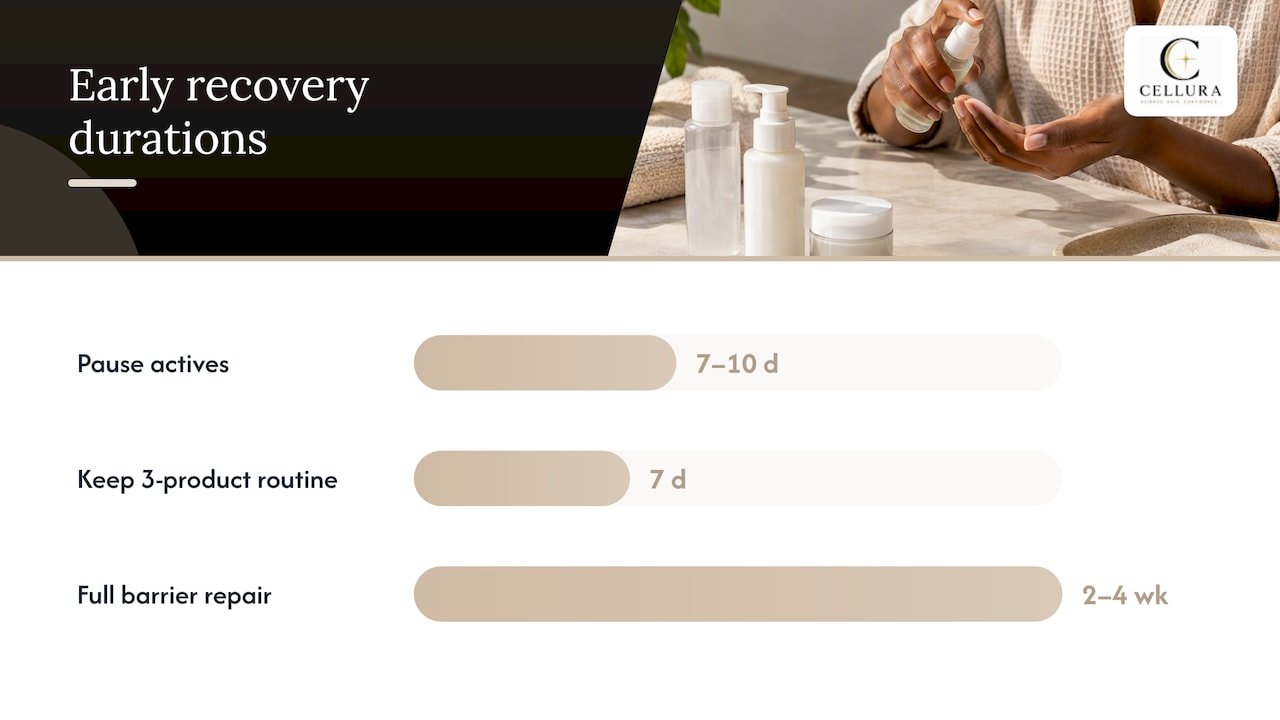
The goal for the next one to two weeks is to calm inflammation and stop feeding the pigment response, not to chase results. DermNet NZ advises stopping all actives for at least 7 to 10 days, with full barrier repair commonly taking 2 to 4 weeks.
Pause these ingredients completely during recovery:
- AHAs and BHAs, including salicylic, glycolic, and lactic acid
- Retinoids and retinol-based products
- Physical scrubs, exfoliating brushes, and cleansing devices
- Vitamin C and benzoyl peroxide, both of which can sting compromised skin
Replace your routine with a non-foaming gentle cleanser, a ceramide or occlusive-rich moisturizer, and a tinted mineral sunscreen with iron oxide at SPF 30 or higher. A cold compress can calm acute stinging, and hydrocortisone should only be used if a clinician recommends it. Skip in-office resurfacing and exfoliating devices entirely until your skin stops reacting to plain moisturizer. If redness, swelling, or stinging persists past two weeks, see a dermatologist rather than waiting it out.
Pro Tip: Keep your routine to three products for the first week: cleanser, moisturizer, sunscreen. Anything more slows down what your barrier is trying to do on its own.
How to prevent a repeat cycle and reintroduce actives safely
Once stinging on plain moisturizer has stopped, you can start rebuilding tolerance. DermNet NZ recommends limiting chemical exfoliation to roughly 2 to 3 times per week for most skin types, and sensitive or pigment-prone skin should stay on the conservative end of that range.
- Audit your current routine for hidden acids in cleansers, toners, and moisturizers before adding anything new.
- Patch test any active on a small area, such as the inner forearm or jawline, for several days before applying it to your full face.
- Reintroduce one active at a time, starting at a low concentration, such as a 2% BHA or a low-strength retinol.
- Wait 2 to 4 weeks between adding each new active so you can isolate what your skin tolerates.
- Choose gentler alternatives, like azelaic acid or enzyme exfoliants, if acids continue to trigger stinging or redness.
Treating existing hyperpigmentation: what works and how long it takes
Once your barrier has calmed down, treatment for the dark spots themselves follows a tolerability-first sequence. Starting with the gentlest effective option reduces the risk of triggering another round of inflammation and more pigment.
Topical options with supporting evidence include:
- Niacinamide, which supports barrier function while interrupting pigment transfer
- Azelaic acid, a well-tolerated option for sensitive and pigment-prone skin
- Tranexamic acid and kojic acid, both used to target pigment production directly
- Vitamin C, often introduced once irritation has fully resolved
- Hydroquinone, a prescription option used under clinical supervision
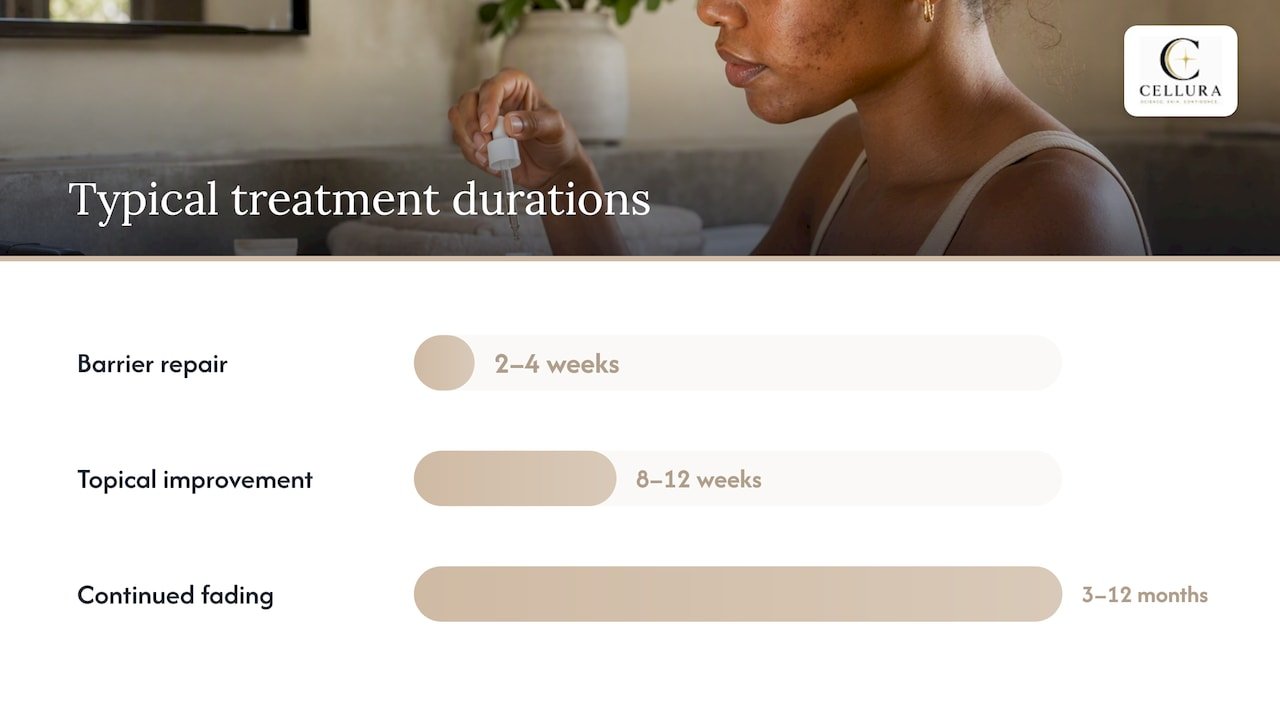
Barrier repair generally takes 2 to 4 weeks, while topical treatment for the pigment itself often shows visible improvement around 8 to 12 weeks, with many spots continuing to fade over 3 to 12 months of consistent care.
For stubborn or diffuse cases, dermatologists may escalate to conservative in-office procedures, such as light chemical peels or microneedling, though these carry higher risk of triggering more pigment in darker phototypes and should stay conservative. Oral tranexamic acid is a specialist-managed option reserved for refractory or widespread pigment that has not responded to topical care, and emerging agents like topical tranexamic acid and cysteamine offer hydroquinone-sparing alternatives with generally favorable tolerability.
Broad-spectrum protection matters at every stage: the American Academy of Dermatology recommends tinted mineral sunscreens with iron oxide at SPF 30 or higher, since visible light alone can worsen hyperpigmentation in melanin-rich skin.
How the Cellura ritual fits a recovery-first routine
Once your barrier has settled and stinging has stopped, a three-step approach can support the next phase without undoing your progress.
- The ClearMark Bar cleanses gently with salicylic, azelaic, and kojic acid at concentrations low enough for recovered skin
- The Luminé Brightening Serum combines niacinamide, tranexamic acid, kojic acid, and alpha-arbutin to target pigment at multiple stages
- A barrier-support balm helps reinforce the lipid barrier between treatment steps
Ingredient concentrations and research references are provided for each formula so you can weigh the evidence yourself. Introduce any new product only after your barrier has recovered, patch test first, and pair it with strict daily sun protection.
Our take: patience beats aggression
Calming inflammation and preventing re-injury matters more than any single brightening ingredient. Pigment fades on its own timeline once the irritation stops, so resist the urge to speed things up with another acid or a stronger peel. If dark spots persist past a few months or keep spreading, a dermatologist can rule out other causes and discuss prescription-strength options.
— Beauvex LLC
Start your recovery-first routine with Cellura
We built the Cellura ritual around the same sequence dermatology guidance recommends: cleanse gently, treat pigment directly, support the barrier in between.

- The ClearMark Bar replaces harsh exfoliating cleansers once your skin tolerates daily washing again
- The Luminé Brightening Serum targets existing dark spots with niacinamide, tranexamic acid, and alpha-arbutin
- The complete Cellura Ritual set bundles all three steps for readers who want one coordinated routine
If you are ready to rebuild your routine, start with the Luminé Brightening Serum or explore the full Cellura line. Patch test first, and check with a clinician if your skin is still reacting to basic moisturizer.
This article is general information, not a substitute for advice from a qualified doctor. Consult a qualified healthcare professional about your own circumstances before acting on anything here.
FAQ
What fades hyperpigmentation quickly?
No treatment fades hyperpigmentation overnight. Consistent use of topicals like niacinamide, azelaic acid, or tranexamic acid paired with daily sunscreen typically shows visible improvement around 8 to 12 weeks.
How do I fix over-exfoliated skin?
Stop every exfoliating product and retinoid immediately, switch to a gentle non-foaming cleanser and a ceramide-rich moisturizer, and wear mineral sunscreen daily. Most people see their barrier recover within 2 to 4 weeks if they avoid reintroducing actives too soon.
Can you exfoliate away hyperpigmentation?
Gentle, well-tolerated exfoliation can support cell turnover once your barrier has healed, but exfoliating aggressively on already inflamed or pigmented skin tends to worsen the discoloration. Pigment fades through calming inflammation and consistent topical treatment, not through more scrubbing.
What are the signs that I’m over-exfoliating my skin?
Watch for tightness, stinging when you apply normal products, a waxy shine instead of a healthy glow, and sudden small breakouts. These signs mean your barrier is compromised and it is time to pause all actives.
Sources
- DermNet NZ — Postinflammatory hyperpigmentation / over-exfoliation guidance
- American Academy of Dermatology — Fade dark spots
- Postinflammatory hyperpigmentation in skin of color — clinical review (PMC)
- Cureus — PIH in skin of color: emerging therapies and treatment algorithms (2026)