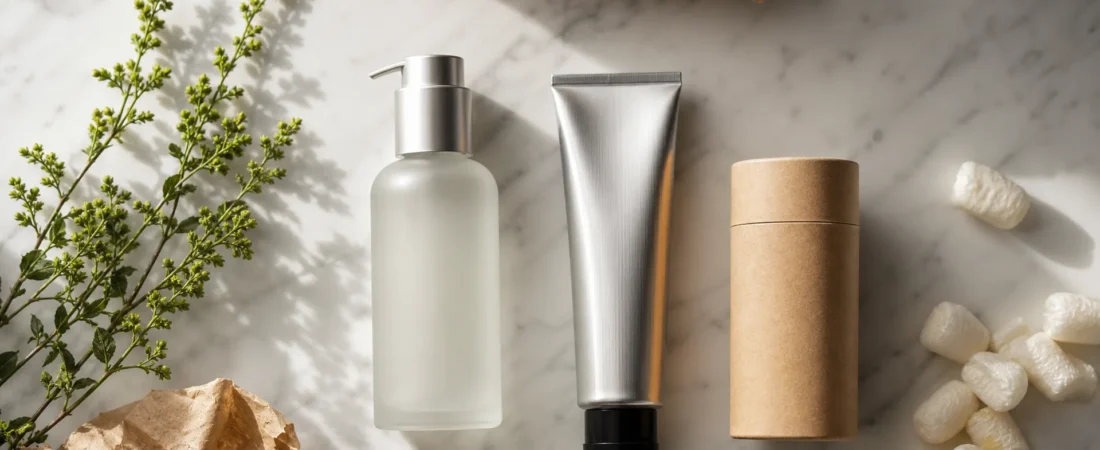
More shoppers now check the box before they check the ingredient list. A serum can be brightening, gentle, and well-formulated. But if it arrives wrapped in three layers of plastic, that undercuts the whole promise. That’s why sustainable skincare packaging brands face as much scrutiny in 2026 as the formulas inside their bottles.
Why Sustainable Skincare Packaging Matters More in 2026
Packaging used to be an afterthought, something to design after the formula was finished. That habit created a lot of waste. Cosmetics packaging generates billions of units of plastic waste each year, and a large share never gets recycled. Mixed materials and components too small for sorting machines to handle are usually the reason why.
Shoppers have noticed. They ask why a 30ml serum needs a box, a plastic tray, a pump, and a shrink seal. They question whether “recyclable” claims hold up once a bottle actually reaches a facility. That skepticism is healthy. It’s pushing brands to rethink packaging from the ground up, not just swap one plastic for a slightly different plastic.
What ‘low waste skincare brand’ actually means
A low waste skincare brand isn’t just one that uses recyclable materials. It’s one that questions whether each layer of packaging needs to exist at all. That means fewer components per product, less mixed material, and packaging that can realistically get reused, refilled, or broken down. It’s a design philosophy, not a marketing label.
What to Look for in Eco Friendly Skincare Packaging
Before trusting any packaging claim, it helps to know what you’re actually evaluating. A few practical checks go a long way.
Look at the material first. Glass, aluminum, and simple paper are easier to recycle or reuse than mixed plastics. Look at the components next. A single-material bottle and cap beat a bottle, pump, plastic collar, and inner seal that all need separating before recycling. Then look at what’s inside the box. Minimal inserts, no unnecessary trays, no plastic-wrapped instructions. It all adds up.
Recyclable vs. compostable vs. refillable
These three words get used interchangeably, but they mean different things. Recyclable means the material can be processed into something new, assuming your local facility accepts it. Compostable means it breaks down into organic matter under the right conditions, which home compost bins don’t always provide. Refillable means the container itself is designed for repeated use, cutting out new manufacturing entirely.
Refillable systems tend to have the smallest footprint over time. They avoid producing a new container with every purchase. Recyclable packaging is only as good as the local infrastructure that processes it. Compostable packaging works well for paper and plant-based wraps, but it rarely applies to bottles that need to protect a liquid formula.
Red flags: greenwashed claims to watch for
Some phrases sound reassuring but promise very little. “Eco-friendly” on its own says nothing about material or process. A recycling symbol on a component too small for facilities to sort is misleading, even if it’s technically accurate. Vague claims about “reducing our footprint,” without specifics on materials or components, are worth questioning. Genuine low waste packaging is specific. It names the material, the process, and what happens to it after use.
Beauvex’s Approach: Designing Cellura Around Minimal Packaging
We built the Cellura line around a simple question: does this material earn its place, or is it just habit? Beauvex designed Cellura’s Luminé serum bottle and ClearMark cleansing bar wrapping around one rule. Every material must be justifiable, not just recyclable.
That rule shaped decisions long before either product reached a shelf. We started by cutting anything that didn’t serve the formula or the customer. Boxes without function, inserts without purpose, and layers that only existed to look premium all got removed.
Why the Luminé serum comes in a plastic-free serum bottle
The Luminé serum sits in a plastic-free serum bottle because glass protects the formula without needing a plastic liner or extra shielding. Glass doesn’t leach into the formula. It’s widely recyclable in a single stream, and it holds up to reuse better than most plastics. You can see the full formulation behind it in the Luminé brightening serum’s ingredient list, including how it pairs actives like niacinamide and kojic acid inside that simple glass housing.
We know glass carries a shipping tradeoff. It’s heavier than plastic, so transport emissions run a little higher. But it lasts longer, recycles more cleanly, and doesn’t shed microplastics the way many bottles do over years of reuse. For a leave-on serum that customers keep on their counter and refill their routine around, we decided that tradeoff was worth it.
How the ClearMark cleansing bar cuts packaging waste
The ClearMark cleansing bar takes a different path. Solid formulas don’t need bottles at all. Cellura’s ClearMark bar ships without a plastic clamshell. It relies on a compostable paper wrap instead of the shrink-wrapped packaging common to liquid cleansers.
That single change removes an entire category of packaging: no pump, no bottle, no plastic seal. If your skin needs a gentler formula, the ClearMark cleansing bar’s gentle formula was built for sensitive skin, and the paper wrap around it composts at home instead of sitting in a landfill.
This design work connects to Beauvex’s broader approach to clean, honest skincare, where the same reasoning applies to formulas as to packaging. Nothing gets included just because it’s standard practice.
Skincare Brands With Minimal, Sustainable Packaging Worth Knowing
Beauvex isn’t alone in this shift. A broader group of skincare brands is rethinking packaging from the material up, and it’s worth understanding the general directions this takes.
Brands using glass and refillable systems
A growing number of brands have moved core products into glass jars and bottles, often paired with refill pouches or refill stations that let customers reuse the original container. Brands moving toward glass, aluminum, and refillable formats in 2026 are responding to consumer demand for packaging that doesn’t need to be “sorted out” before it can be reused. This approach tends to work best for brands with a small, focused catalog, since refill systems get complicated fast across dozens of SKUs.
Brands simplifying formulas to reduce SKU and packaging count
Other brands are tackling the problem from the formula side. Instead of a serum, essence, ampoule, and booster that all target the same concern, they consolidate into one or two multitasking products. Fewer products on the shelf mean fewer bottles, caps, and boxes manufactured in the first place. It’s a quieter strategy than eye-catching refill programs, but it addresses the same root cause: too many packaging components for too little added benefit.
How to Build a Low-Waste Skincare Routine Without Overhauling Everything
You don’t need to replace your entire routine overnight. Small, deliberate swaps add up faster than a full overhaul.
Start with the products you replace most often, since those generate the most packaging waste over a year. Cleansers and serums are a good place to begin. Swap a liquid cleanser for a bar wrapped in paper instead of plastic. Choose a serum in glass over one in a mixed-material plastic bottle.
Next, cut down on how many products you’re buying at all. A two-product minimalist routine built around a serum and a cleanser can cover most basic skincare needs without the extra bottles a ten-step routine requires. Fewer products mean fewer components to recycle, store, or eventually throw away.
Finally, check what happens to packaging after you’re done with it. Does your area recycle glass and aluminum easily? Does a paper wrap go into compost or regular recycling? A little research up front saves the guesswork later.
Frequently Asked Questions
Is recyclable packaging always sustainable?
No. Recyclable only means the material can theoretically be processed again. If your local facility doesn’t accept a certain plastic, or a component is too small to sort, it ends up in the landfill despite the recycling symbol. Sustainable packaging also considers whether the material was needed at all, not just whether it’s technically recyclable.
What makes a serum bottle plastic-free?
A plastic-free serum bottle uses a material like glass or aluminum for the container itself, with no plastic liner, plastic cap insert, or plastic dropper bulb. Some serums still ship in glass bottles with plastic pumps, which isn’t fully plastic-free. A genuinely plastic-free design replaces those parts too, often with glass droppers or metal components.
Are plastic-free serum bottles as protective as standard plastic ones?
Yes, in most cases. Glass protects light-sensitive and active-ingredient formulas well, especially when it’s tinted or stored away from direct sunlight. It doesn’t interact chemically with the formula the way some plastics can over time. The main tradeoff is weight and breakability during shipping, not protection of the formula itself.
How does a smaller, simplified skincare routine reduce packaging waste overall?
Every product in a routine comes with its own packaging: a bottle, a cap, often a box. A routine with two well-chosen products, rather than eight or ten, cuts packaging waste roughly in proportion. It also reduces how many times you’re purchasing replacement packaging each year, since consolidated formulas tend to last longer per use. If you’re comparing actives to decide what to keep in a smaller routine, it helps to look at how niacinamide and tranexamic acid compare for dark spots before adding another product to your shelf.