
For most people, a 4% to 5% niacinamide serum is the clinically favored daily concentration for pigmentation and aging concerns, while 2% has solid evidence for oil and acne control. Products marketed at 10% may offer incremental benefit for some users but carry a higher chance of irritation. Formulation matters as much as the number on the label, and visible results typically take six to twelve weeks to show up.
TL;DR:
- Most research supports using 4-5% niacinamide for pigmentation and aging, with visible results typically taking six to twelve weeks.
- A 2% concentration effectively reduces sebum production within four to six weeks, making it suitable for oily and acne-prone skin.
- Higher concentrations, like 10%, may increase irritation risk, especially for sensitive or reactive skin, and are best used only after tolerance to lower strengths.
- Formulation quality and proper layering are more important for results and tolerability than the percentage on the label.
- Patch testing and gradual introduction help prevent irritation, with lower strengths recommended for sensitive skin or first-time users.
Table of Contents
- 2%, 4-5%, or 10%: Which Niacinamide Strength Fits You
- The Clinical Evidence Behind These Concentrations
- How to Pick Your Starting Niacinamide Percentage
- Using Niacinamide Daily Without Irritating Your Skin
- How Beauvex Approaches Niacinamide Concentration
- Why the Right Percentage Matters Less Than You Think
- A Transparent Niacinamide Option Worth Comparing
- FAQ
- Sources
2%, 4-5%, or 10%: Which Niacinamide Strength Fits You
Niacinamide is not a one-size-fits-all product, and the research reflects that. Each concentration band has a distinct job.
At 2%, controlled trials measured reduced sebum output after four to six weeks of use in both Japanese and Caucasian cohorts, making this strength a sensible pick for oily or breakout-prone skin that cannot tolerate stronger actives yet, according to research on 2% niacinamide and sebum production.
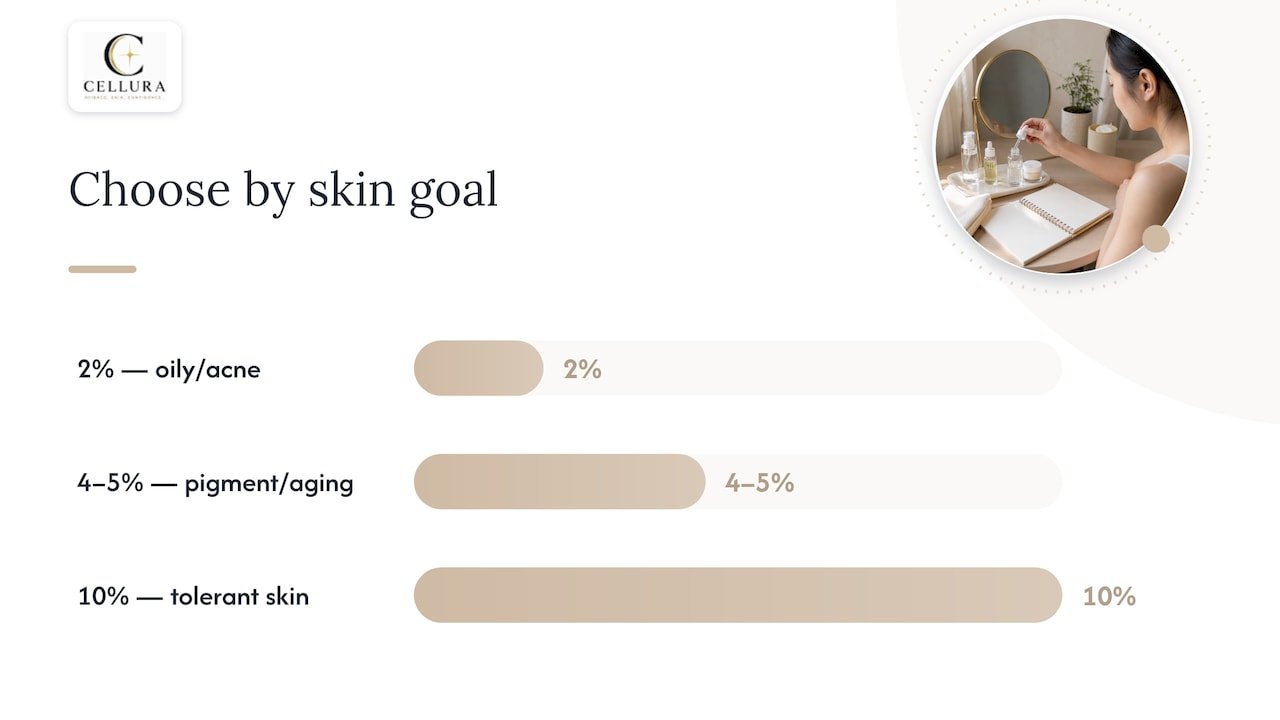
This is the range most melasma and anti-aging trials have used, and it is why dermatology references consistently point to it as the practical daily dose, a pattern confirmed across review literature on nicotinamide’s mechanisms.
At 10%, the picture is murkier. Some formulations push this high for a stronger brightening effect, but irritation risk climbs, particularly for reactive or compromised skin barriers, and the vehicle carrying the niacinamide becomes a bigger factor in whether it stings.
- 2% fits: oily, acne-prone, or sensitized skin starting out with actives.
- 4-5% fits: anyone targeting dark spots, uneven tone, or early fine lines.
- 10% fits: tolerant skin already acclimated to niacinamide, seeking incremental gains.
Choosing between a best niacinamide serum for oily skin and a pigment-focused formula often comes down to which of these three goals matters most right now.
The Clinical Evidence Behind These Concentrations
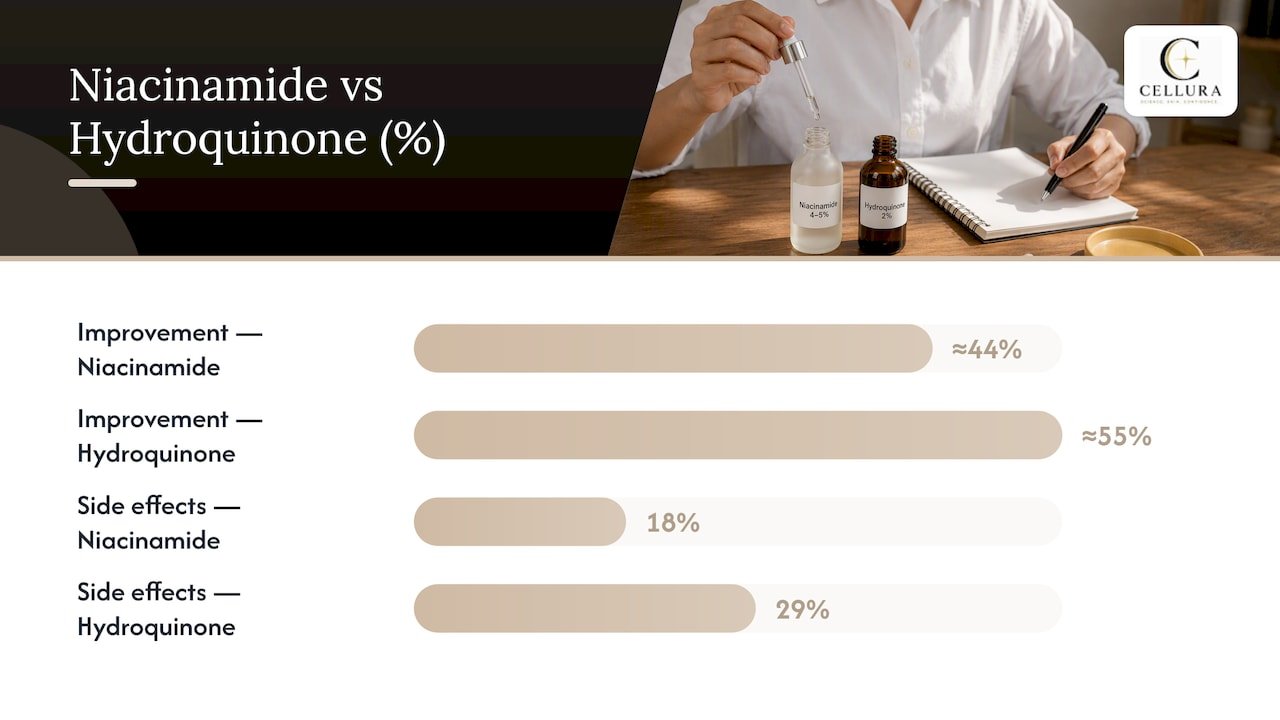
The strongest data point for pigmentation comes from an 8-week randomized, double-blind trial comparing 4% niacinamide to 4% hydroquinone for melasma. Niacinamide produced good to excellent improvement in about 44% of participants compared to roughly 55% for hydroquinone, but with fewer side effects overall, 18% versus 29%, according to the randomized trial of niacinamide versus hydroquinone.
Trials on 2% niacinamide show a measurable drop in sebum excretion within four to six weeks, a result replicated across two different ethnic cohorts, per research on facial sebum production.
Safety reviews back up the tolerability side of this equation. Systematic reviews of topical niacinamide report that most formulations show no stinging at 5%, and many standard irritation tests find no stinging even at 10%, though individual sensitivity still varies, based on the safety and tolerability review of topical niacinamide.
A few consistent patterns emerge from this body of work:
- Trials targeting pigment or aging almost always use approximately 4% to 5%.
- Trials targeting oil or acne almost always use around 2%.
- Most clinical windows run 6 to 12 weeks before measuring results.
- Side effect rates stay low across these ranges when formulation is sound.
How to Pick Your Starting Niacinamide Percentage
Choosing a concentration is less about finding the “strongest” option and more about matching your skin’s current tolerance to your goal.
- Start at 2% if you have oily, acne-prone, or reactive skin, or if this is your first niacinamide product.
- Start at 4-5% if your main concern is dark spots, melasma, or early aging and your skin already tolerates active ingredients.
- Consider 10% only after weeks of tolerating lower strengths, and only if you want incremental brightening.
- Check what else is in your routine. Retinoids, exfoliating acids, vitamin C, and benzoyl peroxide can all increase sensitivity when layered with niacinamide, a dynamic covered in more detail in this guide to niacinamide and retinol together.
- Patch test for three to five days on the inner forearm or jawline before applying to the full face, then introduce the product every other night for two weeks before going daily.
Pro Tip: If you notice persistent stinging, new severe redness, or any blistering, stop the product immediately and have your skin evaluated before trying another concentration.
Using Niacinamide Daily Without Irritating Your Skin
Niacinamide works in both morning and evening routines, but pairing it with sunscreen in the AM matters more for pigmentation outcomes than the time of day you apply it.
- Apply niacinamide after cleansing and before heavier creams, letting it absorb for a minute before layering moisturizer.
- Space niacinamide 15 to 20 minutes apart from vitamin C or strong acids if your skin tends to react, a sequencing issue covered in niacinamide versus vitamin C for dark spots.
- For mild tingling, reduce to every other day rather than stopping entirely.
- For moderate redness or persistent irritation, drop down a concentration tier or pause for a few days.
- See a dermatologist if irritation does not resolve within a week of reducing frequency.
A consistent, simple routine tends to outperform an aggressive one. The daily niacinamide routine guide walks through a sequence that keeps irritation low while still delivering results.
How Beauvex Approaches Niacinamide Concentration
The system is built around a three-step ritual: cleanse, treat, and support the skin barrier, on the premise that actives perform better when the skin around them is stable rather than compromised.
A serum product combines niacinamide with tranexamic acid and alpha-arbutin, targeting the pigmentation process at multiple points rather than relying on niacinamide alone. The concentrations used in this formula are published, letting readers compare the product against the clinical ranges described above rather than guessing.
- Fits readers dealing with post-acne discoloration who want a disclosed, research-referenced formula.
- Fits anyone comparing Luminé’s ingredient breakdown against published trial concentrations before buying.
- Fits readers who prefer combination actives over chasing a single high percentage.
Why the Right Percentage Matters Less Than You Think
Chasing the highest percentage on a label is a common mistake. Formulation, vehicle, and how your skin actually tolerates a product predict results better than the number alone. Escalate slowly, patch test first, and favor brands that disclose their concentrations.
— Beauvex LLC
A Transparent Niacinamide Option Worth Comparing
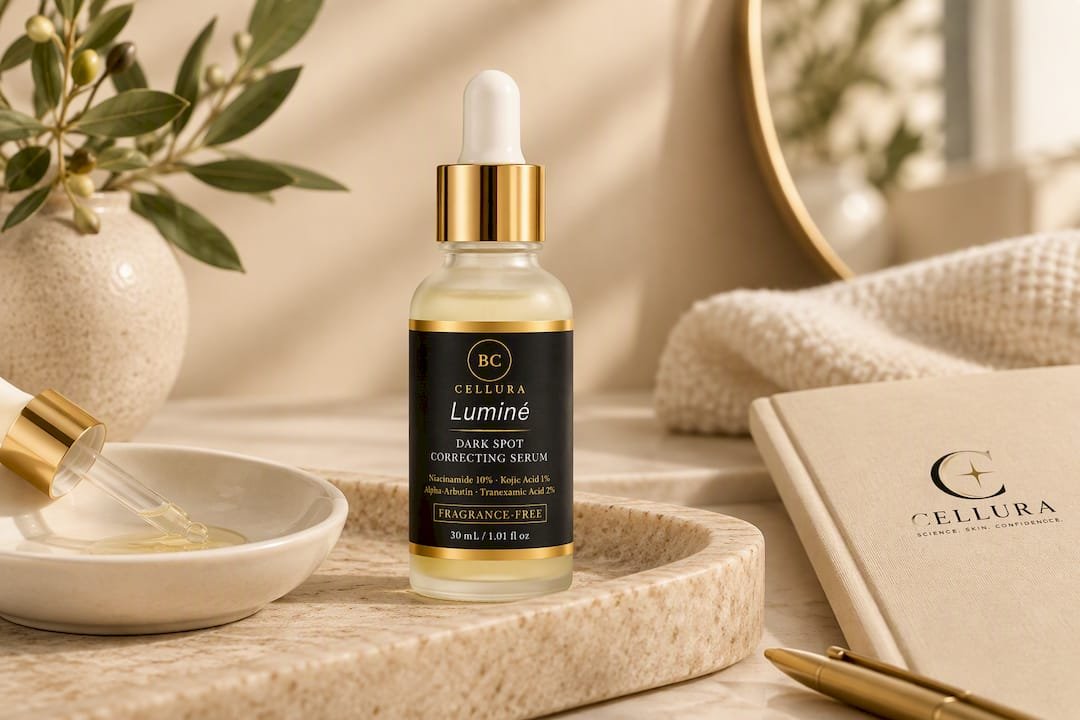
If post-acne dark spots are your main concern, the Cellura Luminé Brightening Serum pairs niacinamide with tranexamic acid and alpha-arbutin at concentrations Beauvex discloses on the product page, so you can measure the formula against the clinical ranges covered above instead of taking a marketing claim at face value.
- Built for readers dealing with lingering discoloration from past breakouts.
- Suited to anyone who wants to see the actual percentages before buying.
- Part of the broader Cellura line if you are assembling a full routine.
Check the Cellura Luminé Brightening Serum page for full ingredient concentrations and current availability.
FAQ
Is 5% or 10% niacinamide better for dark spots?
Most clinical trials for pigmentation use 4% to 5%, and that range has the strongest track record for measurable improvement, based on the niacinamide versus hydroquinone trial.
Is 5% niacinamide too strong for sensitive skin?
Safety reviews report that most tolerability tests show no stinging at 5%, though individual sensitivity still varies, per the safety review of topical niacinamide. Patch testing before full use is still the safest approach for reactive skin.
Is 2% niacinamide strong enough to work?
Yes. Controlled trials found that 2% niacinamide measurably reduced sebum production within four to six weeks, making it an effective, gentle starting point for oily or acne-prone skin, according to research on 2% niacinamide and sebum.
Is 20% niacinamide too high to use safely?
Without trial data at that level, it is safer to stay within the studied range and increase gradually rather than assume more is better.
Sources
- A Double-Blind, Randomized Clinical Trial of Niacinamide 4% versus Hydroquinone 4% in the Treatment of Melasma
- The effect of 2% niacinamide on facial sebum production