Hydroquinone acts faster and produces stronger results for stubborn melasma, while kojic acid works more slowly but tends to suit long-term, lower-irritation use. A 2013 randomized trial found 4% hydroquinone brought significantly quicker improvement than 0.75% kojic acid in the early weeks of treatment. Combination regimens generally outperform either ingredient alone, and daily sunscreen is not optional with either one. Prescription-strength hydroquinone should be used under a clinician’s guidance.
TL;DR:
- Hydroquinone produces faster melasma improvement, often within four weeks, compared to kojic acid’s slower onset that may take longer than eight weeks.
- Combining hydroquinone with kojic acid can lead to greater pigment reduction, with some studies showing a 71% decrease in MASI scores.
- Long-term unsupervised use of hydroquinone carries risks like ochronosis and skin discoloration, while kojic acid generally has fewer permanent side effects.
- Both active ingredients should be patch tested before use, and sun protection with broad-spectrum SPF 30 or higher is essential during treatment.
- Prescription-strength hydroquinone must be used under medical supervision, especially in markets where OTC sales are restricted or regulated.
Table of Contents
- Comparative efficacy: what the clinical trials actually show
- How hydroquinone and kojic acid actually block pigmentation
- Short-term irritation and rare long-term risks to watch for
- Concentrations, timelines, and how to apply either ingredient safely
- Combining the two: how clinicians balance speed with tolerability
- Where the FDA and cosmetic regulations draw the line
- Choosing an approach for melasma, dark spots, and sensitive skin
- Why Beauvex’s transparency-first formulas reflect the research
- The real lesson from the hydroquinone versus kojic acid debate
- A maintenance-minded next step for your skin routine
- Authoritative studies and guidelines referenced
- Sources
- FAQ
Comparative efficacy: what the clinical trials actually show
The most cited head-to-head data comes from a 2013 study comparing 4% hydroquinone to 0.75% kojic acid cream in patients with facial melasma. Researchers tracked Melasma Area and Severity Index (MASI) scores, a standard measure of pigmentation extent and intensity, over the course of treatment. The hydroquinone group showed a significantly faster onset of improvement within the first four weeks, while the kojic acid group needed more time to reach comparable, though generally smaller, reductions.
That speed gap matters practically. Someone treating melasma before a wedding or a big event has a different calculus than someone managing mild post-acne marks with no deadline.
Combination therapy changes the picture further. A review of kojic acid’s biological activity and safety reports that pairing kojic acid with hydroquinone produced a 71% reduction in MASI scores in one clinical trial, a larger drop than either ingredient achieved alone. This lines up with how dermatologists often approach resistant pigmentation: layering ingredients that hit the pigment pathway from different angles rather than raising the dose of a single agent.
A few caveats keep these numbers in context:
- Most published trials involve relatively small patient groups, so results may vary across different skin types.
- The foundational 2013 trial and much of the supporting kojic acid literature focus on specific populations, which limits how confidently the findings generalize across all Fitzpatrick skin types.
- Trial durations typically cover a few months, so long-term data beyond that period is more limited compared to short-term efficacy data.
In a 2013 randomized trial, 4% hydroquinone produced significantly faster melasma improvement than 0.75% kojic acid within the first four weeks of use. That early gap is the main reason clinicians reach for hydroquinone when speed is the priority, and reach for gentler agents when it is not.
How hydroquinone and kojic acid actually block pigmentation
Both ingredients interfere with melanin production, but they do it differently, and that difference explains why one acts faster while the other tends to be gentler.

Hydroquinone primarily works by inhibiting tyrosinase, the enzyme that drives melanin synthesis, while also affecting melanocyte function more broadly, according to mechanism reviews of topical lightening agents. This broader disruption of the pigment-producing cell is part of why its clinical effects show up sooner.
Kojic acid also inhibits tyrosinase, but through a different chemical route, and it carries antioxidant properties that hydroquinone lacks. It is also less chemically stable in some formulations, which is one reason cosmetic brands often pair it with other actives or use derivative forms to improve shelf life and performance.
- Hydroquinone targets tyrosinase activity and melanocyte function directly, producing a faster visible effect.
- Kojic acid inhibits tyrosinase through a separate mechanism and adds antioxidant activity, but can be less stable in formulation.
- Because the two ingredients act on overlapping but distinct points in the melanin pathway, combining them can produce an additive effect rather than simply doubling up on the same mechanism.
That mechanistic overlap, not just habit, is the real reason combination regimens tend to outperform either ingredient used alone.
Short-term irritation and rare long-term risks to watch for
Both ingredients can irritate skin, but the risk profiles diverge the longer you look at them.
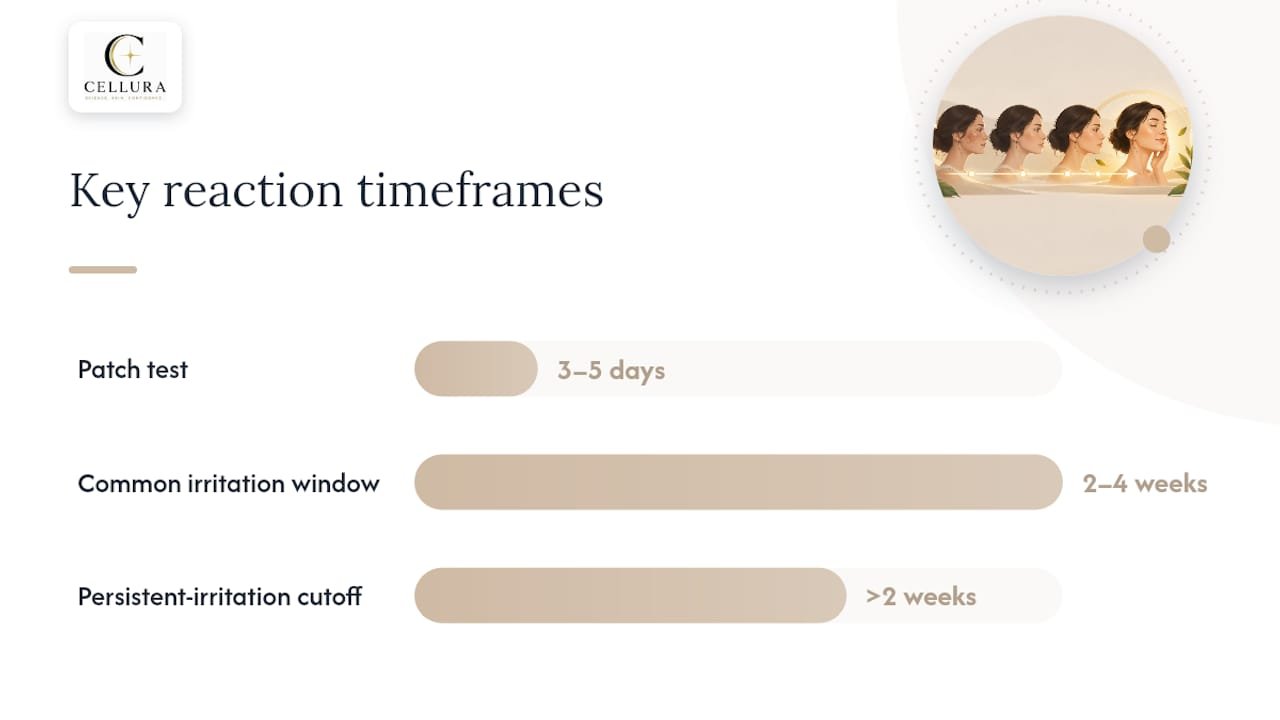
Common reactions to either ingredient include redness, stinging, dryness, and mild peeling, especially in the first two to four weeks. A patch test on a small area of skin, worn for several days before full-face use, catches most sensitivity issues before they become a bigger problem.
- Stop use and reassess if you see spreading redness, blistering, or a rash rather than mild, temporary irritation.
- Watch for a slow, unexpected darkening or blue-gray discoloration, particularly with long-term unsupervised hydroquinone use.
- Discontinue and see a dermatologist if irritation persists beyond two weeks despite reduced frequency.
The more serious concern with hydroquinone is exogenous ochronosis, a rare but sometimes permanent blue-gray skin discoloration linked to prolonged, unsupervised use of high-concentration products. The FDA has warned that skin-lightening products containing hydroquinone can cause harm, noting that hydroquinone is not approved for over-the-counter sale in the United States and that reported adverse effects include rashes, facial swelling, and ochronosis.
Kojic acid, used at typical cosmetic concentrations, carries its own irritation risk but far fewer reports of permanent skin damage. It is generally formulated at lower strengths than prescription hydroquinone, which is part of why it is viewed as the safer option for extended use.
Pro Tip: Patch test any new lightening product on your inner forearm for three to five days before applying it to your face, especially if you have a history of sensitive or reactive skin.
The FDA warns that hydroquinone is not approved for OTC sale in the United States and has linked unsupervised use to adverse effects including ochronosis. That single regulatory fact should shape how you shop for it.
Concentrations, timelines, and how to apply either ingredient safely
Clinical trials most often study hydroquinone at 2% to 4% concentrations, while kojic acid appears in cosmetic products typically ranging from 0.75% to 3%, according to a review of kojic acid’s safety data. Higher-strength hydroquinone generally requires a prescription in many markets, while kojic acid is widely available in over-the-counter cosmetic formulations.
- Apply either active at night, since both can increase sun sensitivity, and follow with sunscreen every morning without exception.
- Give hydroquinone four to eight weeks before judging results, and expect kojic acid to take longer given its slower mechanism.
- Patch test for several days before full application, particularly with any new hydroquinone product.
- Stagger use with retinoids or exfoliating acids rather than layering them the same night, since combined irritation is common.
- Check in with a dermatologist or prescriber before starting or continuing hydroquinone beyond the initial trial window.
Combining the two: how clinicians balance speed with tolerability
The strongest evidence for combination use comes from the same kojic acid safety review that reported a 71% MASI reduction when kojic acid was paired with hydroquinone, compared with smaller reductions from either ingredient alone. In practice, many clinicians use a short, supervised course of hydroquinone to get pigmentation down quickly, then transition to kojic acid or another gentler active for maintenance.
- Start with a defined hydroquinone cycle under supervision rather than open-ended daily use.
- Introduce kojic acid, tranexamic acid, or niacinamide as pigmentation improves to sustain results with less irritation risk.
- Add a mild anti-inflammatory step, such as a fragrance-free moisturizer, on nights when irritation flares.
Pro Tip: Reserve prescription-strength hydroquinone for defined treatment windows, then switch to gentler maintenance actives once your pigmentation has visibly improved.
Sunscreen is not a footnote to this plan, it is part of the mechanism. The American Academy of Dermatology recommends broad-spectrum SPF 30 or higher, ideally with visible-light protection from iron oxides, since visible light can worsen melasma independent of UV exposure.
Where the FDA and cosmetic regulations draw the line
Access to these two ingredients differs sharply by region and by strength. In the United States, the FDA does not approve hydroquinone for over-the-counter sale and has flagged products, particularly those sourced informally online or from unregulated sellers, that may contain mercury or other unsafe additives alongside hydroquinone.
- Avoid unlabeled skin-lightening creams from informal marketplaces, since they carry a documented risk of mercury contamination.
- Treat any hydroquinone product above cosmetic-grade strength as one that belongs under a prescriber’s guidance, not a shelf purchase.
- Expect kojic acid to appear in ordinary cosmetic products at lower concentrations, generally without the same prescription requirement.
The FDA has specifically warned that some unregulated skin-lightening products carry a risk of mercury contamination alongside unsafe hydroquinone levels. That risk sits with sourcing, not with the ingredient itself when used as directed.
Choosing an approach for melasma, dark spots, and sensitive skin
The right choice depends less on which ingredient sounds stronger and more on your skin type, your pigmentation pattern, and how much risk you are willing to accept for faster results.
- For stubborn, well-established melasma, a short course of clinician-supervised hydroquinone often makes sense when visible improvement matters on a timeline.
- For post-inflammatory hyperpigmentation, maintenance goals, or sensitive skin, kojic acid, azelaic acid, or tranexamic acid tend to offer a gentler path with a lower irritation burden. A guide on kojic acid for dark spots covers this maintenance approach in more depth, and a hydroquinone alternatives comparison breaks down other gentler options.
- For darker Fitzpatrick skin types, which carry a higher baseline risk of paradoxical darkening or rebound pigmentation from aggressive treatment, gentler multi-active regimens are generally the safer starting point.
- Stop any active and consult a dermatologist if you notice spreading discoloration, persistent burning, or a rash that does not settle within days of stopping.
Why Beauvex’s transparency-first formulas reflect the research
The clinical evidence favors combination strategies over single-ingredient monotherapy, and that principle shapes how Beauvex approaches maintenance skincare. Its three-step ritual, cleansing, treatment, and barrier support, is built around layering complementary actives rather than relying on one ingredient at a high concentration.
- The Luminé Serum combines niacinamide, tranexamic acid, kojic acid, and alpha-arbutin, targeting pigmentation at multiple points in the melanin pathway rather than just one.
- Beauvex publishes exact ingredient concentrations for each formula rather than listing actives without strength data.
- Research references are published alongside each product, including where the brand’s own formulas differ from the concentrations used in published clinical trials.
This multi-mechanism approach mirrors what the trial data actually supports: pigmentation responds better to layered strategies than to a single ingredient pushed to its limit.
The real lesson from the hydroquinone versus kojic acid debate
The framing of “which ingredient wins” misses the point the clinical evidence actually makes. Speed and tolerability trade off against each other, and the trial data supports picking a lane deliberately rather than defaulting to whichever ingredient sounds more potent on a label.
The bigger failure in most at-home routines is not the ingredient choice, it is the absence of sunscreen and the impatience that leads people to stack too many actives too fast. A slower, layered kojic acid routine that gets used consistently for months will often beat an inconsistently applied hydroquinone course that gets abandoned after two weeks of irritation.
If there is one thing the research supports clearly, it is this: combination therapy beats monotherapy, and photoprotection is not a supporting detail, it is part of the treatment itself. Anyone starting either ingredient should prioritize consistency and sun protection over chasing the fastest possible result.
— Beauvex LLC
A maintenance-minded next step for your skin routine
If you are managing post-acne discoloration rather than active melasma, a transparent, multi-active maintenance routine is often the more sustainable path than cycling on and off prescription-strength hydroquinone. Beauvex’s Cellura line is built around that idea, with published concentrations for every active ingredient it uses.
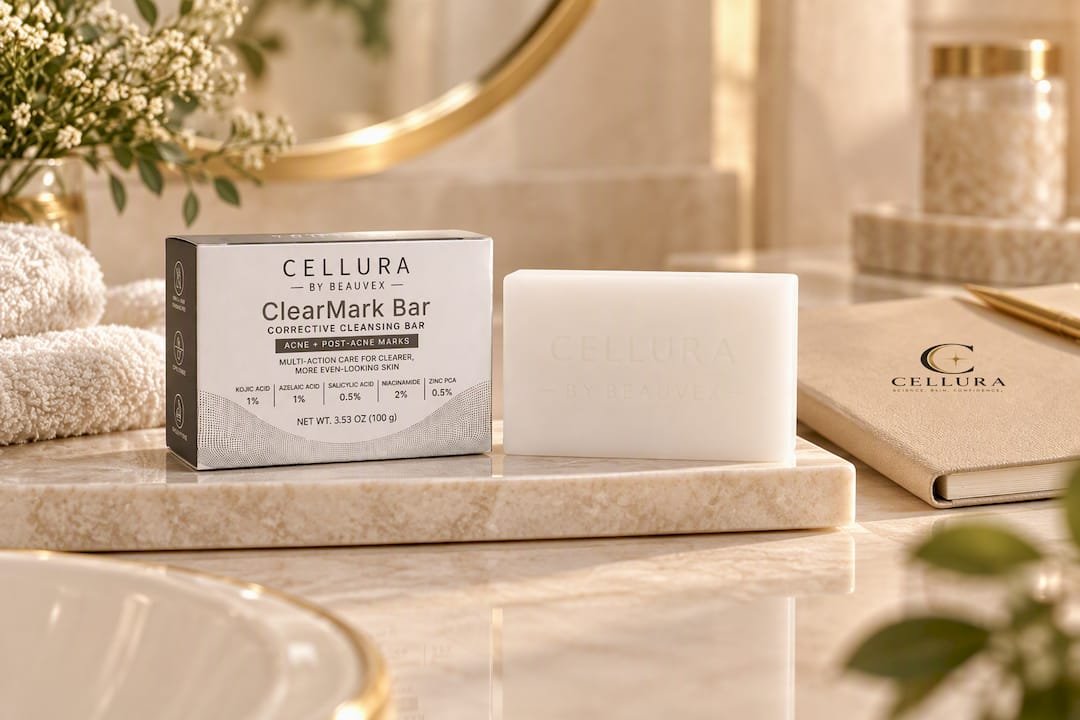
- The Cellura ClearMark Bar combines salicylic, azelaic, and kojic acid in a cleansing step designed to support ongoing dark spot maintenance.
- The Luminé Serum layers niacinamide, tranexamic acid, kojic acid, and alpha-arbutin for a multi-mechanism approach that mirrors the combination evidence discussed above.
- If you are considering prescription-strength hydroquinone for faster results, talk to a dermatologist first to weigh the speed against the supervision it requires.
Explore the full Cellura line to see how a transparent, evidence-referenced routine fits into your maintenance plan.
Authoritative studies and guidelines referenced
- A comparative study of 4% hydroquinone vs 0.75% kojic acid cream in melasma
- American Academy of Dermatology: melasma diagnosis and treatment
- Biological activities and safety data of kojic acid
- Experimental study on skin lightening agents
This article is general information, not a substitute for advice from a qualified doctor. Consult a qualified healthcare professional about your own circumstances before acting on anything here.
Sources
- A comparative study of the efficacy of 4% hydroquinone vs 0.75% kojic acid cream in the treatment of facial melasma
- Biological activities and safety data of kojic acid and its derivatives: A review
- Melasma: Diagnosis and treatment — American Academy of Dermatology
- Effects of skin lightening cream agents – hydroquinone and kojic acid (experimental study)
FAQ
What lightens skin better than hydroquinone?
No single ingredient is universally stronger, but options like tranexamic acid, azelaic acid, and combination regimens with kojic acid can produce meaningful results with less risk of long-term side effects. The American Academy of Dermatology notes that combined regimens generally outperform single-ingredient treatments for melasma.
Can you use hydroquinone with kojic acid?
Yes, and clinical evidence supports it: one trial reported a 71% reduction in MASI scores when kojic acid was combined with hydroquinone, compared with smaller reductions from either ingredient alone. Many clinicians use this pairing deliberately to balance faster results with better tolerability.
Why is my skin getting darker after using kojic acid?
Increased darkness after starting a lightening ingredient is usually a sign of irritation-triggered inflammation rather than the ingredient itself causing pigment. Stopping the product, protecting skin with sunscreen, and reintroducing it more slowly, or consulting a dermatologist if darkening persists, usually resolves the issue.
What is the disadvantage of kojic?
Kojic acid works more slowly than hydroquinone, often requiring longer than eight weeks to show visible change, and it can still cause irritation in sensitive skin despite being generally considered gentler. It can also be less stable in some formulations, which is why it is often paired with other actives.