
Vitamin C is the better pick for general brightening, dullness, and sun-related discoloration, while tranexamic acid tends to work faster on pigment tied to inflammation or hormones, like melasma and post-acne marks. Neither ingredient cancels the other out. Most dermatologists and formulators treat them as teammates, not rivals, provided the formula is stable and sunscreen is non-negotiable. The ingredient name matters less than whether the product actually holds its potency on your bathroom shelf.
TL;DR:
- Tranexamic acid is more effective for inflammation- or hormone-related pigmentation, such as melasma and post-inflammatory marks, with better formulation stability than vitamin C.
- Vitamin C excels at brightening dull skin, protecting against sun damage, and supporting collagen, but requires careful formulation and storage to maintain its potency.
- Combining both ingredients in a routine can enhance results, especially when skin is treated with in-office procedures like microneedling or laser.
- Melasma responds better to tranexamic acid, while sun spots and general photoaging benefit more from vitamin C and daily sun protection.
- Consistent use over eight to twelve weeks, along with sunscreen, is essential for visible fading, regardless of the active chosen.
Table of Contents
- How Tranexamic Acid and Vitamin C Work (and Why That Changes Results)
- Which Pigmentation Type Responds Best to Each Ingredient?
- What the Clinical Evidence Actually Shows
- How to Layer Vitamin C and Tranexamic Acid Without Irritation
- How to Choose a Product That Actually Works
- Sample Routines for Different Skin Goals
- How Beauvex LLC Applies These Principles
- Our Take: Consistency Beats Chasing the “Better” Ingredient
- Try the Cellura Ritual for Evidence-Aligned Dark Spot Care
- Sources
- FAQ
How Tranexamic Acid and Vitamin C Work (and Why That Changes Results)
Tranexamic acid was originally developed as an anti-clotting medication, but topically it works through a completely different pathway: it blocks plasmin activity in skin cells, which interrupts the signaling that tells melanocytes to overproduce pigment after inflammation or UV exposure. That anti-plasmin action is why tranexamic acid, often shortened to TXA, shows up so often in melasma research. Melasma is driven partly by vascular and inflammatory triggers, and TXA calms that cascade at the source rather than just bleaching existing pigment.
Vitamin C works differently. As L-ascorbic acid, it inhibits tyrosinase, the enzyme responsible for the first step of melanin production, while also neutralizing free radicals from sun exposure and pollution. It has a secondary benefit TXA doesn’t: it supports collagen synthesis, which is part of why vitamin C serum shows up in nearly every anti-aging routine, not just brightening ones.
The catch is stability. L-ascorbic acid oxidizes readily when exposed to light, air, or the wrong pH, and an oxidized vitamin C serum turns a dull yellow or brown and loses much of its punch. Formulators fight this with airtight packaging, added antioxidants like vitamin E and ferulic acid, or by switching to a more stable derivative altogether. Tranexamic acid doesn’t have this problem. It’s a comparatively simple, stable molecule that holds up across a wider range of pH levels and packaging types, which is part of why brands can formulate it into everything from watery essences to rich creams without much fuss.
That difference in formulation stability, not just biochemistry, is part of why the two ingredients tend to earn different reputations in practice:
- Tranexamic acid: better suited to inflammation- or hormone-driven pigment (melasma, post-inflammatory marks), and easier to keep stable long-term.
- Vitamin C: better suited to overall dullness, sun damage, and antioxidant defense, but requires careful formulation and storage to stay effective.
- Both: interrupt melanin production, though at different points in the pathway, which is exactly why combining them is common practice rather than redundant.
Skin tone, sensitivity, and the specific type of discoloration determine which one should lead your routine, and which one plays a supporting role.
Which Pigmentation Type Responds Best to Each Ingredient?
Melasma tends to respond more consistently to tranexamic acid for hyperpigmentation than to vitamin C alone. Melasma isn’t simple sun damage. It’s linked to hormonal shifts, heat, and vascular activity, and TXA’s anti-inflammatory action addresses that root mechanism more directly than an antioxidant can.
Post-inflammatory hyperpigmentation, the dark marks left behind after a pimple heals, responds to both ingredients, but tranexamic acid is frequently the gentler starting point for skin that’s already irritated or reactive. Vitamin C at higher concentrations can sting on compromised skin barriers, which is counterproductive when the goal is calming inflammation, not adding to it.
Sunspots and general photoaging are where vitamin C for hyperpigmentation earns its reputation. These marks come from cumulative UV exposure rather than inflammation, so an antioxidant that also defends against future sun damage does double duty. Pairing it with sunscreen and other brightening actives like niacinamide or alpha-arbutin tends to outperform using vitamin C in isolation.
A quick way to sort it:
- Melasma or hormonal pigment: lean toward tranexamic acid first.
- Fresh acne marks on reactive skin: start with TXA, since it’s generally better tolerated.
- Sunspots and dullness from UV exposure: vitamin C plus daily sunscreen does more heavy lifting.
- Sensitive or darker skin tones prone to reactive pigmentation: favor the ingredient with the lower irritation profile before layering in stronger actives.
Skin tone matters here too. Deeper skin tones are more prone to post-inflammatory hyperpigmentation from irritation itself, so a lower-irritation entry point protects against creating new dark spots while treating old ones.
What the Clinical Evidence Actually Shows
The strongest recent evidence comes from a 2026 systematic review and meta-analysis that found no statistically significant difference in overall efficacy between tranexamic acid and vitamin C when both were used as adjuncts to procedures like microneedling. Both were effective. Both were well tolerated. That parity at the meta-analysis level is worth remembering before anyone claims one ingredient definitively beats the other across the board.
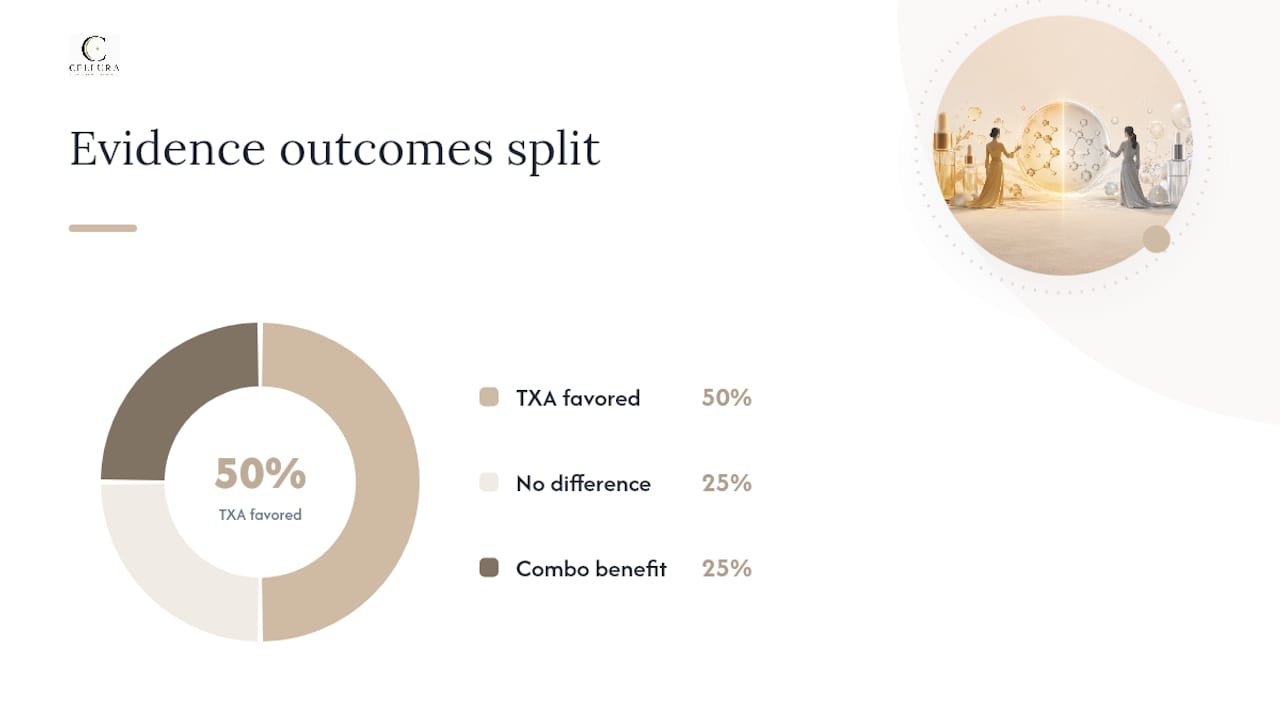
Zoom into individual trials, though, and TXA starts pulling ahead in specific scenarios. A split-face comparative study testing microneedling with tranexamic acid against microneedling with vitamin C found both sides improved, but the TXA-treated side showed greater improvement and higher patient satisfaction. Another study using Antera 3D camera measurements to track persistent post-acne erythema found tranexamic acid produced superior reductions in redness and hemoglobin readings compared to vitamin C after microneedling.
Delivery method changes the picture further. Research on fractional CO2 laser-assisted delivery comparing topical tranexamic acid against ascorbic acid after laser treatment reported more pronounced melasma score reductions on the tranexamic-acid-treated side. And a pilot study testing tranexamic acid 2% combined with vitamin C 2% found meaningful MASI score improvements in resistant melasma cases over eight weeks, with minimal side effects, reinforcing that the combination itself has real support.
| Evidence type | What it found | Best-fit takeaway |
|---|---|---|
| Systematic review (procedural adjunct use) | No significant difference between TXA and vitamin C | Both are valid adjuncts to microneedling or laser |
| Split-face microneedling trial | TXA side showed greater improvement, higher satisfaction | TXA edge for melasma with in-office delivery |
| Post-acne erythema study | TXA outperformed vitamin C on camera-measured redness | TXA favored for inflamed, reactive skin |
| Combination pilot study | TXA 2% + vitamin C 2% improved resistant melasma | Combining both is evidence-supported |
The pattern that emerges: efficacy is often close on paper, but tranexamic acid pulls ahead specifically in inflammatory and hormonal pigment, and especially when paired with in-office delivery methods like microneedling or laser that push the active deeper into skin.
How to Layer Vitamin C and Tranexamic Acid Without Irritation
Vitamin C generally works best in the morning, layered under sunscreen, since its antioxidant properties help defend against the free radicals your skin encounters during the day. Tranexamic acid is more flexible. Many formulations work fine at night, but a stable, well-formulated version can also be worn in the morning without issue.
A simple layering sequence:
- Cleanse first, using a gentle formula that won’t strip the skin barrier before actives go on.
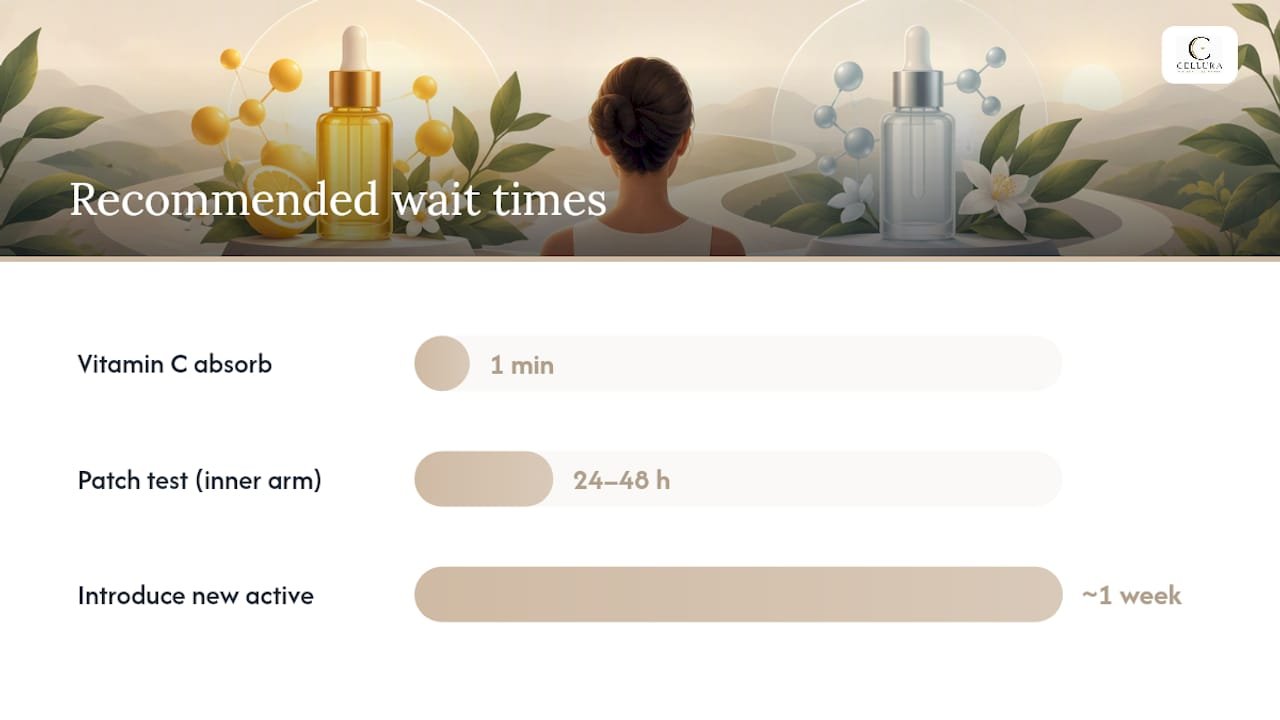
- Apply vitamin C serum in the morning, waiting roughly a minute for it to absorb before the next step.
- Follow with a hydrating layer or moisturizer if your vitamin C serum runs thin or watery.
- Finish every morning with broad-spectrum sunscreen, since unprotected skin undoes most of the progress either ingredient makes.
- In the evening, apply tranexamic acid serum after cleansing, then follow with a barrier-supporting moisturizer or balm.
The general rule is thin to thick: serums before creams, water-based formulas before oil-based ones. If you’re using an L-ascorbic acid serum, keep in mind its effectiveness depends on a low pH, which can occasionally clash with other acids or irritate sensitive skin. Stabilized vitamin C derivatives sidestep a lot of that pH sensitivity, and pairing vitamin C with niacinamide is generally fine in modern formulations, despite older myths claiming otherwise.
Pro Tip: Introduce one new active at a time, waiting about a week between additions, and patch test on your inner arm for 24 to 48 hours before applying anything new to your face. If persistent redness, stinging, or peeling shows up, stop and scale back rather than pushing through it.
How to Choose a Product That Actually Works
Label reading matters more than brand reputation here. Topical tranexamic acid products commonly land in the 2% to 5% range, while vitamin C products vary more widely: L-ascorbic acid formulas often sit between 10% and 20%, while stabilized derivatives are typically formulated at lower percentages since they work through a different delivery mechanism.
Packaging tells you almost as much as the ingredient list. A few signals worth checking before you buy:
- Airless pump dispensers or dark glass bottles protect vitamin C from the light and air exposure that degrade it fastest.
- Disclosed percentages on the label or product page signal a brand willing to stand behind its formulation, rather than hiding behind vague marketing terms.
- Supporting antioxidants like vitamin E or ferulic acid alongside L-ascorbic acid extend shelf stability and performance.
- Derivative type matters: magnesium ascorbyl phosphate and sodium ascorbyl phosphate are gentler and more stable but generally slower acting, while ascorbyl glucoside splits the difference between stability and potency.
In-office procedures change the math on all of this. Microneedling and fractional laser treatments physically create channels that let actives penetrate deeper than topical application alone allows, which is part of why the split-face studies above show more dramatic differences between TXA and vitamin C than you’d typically see from at-home use.
Sample Routines for Different Skin Goals
For sensitive or reactive skin prone to post-acne marks, start conservative:
- Gentle cleanser, morning and night.
- Tranexamic acid serum at night, three to four nights a week initially.
- Fragrance-free moisturizer or barrier balm layered over the serum.
- Sunscreen every morning, non-negotiable.
For melasma-prone skin, prioritize consistency over speed:
- Cleanse morning and night.
- Tranexamic acid serum nightly, extending to daily use once tolerated well.
- Vitamin C serum in the morning if the skin isn’t reactive, followed by sunscreen.
- Reassess after eight to twelve weeks, and bring in a dermatologist if pigment isn’t budging or worsens with sun exposure.
For general brightening and dullness, vitamin C leads:
- Cleanse, then apply vitamin C serum each morning.
- Sunscreen immediately after, no exceptions.
- Tranexamic acid serum at night, two to three times weekly at first.
- Increase frequency gradually over three to four weeks as tolerance builds.
Discontinue any active and consult a dermatologist if you notice persistent burning, swelling, or pigment that darkens rather than fades, since that can signal irritation-triggered hyperpigmentation rather than treatment progress.
How Beauvex LLC Applies These Principles
Beauvex LLC built the Cellura line around this exact logic: cleanse, treat, then support the barrier. The Luminé Brightening Serum combines tranexamic acid with niacinamide, kojic acid, and alpha-arbutin so it addresses inflammation-linked pigment and general dullness in one formula rather than forcing a choice between them.
Pro Tip: Check a product’s ingredient page for disclosed concentrations before buying. Publishing exact percentages and research references for each active lets consumers compare formulation choices against the clinical evidence rather than taking marketing claims at face value.
Our Take: Consistency Beats Chasing the “Better” Ingredient
Realistic expectations matter more than winning the tranexamic acid vs vitamin C debate. Visible fading takes eight to twelve weeks of consistent use, not eight to twelve days, and skipping sunscreen undoes progress faster than any serum can rebuild it. We’d rather publish our exact concentrations and let you patch test than promise overnight results. For melasma that resists a solid three-month routine, see a dermatologist. That’s not a failure of the product. It’s just what stubborn pigment sometimes requires.
— Beauvex LLC
Try the Cellura Ritual for Evidence-Aligned Dark Spot Care
An approach built around transparent concentrations, stable formulations, and ingredients matched to how pigment forms, rather than marketing, is recommended. The Cellura Ritual Complete Set pairs the ClearMark cleansing bar with the Luminé Brightening Serum and the GHK-Cu copper peptide balm, covering the cleanse, treat, and barrier-support sequence recommended throughout this guide in one bundle.

A serum formulated with tranexamic acid alongside niacinamide and alpha-arbutin can be a good starting product if tranexamic acid is your priority active, rather than using it isolated on its own. Product pages that list exact ingredient concentrations and supporting research allow consumers to check formulations against clinical evidence before buying. Visit the Cellura product line to compare individual items against the complete ritual set and pick the starting point that matches your skin’s current tolerance.
Sources
- Systematic review and meta-analysis (2026) – tranexamic acid and vitamin C adjunctive use
- Efficacy of tranexamic acid solution versus vitamin C solution after microneedling in treatment of persistent post acne erythema
FAQ
Can I Replace Vitamin C With Tranexamic Acid?
You can, but you’d be trading one benefit for another rather than getting a straight swap. Tranexamic acid handles inflammation- and hormone-linked pigment well, but it doesn’t offer the antioxidant, collagen-supporting benefits vitamin C provides against sun damage and dullness.
Should I Use Vitamin C First or Tranexamic Acid First?
Vitamin C typically goes in the morning under sunscreen, while tranexamic acid usually works better at night, though a stable formulation can be worn either time. If you’re using both in the same session, apply the thinner, more active serum first and let it absorb before layering the next product.
Can I Use Tranexamic Acid and Vitamin C Together?
Yes, and a pilot study combining tranexamic acid 2% with vitamin C 2% found meaningful improvement in resistant melasma over eight weeks with minimal side effects. Introduce them gradually rather than starting both on the same day, and watch for irritation as you build tolerance.
What Are the Disadvantages of Tranexamic Acid?
Topical tranexamic acid is generally well tolerated, but results take weeks to become visible, and it works best on inflammation- or hormone-driven pigment rather than general sun damage. It also doesn’t provide the antioxidant or collagen-support benefits that vitamin C brings to a routine, so relying on it alone can leave photoaging concerns unaddressed.