
For brown, tan, or gray-brown pigment (including melasma), tranexamic acid usually wins on both results and comfort. For red or pink marks, active acne, or rosacea-prone skin, azelaic acid does more of the work you need. Tranexamic acid tends to cause less early irritation at comparable strengths, and both have real trial data behind them. Patch test either one, match your pick to your dominant mark color, and see a dermatologist before starting anything for suspected melasma.
TL;DR:
- Tranexamic acid is generally better suited for targeting deep, brown, or melasma-like pigmentation, especially when combined with other treatments for stubborn cases.
- Azelaic acid is more effective for superficial marks, active acne, and rosacea, offering anti-inflammatory benefits and pore unclogging properties.
- Both ingredients produce similar results in reducing pigmentation within 12 weeks, but tranexamic acid causes significantly fewer early side effects such as irritation and redness.
- Combining topical tranexamic acid with azelaic acid can cover multiple skin concerns and may enhance results, provided they are layered properly and introduced gradually.
- Pregnant or breastfeeding individuals should prefer azelaic acid, as it has a longer safety record during pregnancy, while tranexamic acid should only be used under medical supervision.
Table of Contents
- Tranexamic Acid vs Azelaic Acid: What Tranexamic Acid Actually Does
- Tranexamic Acid vs Azelaic Acid: What Azelaic Acid Brings to the Table
- Which Ingredient Wins for Hyperpigmentation and Melasma?
- Which One Should You Pick for Your Skin and Marks?
- Can You Use Tranexamic Acid and Azelaic Acid Together?
- Safety, Pregnancy, and Special Considerations
- What the Clinical Evidence Actually Shows
- Beauvex’s Take on Choosing Between These Two
- Find Your Match in the Cellura Line
- Sources
- FAQ
Tranexamic Acid vs Azelaic Acid: What Tranexamic Acid Actually Does
Tranexamic acid started as a medication to stop bleeding. It blocks an enzyme called plasmin, which sounds unrelated to skin until you learn that plasmin activation is one of the triggers that pushes melanocytes into overdrive, especially under UV exposure and hormonal shifts. By interrupting that plasmin pathway, tranexamic acid calms the signal that tells pigment cells to keep producing melanin, and it also tempers the blood vessel activity that shows up in melasma-prone skin. That vascular piece matters. Melasma is not purely a pigment problem. It has a visible microvascular component, and tranexamic acid is one of the few actives that addresses both fronts at once, a mechanism laid out in reviews on tranexamic acid’s dermatologic uses.
Most people encounter tranexamic acid in one of these formats:
- Topical serums or solutions at 2% to 5%, the concentration range used in the clinical trials behind most of the evidence discussed below
- Microneedling or intradermal delivery, which pushes the ingredient deeper and can speed visible change in small studies
- Oral tranexamic acid, prescribed off-label for stubborn melasma, sometimes paired with topical treatment
Dermatologists reach for tranexamic acid specifically for melasma and for deeper, brown-toned postinflammatory hyperpigmentation, often layering it into regimens that already include niacinamide or alpha-arbutin. Tolerance is generally its selling point. Across trial data, it produces far fewer reports of stinging, redness, or peeling than higher-strength alternatives, which is a meaningful factor for anyone who has quit a treatment because their face couldn’t handle it. If you want a deeper look at how it stacks up against another popular brightening ingredient, tranexamic acid versus niacinamide covers that ground directly.
Tranexamic Acid vs Azelaic Acid: What Azelaic Acid Brings to the Table
Azelaic acid works through a different door entirely. It inhibits tyrosinase, the enzyme pigment cells need to manufacture melanin in the first place, so it slows new pigment production rather than acting on the vascular side of things. It is also genuinely anti-inflammatory and mildly comedolytic, meaning it helps unclog pores while calming the redness and swelling that come with active breakouts. That combination is why azelaic acid shows up constantly in acne and rosacea treatment, not just pigment correction.
You’ll typically see azelaic acid in these strengths:
- 10% in over-the-counter creams and gels, gentle enough for daily use in most routines
- 15% to 20% in prescription formulations or professional peels, where efficacy climbs but so does the chance of tingling, dryness, and flaking
- Combination formulas pairing azelaic acid with salicylic or kojic acid for acne-prone skin needing multiple actives at once
Clinically, azelaic acid earns its keep for acne, rosacea, red or pink postinflammatory marks, and the more superficial, epidermal component of melasma. Higher concentrations do more, but they also test your skin barrier harder. For a full breakdown of how strength affects results and irritation, see azelaic acid at 10% versus 20%.
Which Ingredient Wins for Hyperpigmentation and Melasma?
The clearest answer comes from a systematic review and meta-analysis of topical melasma treatments, which pooled data across 45 studies for efficacy and 55 for adverse effects. Tranexamic acid and azelaic acid landed close on effectiveness, with standardized mean differences of about -1.5 for tranexamic acid and -1.3 for azelaic acid against baseline. That’s a near tie on results.
By the numbers: A 12-week randomized trial testing 5% tranexamic acid against 20% azelaic acid for acne-related postinflammatory hyperpigmentation found comparable improvement at weeks 4, 8, and 12, but the early side-effect rate at week 4 told a different story: 36.6% for azelaic acid versus just 3.3% for tranexamic acid, according to the head-to-head clinical trial.
Melasma-specific research tilts a bit further toward tranexamic acid. A 2024 prospective comparative study found 5% topical tranexamic acid produced greater MASI score improvement than 20% azelaic acid, with 36.0% of the tranexamic acid group rated as excellent responders compared with 19.0% in the azelaic acid group. Combination regimens push results further still. Trials pairing oral tranexamic acid with topical agents, including hydroquinone-based triple therapy, report faster or larger improvements than either ingredient used alone, though oral and intradermal routes require medical supervision and aren’t something to try without a prescriber involved.
A few practical patterns fall out of this evidence:
- Brown, stubborn, melasma-type pigment: tranexamic acid has the edge, especially in combination protocols
- Red or pink acne marks: both perform similarly, but tranexamic acid gets there with less irritation along the way
- Texture-related or inflamed marks with active breakouts: azelaic acid’s anti-inflammatory action adds value tranexamic acid doesn’t offer
On timeline, expect visible change to start around week 4, with meaningful improvement building through weeks 8 to 12 for either ingredient. Procedural delivery changes that curve. A hemiface comparison of azelaic acid peels versus tranexamic acid microneedling found the azelaic acid peel produced visible whitening by session four, one session earlier than the microneedling group, though both sides showed significant MASI improvement by the study’s end.
Which One Should You Pick for Your Skin and Marks?
Match the ingredient to what you actually see in the mirror before you match it to anything else.
- Brown, tan, or gray-brown pigment (including melasma patches): start with tranexamic acid. It targets the vascular and melanocyte activity behind these deeper tones.
- Red or pink marks, especially with active acne: reach for azelaic acid first. Its anti-inflammatory effect works on both the mark and the breakout causing it.
- Mixed pigment with both brown and red tones: treat the dominant color first. Trying to fix everything at once usually just irritates skin that’s already stressed.
- Sensitive or compromised skin barrier: lower-strength tranexamic acid (2% to 5%) is typically the gentler entry point.
- Acne-prone or rosacea-prone skin: azelaic acid earns its place here even beyond pigment concerns, since it addresses the inflammation driving new marks.
Whichever you choose, patch test on your inner arm or jawline for 48 hours first, introduce only one new active at a time, and start at the lowest effective frequency, maybe three nights a week, before working up. None of this works without daily sunscreen. Melasma in particular flares hard with unprotected sun exposure, and SPF is non-negotiable co-therapy for any pigment treatment. If you suspect melasma rather than simple postinflammatory marks, see a dermatologist before starting, since melasma responds better to a diagnosis-driven plan than to guesswork.
Can You Use Tranexamic Acid and Azelaic Acid Together?
Yes, and the mechanisms actually complement each other well: one calms vascular and melanocyte activity, the other blocks new pigment production and cools inflammation. For mixed marks, that pairing covers more ground than either ingredient alone.
Layer thinnest to thickest: apply a tranexamic acid serum first, let it absorb, then follow with an azelaic acid cream. If your skin runs sensitive, alternate them instead, tranexamic acid one night, azelaic acid the next, rather than stacking both in a single routine. Start with the alternating approach for two to four weeks, and only combine them nightly once you know neither causes stinging or flaking on its own.
Pro Tip: Introduce the second active gradually and keep the rest of your routine boring while you do it. Skip new exfoliants or retinoids during the adjustment window so you can actually tell which product is causing any irritation.
Safety, Pregnancy, and Special Considerations
Side effects scale with concentration for both ingredients.
- Azelaic acid has a longer track record of topical use during pregnancy and breastfeeding, and it’s frequently the preferred choice for pregnant patients dealing with melasma or acne.
- Topical tranexamic acid has less established safety data in pregnancy, so talk to your doctor or dermatologist before starting it while pregnant or nursing.
- Oral and intradermal tranexamic acid carry their own considerations, including clotting risk factors, and belong strictly under a prescriber’s supervision, not a self-directed routine.
- If you notice persistent burning, swelling, or a rash that doesn’t settle within a few days of stopping the product, discontinue use and get it checked out.
What the Clinical Evidence Actually Shows
Three pieces of research carry most of the weight in this comparison, and each answers a slightly different question.
- The meta-analysis of 45 efficacy studies is the broadest view: tranexamic acid and azelaic acid perform similarly overall, but tranexamic acid’s pooled irritation rate (0.8%) is dramatically lower than azelaic acid’s (18.7%).
- The randomized trial in acne PIH patients is the most direct head-to-head: comparable results at 12 weeks, but a striking early tolerability gap at week 4 (3.3% versus 36.6% side effects).
- The 2024 melasma comparison study suggests tranexamic acid may pull ahead specifically for melasma, with more patients rated excellent responders.
Read these with a little caution. Sample sizes in dermatology trials are often modest, study populations vary by skin tone and geography, and delivery method (topical solution versus peel versus microneedling versus oral) changes outcomes in ways that make direct comparisons tricky. Tolerance matters more than the raw efficacy numbers suggest, too: patients who abandon a high-strength active because of early irritation never get the chance to see whether it would have worked. A milder option used consistently often beats a stronger one used for two weeks and then shelved.
Beauvex’s Take on Choosing Between These Two
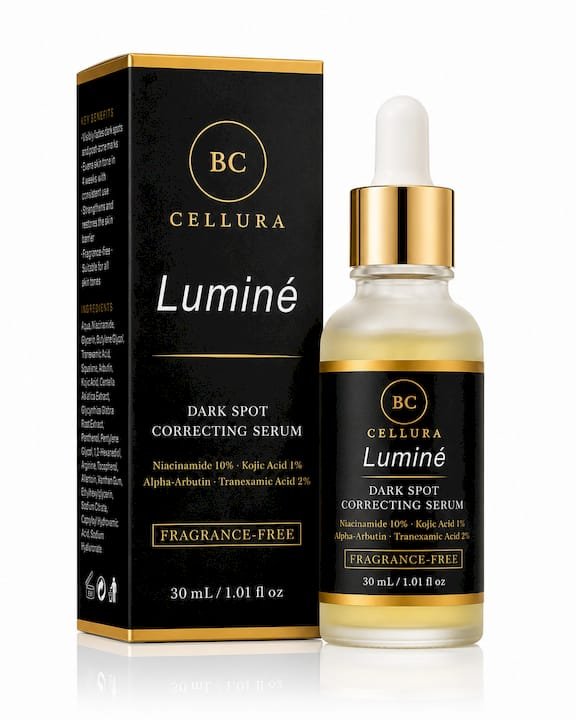
We formulate around the evidence, not around whichever ingredient is trending. That’s why Luminé Serum pairs tranexamic acid with niacinamide and alpha-arbutin rather than azelaic acid alone: for the brown, stubborn marks most of our customers describe, the trial data points that direction. ClearMark Bar handles the azelaic acid side of the equation, prepping acne-prone skin before treatment. Match your product to your dominant mark color, read the published concentrations before you buy anything, and loop in a dermatologist if melasma is on the table.
— Beauvex LLC
Find Your Match in the Cellura Line
The Cellura system is designed to help users choose which active ingredients may fit their routine. The Cellura Luminé Brightening Serum combines tranexamic acid with niacinamide and alpha-arbutin at published concentrations, built specifically for the brown, deeper pigment this article points you toward.

If your marks come with active breakouts, the Cellura ClearMark Bar combines salicylic, azelaic, and kojic acid in a cleansing format, prepping acne-prone skin before any treatment step goes on. Unlike brands that hide behind vague “proprietary blend” labels, the Cellura line publishes ingredient concentrations and some research references to help consumers assess the evidence. Browse the full Cellura line to see how the cleansing bar, serum, and barrier balm work as a three-step system, and pick the product that matches the mark color you’re actually trying to fade.
FAQ
Can you use azelaic acid and tranexamic acid together?
Yes. Their mechanisms complement each other, one calms melanocyte and vascular activity, the other blocks new pigment and reduces inflammation. Start by alternating them on different nights for two to four weeks before layering both into one routine.
Should I apply tranexamic acid or azelaic acid first?
Apply tranexamic acid serum first since it’s typically the thinner formulation, then follow with azelaic acid cream. If you’re alternating rather than combining, this ordering question doesn’t apply since you’d use just one per session.
What works better than azelaic acid?
For melasma specifically, a 2024 comparative study found 5% tranexamic acid produced greater MASI improvement than 20% azelaic acid, with more patients reaching excellent-response status. For red or pink acne marks, the two perform comparably, though tranexamic acid causes less early irritation.
Is azelaic acid or tranexamic acid better for dark spots?
It depends on the color of the spot. Brown or gray-brown marks and melasma respond better to tranexamic acid, while red or pink postinflammatory marks respond just as well to either, with azelaic acid adding extra benefit if active acne is still present. Products like Cellura Luminé Serum are built around the tranexamic acid side of that split for exactly this reason.