Salicylic acid is usually the better pick for oily, acne-prone skin, while glycolic acid tends to win for surface texture, dullness, and post-acne dark spots. The right answer still bends around your product’s concentration, its form, and how your skin actually tolerates exfoliation. Some people use both, on different nights, once their skin builds tolerance.
TL;DR:
- Salicylic acid is best suited for oiliness and acne because it penetrates pores and reduces inflammation, while glycolic acid improves surface texture and fade marks.
- Use salicylic acid at 0.5% to 2% for daily treatments targeting breakouts, and glycolic acid at 5% to 10% for mild exfoliation and brightening, with higher concentrations reserved for professional peels.
- Both acids increase sun sensitivity, so daily SPF is essential, and overuse or high concentrations can damage the skin barrier, causing redness, tightness, or flaking.
- Combining acids is possible through alternating nights or using specially formulated products, but stacking strong acids in one application raises irritation risks.
- Prioritize treatment based on the active concern: target breakouts first with salicylic acid, then introduce glycolic acid for dullness or post-acne marks once inflammation subsides.
Table of Contents
- What Is Salicylic Acid?
- What Is Glycolic Acid?
- Where Glycolic and Salicylic Overlap
- Glycolic Acid vs Salicylic Acid: Key Differences
- Which One Fits Your Skin Concern?
- How to Use Each Acid Without Wrecking Your Skin
- Can You Use Glycolic and Salicylic Acid Together?
- How Beauvex Approaches Acne and Post-Acne Dark Spots
- Editorial Take: The Practical Decision Nobody Simplifies Enough
- Building Your Routine Around the Right Acid
- Sources
- FAQ
What Is Salicylic Acid?
Salicylic acid is a beta hydroxy acid (BHA), and its defining trait is that it’s oil soluble. That single property lets it slip past sebum and travel down into the pore lining, where it loosens the mix of oil and dead skin cells that turns into a blackhead or a pimple. It also calms inflammation, which is part of why dermatologists point to salicylic acid for oily, acne-prone skin over other exfoliants.
Most facial products land in the:
- 0.5% to 2% range for cleansers, pads, and spot treatments
- Higher concentrations (well above 2%) in professional peels and wart treatments
Statistic Callout: Consistent use for several weeks is typically needed before acne visibly improves, not days.
Salicylic acid is generally low risk, but the Mayo Clinic notes rare toxicity in cases of misuse, with extra caution advised for children and anyone with kidney or liver disease.
What Is Glycolic Acid?
Glycolic acid is an alpha hydroxy acid (AHA) derived from sugar cane, and it’s water soluble, which is the opposite chemistry from salicylic acid. Because it can’t slip into oily pores the same way, it works mostly at the surface, loosening the glue between dead skin cells so they shed faster. That surface action is what smooths rough texture, evens out tone, and gives skin the brighter look people associate with glycolic acid benefits.
You’ll find it in:
- toners and serums in commonly used percentage ranges for daily home use
- peel formulas at higher concentrations, usually reserved for professional settings
Statistic Callout: A peer-reviewed review comparing glycolic acid peels to salicylic-mandelic peels found no clear winner for global acne improvement, based on small trials and low-quality evidence, a reminder that “better” depends heavily on formulation and skin type.
Because it thins the outermost dead layer, glycolic acid helps fade superficial post-acne marks over weeks of steady use, though deeper pigment needs more time and often a partner ingredient.
Where Glycolic and Salicylic Overlap
Both acids speed up cell turnover, and both can chip away at rough texture and mild discoloration given enough time. That shared mechanism is also where the shared risks live.
- Both increase sun sensitivity, so daily SPF isn’t optional with either one
- Both come in rinse-off formats (cleansers, wash-off masks) and leave-on formats (serums, toners), and contact time changes how strong the effect feels
- Both can wreck your skin barrier if you overdo frequency or concentration, leading to redness, tightness, and flaking
The overlap explains why people often ask “which acid is better” as if there’s one universal answer. There isn’t. Context decides it.
Glycolic Acid vs Salicylic Acid: Key Differences
The clearest way to separate them is by solubility, because that single chemical fact drives almost everything else.
| Factor | Salicylic Acid (BHA) | Glycolic Acid (AHA) |
|---|---|---|
| Solubility | Oil soluble | Water soluble |
| Where it works | Inside the pore | Skin surface |
| Best for | Acne, blackheads, oily skin | Texture, dullness, post-acne marks |
| Irritation profile | Generally milder for oily/acne-prone skin | Can sting more on dry or sensitive skin |
| Molecule size | Larger, penetrates lipid-rich pores | Smaller molecule, spreads across surface cells |
Pro Tip: If your skin is dry or thin, start with glycolic acid at a lower percentage and shorter contact time. If your skin is oily with visible clogged pores, salicylic acid usually feels less irritating because it’s working where the actual problem sits.
The molecular size difference matters practically: glycolic’s small molecule covers the surface quickly, which is why it works fast on rough texture, while salicylic’s fat solubility lets it linger inside oil-filled pores rather than washing away.
Which One Fits Your Skin Concern?
Match the acid to the problem you actually see in the mirror, not the one you assume you have.
- Acne, blackheads, or visibly clogged pores — start with salicylic acid. Its pore-clearing action targets the exact mechanism behind breakouts.
- Dullness, rough patches, or superficial post-acne dark spots — start with glycolic acid, since surface exfoliation is what reveals fresher, more even-toned skin.
- Both acne and lingering dark marks — treat the active breakout first with salicylic acid, then introduce glycolic acid once inflammation calms down, or alternate nights.
- Pregnant, allergic to aspirin, or managing eczema or rosacea — skip both without medical guidance; salicylic acid is chemically related to aspirin, and either acid can aggravate a compromised barrier.
When concerns overlap, prioritize whichever problem is more active right now. Calm, then brighten. Not the other way around.
How to Use Each Acid Without Wrecking Your Skin
Start slow no matter which acid you pick. Two to three nights a week is a sane opening pace for either one, moving up gradually as your skin adjusts.
- Rinse-off cleansers and pads are more forgiving for beginners than leave-on serums
- Stick to OTC ranges (roughly 0.5% to 2% for salicylic acid, 5% to 10% for glycolic acid) unless a professional is guiding a stronger peel
- Watch for tightness, stinging, or flaking that lasts beyond application. That’s your overuse signal, not a sign it’s “working harder”
Statistic Callout: Sun sensitivity rises with both acids, which is why dermatologists treat daily SPF as non-negotiable alongside either one.
Layering either acid with retinoids or other strong actives on the same night raises irritation risk sharply. If you’re building a routine around niacinamide and salicylic acid together, space out your strongest actives and always patch test before committing to nightly use.
Can You Use Glycolic and Salicylic Acid Together?
You can, carefully, and alternation beats stacking both in one application. Health guidance on combining actives consistently favors spacing them out rather than layering separate strong acids on the same night.
- Use salicylic acid on active breakout zones most nights, as tolerated
- Reserve glycolic acid for two nights a week, on skin that isn’t currently irritated
- If you notice redness or peeling that won’t settle, drop both actives for a few days, moisturize, and reintroduce slowly
Pro Tip: A formulated combination product, built by a chemist to balance both acids at safe percentages, is usually gentler than DIY-layering two separate bottles.
How Beauvex Approaches Acne and Post-Acne Dark Spots
Beauvex LLC builds routines around a barrier-first philosophy: control oil and clogged pores first, then bring in targeted brightening once the skin has calmed down. Pairing surface exfoliation with actives like tranexamic acid and alpha-arbutin tends to outperform exfoliation alone for stubborn post-acne marks. In practice, that means a salicylic cleansing step for pore control, a brightening serum for discoloration, and SPF every single morning, no exceptions.
Editorial Take: The Practical Decision Nobody Simplifies Enough
The research doesn’t support crowning one acid as universally “better,” and that’s the part most articles gloss over. A systematic review comparing glycolic and salicylic-based peels found no clear difference in acne improvement, which tells you outcomes hinge on formulation, concentration, and your own skin, not on which acid sounds more advanced.
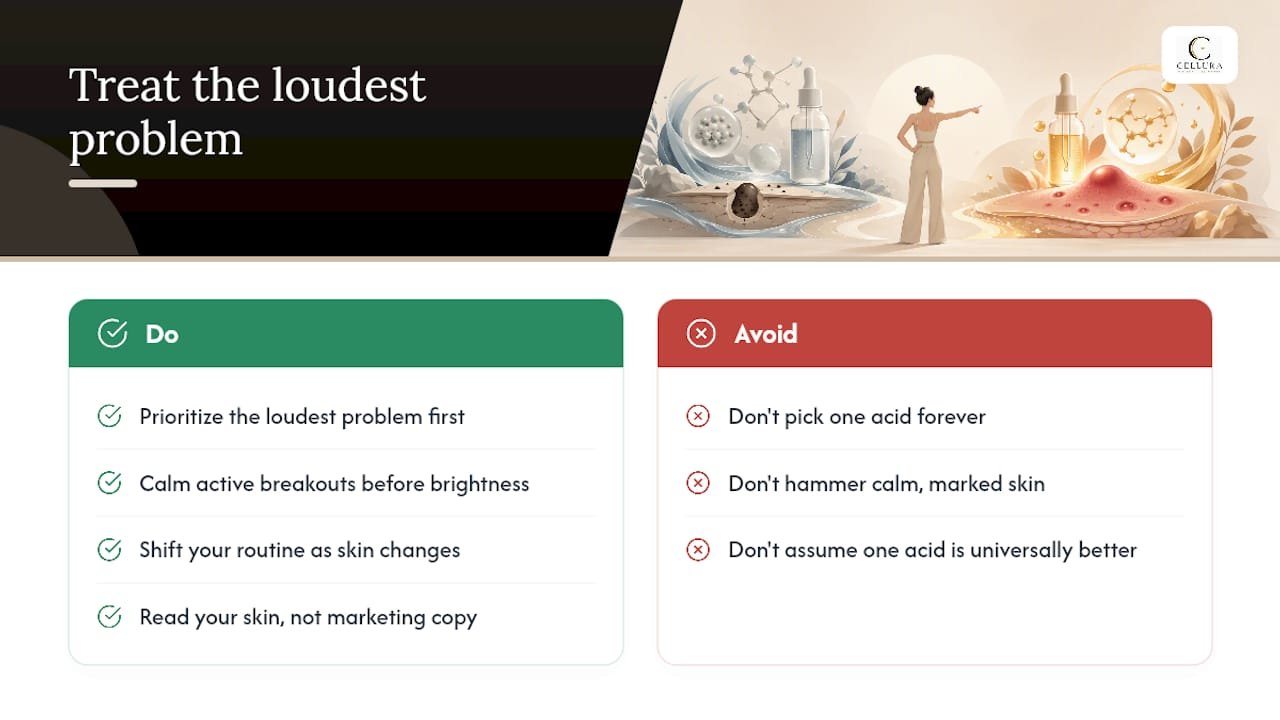
Where conventional advice falls short is the assumption that you pick one acid and stick with it forever. Real skin problems shift. Someone with active acne today might be dealing with flat, stubborn dark marks in three months, and their routine should shift with it.
Prioritize the loudest problem first. If breakouts are active, calm them before chasing brightness. If your skin is calm but marked up from old breakouts, don’t keep hammering it with pore-clearing acids that won’t touch surface discoloration. Read your skin, not the marketing copy on the bottle.
— Beauvex LLC
Building Your Routine Around the Right Acid
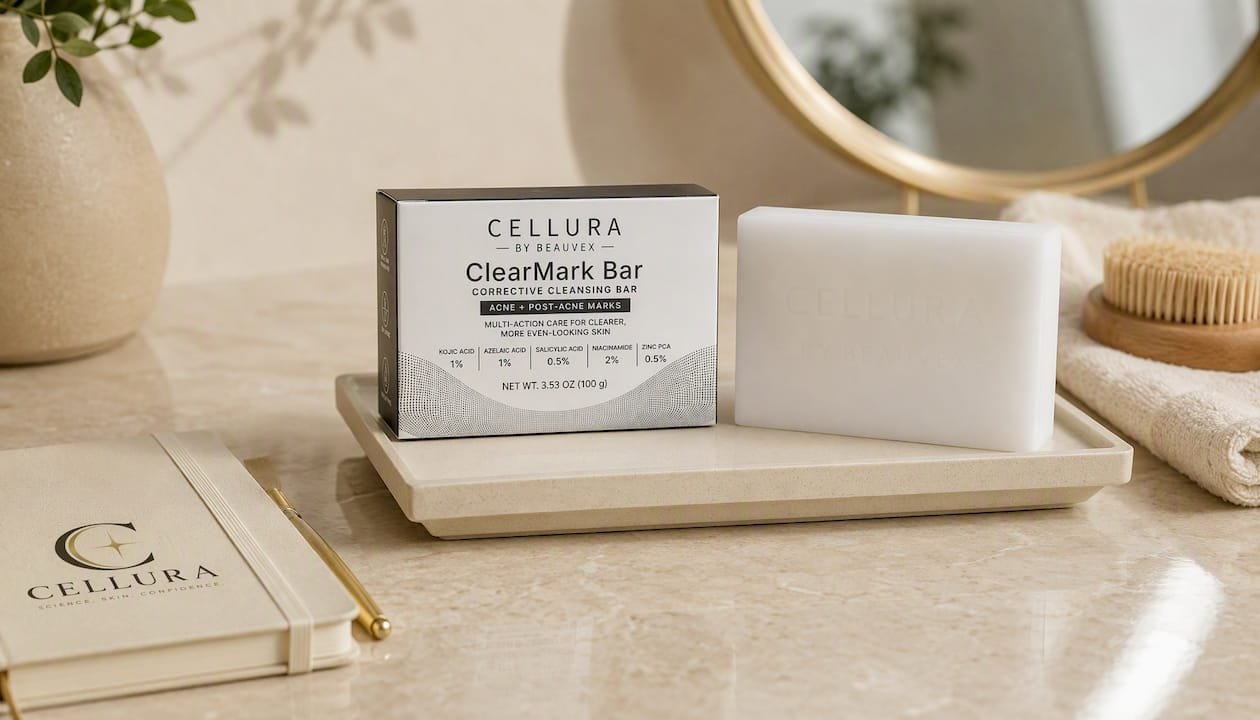
If clogged pores and breakouts are your main issue, the Cellura ClearMark Bar is built for that job. It’s a rinse-off cleansing bar combining salicylic, azelaic, and kojic acid, so it works oil control and pore clearing into a single daily step without asking you to layer separate leave-on treatments too early.
If your bigger frustration is the dark marks breakouts leave behind, the Cellura Luminé Brightening Serum pairs niacinamide, tranexamic acid, kojic acid, and alpha-arbutin to target discoloration at multiple stages, rather than relying on surface exfoliation alone. Many people end up using both across their routine: the bar in the morning and evening cleanse, the serum layered after, once skin has adjusted to any exfoliating acid. Check Cellura Skincare’s product lineup to see how the cleansing bar and serum fit into a full three-step ritual, and start with the step that matches your most active concern right now.
Sources
- Salicylic Vs. Glycolic Acid: A Dermatologist Explains the Difference
- Peer-reviewed review comparing glycolic acid and salicylic-based peels
- Salicylic acid (topical route) — Mayo Clinic
- Salicylic acid for acne: Benefits, dosages, and side effects — Healthline
FAQ
Which One Is Better, Glycolic Acid or Salicylic Acid?
Neither wins universally. Salicylic acid usually works better for oily, acne-prone skin because it penetrates pores, while glycolic acid tends to win for surface texture and dullness because it exfoliates at the surface.
Do You Need Both Salicylic Acid and Glycolic Acid?
Not necessarily. Many people only need one, matched to their main concern, though combining them on alternating nights can help if you’re managing both active acne and old discoloration at once.
What Should You Never Mix With Glycolic Acid?
Avoid layering glycolic acid with retinoids or other strong acids in the same routine, since stacking actives raises irritation risk rather than doubling the benefit. Space them across different nights instead.
Which Is Better for Armpits, Glycolic Acid or Salicylic Acid?
Glycolic acid is generally the gentler, more common choice for underarm skin, since it targets surface texture and dullness without the pore-penetrating action salicylic acid is built for. Start with a low concentration, since underarm skin tends to be more sensitive than facial skin.
Can Beauvex Products Replace a Choice Between These Two Acids?
Beauvex’s ClearMark Bar covers the salicylic acid role for pore control, while the Luminé Serum targets discoloration the way glycolic acid does at the surface, minus the exfoliating sting. For current pricing and availability, please refer to the product pages on the official website.