
Pick alpha arbutin when you want a targeted, gentle fix for a specific dark spot; pick vitamin C when you want broad antioxidant protection and an overall brighter tone. They are not rivals. Layer them with daily sunscreen and give the combination 8 to 12 weeks before judging results, and patch-test either one first if your skin reacts easily.
TL;DR:
- Alpha arbutin effectively prevents new pigment formation and is safe for sensitive skin, but it works slowly and does not reach deep dermal pigment.
- Vitamin C offers broad antioxidant protection, reduces existing dark spots, and is more effective for overall dullness and photoaging, yet it causes irritation at high concentrations.
- Combining a low pH vitamin C with alpha arbutin in the routine enhances results, but application order and patch testing are crucial to avoid irritation.
- Neither ingredient reliably treats stubborn or hormonally driven pigment like melasma; a dermatologist consultation may be necessary for such cases.
- Most brightening routines benefit from a multi-active approach, pairing ingredients like niacinamide, kojic acid, or tranexamic acid for more comprehensive results.
Table of Contents
- Alpha Arbutin vs Vitamin C: A Side-By-Side Comparison
- How Do Alpha Arbutin and Vitamin C Actually Work in Skin?
- Which One Should You Choose for Your Skin Type?
- How to Layer Alpha Arbutin and Vitamin C Without Wasting Either One
- What Side Effects and Limits Should You Watch For?
- What Beauvex LLC Has Learned From Building a Brightening Routine
- Ready to Put This Routine on Your Shelf?
- Where to Verify These Claims
- Sources
- FAQ
Alpha Arbutin vs Vitamin C: A Side-By-Side Comparison
Both ingredients lighten dark spots, but they get there through different routes, and that difference decides who should reach for which one first.
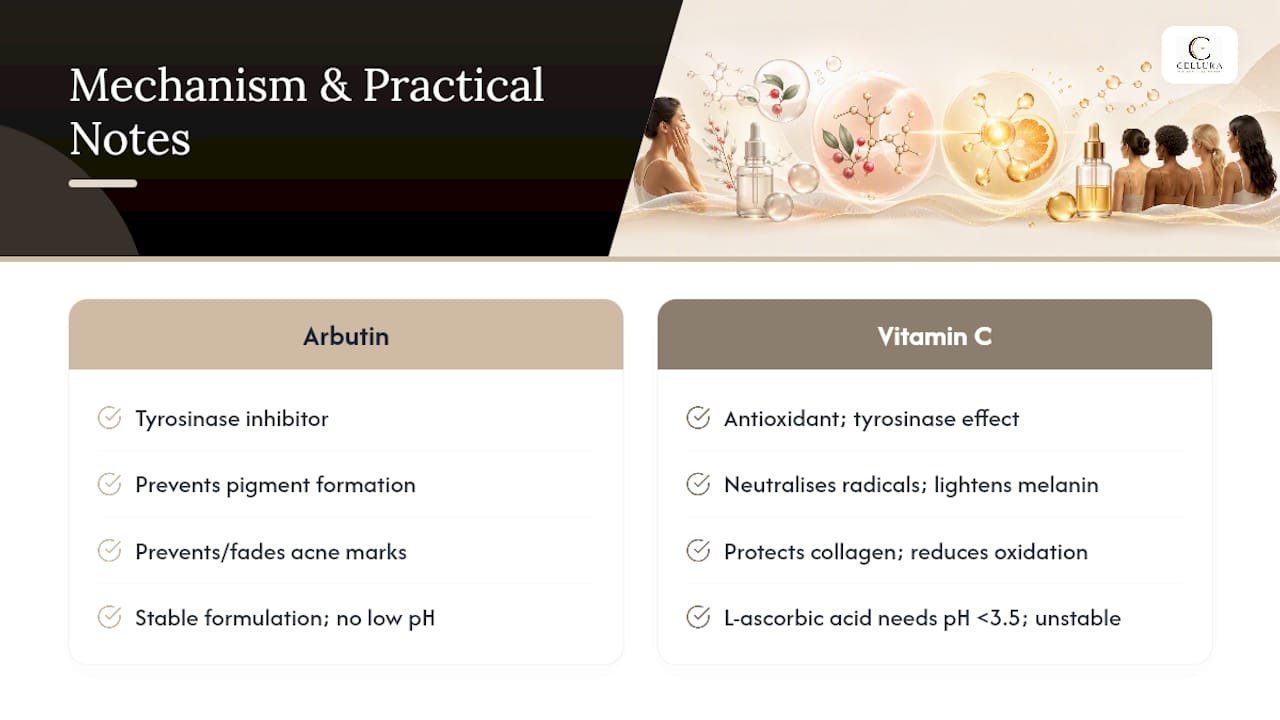
Alpha arbutin blocks tyrosinase, the enzyme that manufactures melanin, before pigment ever forms. It works at a near-neutral pH, so it sits comfortably in serums, creams, or even cleansing bars without much formulation drama. Vitamin C, in its active L-ascorbic acid form, works differently. It partly inhibits tyrosinase too, but its main job is neutralizing oxidative stress and reducing melanin that has already darkened, while also feeding collagen synthesis along the way.
- Mechanism: Arbutin stops new pigment at the source; vitamin C fights oxidative damage and lightens existing pigment.
- Concentration: Alpha arbutin is typically formulated at 1 to 2%, with the European Commission capping face products at 2%. Vitamin C formulation concentrations vary depending on the active form used, including derivatives and pure L-ascorbic acid, without specifying exact percentages.
- Stability: Arbutin holds up well across a wide pH range. L-ascorbic acid oxidizes fast once exposed to air or light, turning a bottle brown and less effective.
- Irritation risk: Arbutin is one of the calmer brighteners on the shelf, according to a side-by-side ingredient breakdown from SYNC Beauty, while high-strength L-ascorbic acid commonly stings, especially on reactive or compromised skin.
- Limits: Neither ingredient reaches pigment sitting deep in the dermis. Melasma and stubborn post-inflammatory marks often need a dermatologist’s input rather than an over-the-counter fix alone.
If your skin flares at the mention of a 15% vitamin C serum, arbutin is the safer entry point. If your main concern is overall dullness and prevention rather than one specific mark, vitamin C earns its keep.
How Do Alpha Arbutin and Vitamin C Actually Work in Skin?
Melanin forms when tyrosinase converts tyrosine into pigment precursors. Alpha arbutin binds to that enzyme competitively, slowing production before a spot even darkens. That is why it shines for prevention and for fading marks left behind by acne, where new pigment keeps trying to form during healing.
Vitamin C takes a different biochemical path. As an antioxidant, it mops up free radicals generated by UV exposure and pollution, both of which accelerate pigment production and break down collagen. It also interferes with tyrosinase at an earlier stage of the melanin pathway and helps reduce oxidized melanin back to a lighter form. The catch is formulation. Pure L-ascorbic acid needs a low pH (usually below 3.5) to stay active, which is exactly the environment that makes it irritating and unstable. Derivative forms, like sodium ascorbic phosphate, tolerate a wider pH range and are gentler, though generally less potent, according to DermNet NZ’s practical breakdown.
Review-level dermatology guidance backs pairing the two: combining a tyrosinase inhibitor with an antioxidant tends to outperform either ingredient alone, particularly when sunscreen is part of the routine and use stays consistent for months, not weeks.
Which One Should You Choose for Your Skin Type?
Your skin’s sensitivity and the type of pigment you’re dealing with should drive the decision more than marketing claims do.
- Sensitive or reactive skin: Start with alpha arbutin at 1 to 2%. Its neutral pH makes it far less likely to sting than a high-strength L-ascorbic acid serum.
- Post-inflammatory hyperpigmentation from acne: Alpha arbutin is the logical first pick since it interrupts new melanin production right where breakouts keep triggering it. Adding a vitamin C step later builds broader antioxidant support once your skin tolerates actives well.
- Photoaging and dullness from sun exposure: Vitamin C usually leads here, since its antioxidant action tackles the free-radical damage driving both pigment and fine lines.
- Melasma or deep, patchy pigment: Topical actives alone often aren’t enough. The American Academy of Dermatology notes hormonally driven pigment frequently relapses even with consistent treatment, so a dermatologist consult matters before or alongside any at-home routine.
- Pregnancy or nursing: Ask an OB or dermatologist before adding either ingredient, and never assume an over-the-counter brightener is automatically safe just because it’s plant-derived.
Pro Tip: Patch-test any new brightener on your inner forearm for three nights before applying it to your face. Arbutin rarely causes a reaction, but any vitamin C above 10% is worth testing first, especially if you’ve reacted to acids before.
Start once daily, monitor for redness or peeling over the first two weeks, and increase frequency only once your skin tolerates it without stinging.
How to Layer Alpha Arbutin and Vitamin C Without Wasting Either One
Order matters more with vitamin C than with arbutin, because L-ascorbic acid needs a low pH to stay active and can be destabilized by whatever you layer underneath it.
- Cleanse first, then apply vitamin C to dry skin if you’re using pure L-ascorbic acid, letting it absorb for a few minutes before anything else goes on.
- Follow with alpha arbutin. Its neutral pH tolerance means it won’t disrupt the vitamin C, and layering it right after keeps both actives working without a long wait.
- If you’re using a gentler vitamin C derivative instead of pure L-ascorbic acid, order becomes far less strict. Ingredient-compatibility resources from Typology confirm the two are generally compatible when layered thoughtfully.
- If either ingredient irritates your skin when combined, split them: vitamin C in the morning, alpha arbutin at night. This also fits a natural product application order.
- Finish every morning with broad-spectrum sunscreen. Skipping this step undoes the work of both ingredients, since new UV-driven pigment will simply replace what you just faded.
What Side Effects and Limits Should You Watch For?
Both ingredients are generally well tolerated, but neither is risk-free. Vitamin C, particularly at higher L-ascorbic acid concentrations, commonly causes stinging, redness, or dryness during the first few weeks. Dropping frequency to every other day or switching to a derivative form usually solves it. Alpha arbutin causes irritation less often, though breakouts of tiny bumps or mild redness can still happen on very reactive skin.
Neither ingredient fixes pigment sitting deep in the dermis, and neither reliably resolves melasma on its own. If a spot darkens further, spreads, or stays inflamed past a few weeks of consistent use, that’s a signal to stop and get it checked rather than pushing through with a stronger concentration. The European Commission’s safety review sets clear concentration limits for arbutin in cosmetics, and NHS guidance is blunt about sunscreen being non-negotiable whenever you’re treating hyperpigmentation of any kind.
What Beauvex LLC Has Learned From Building a Brightening Routine
Most single-ingredient debates miss the point: pigment forms through several overlapping pathways, so no one active covers all of them. That’s the thinking behind Beauvex’s three-step ritual: a cleansing step, a treatment step, and barrier support, rather than a single serum asked to do everything.
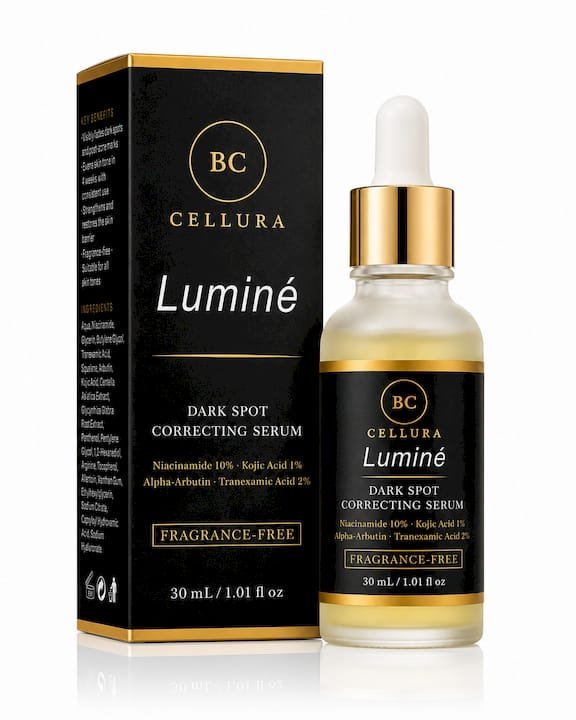
The Luminé Brightening Serum reflects that logic directly. It pairs alpha arbutin with niacinamide, tranexamic acid, and kojic acid, targeting melanin production, inflammation, and oxidative triggers at once rather than betting everything on tyrosinase inhibition alone.
— Beauvex LLC
Ready to Put This Routine on Your Shelf?
If you’ve been weighing arbutin against vitamin C wondering which bottle to buy, the honest answer is that most dark spots respond better to a multi-active approach than to either ingredient in isolation.
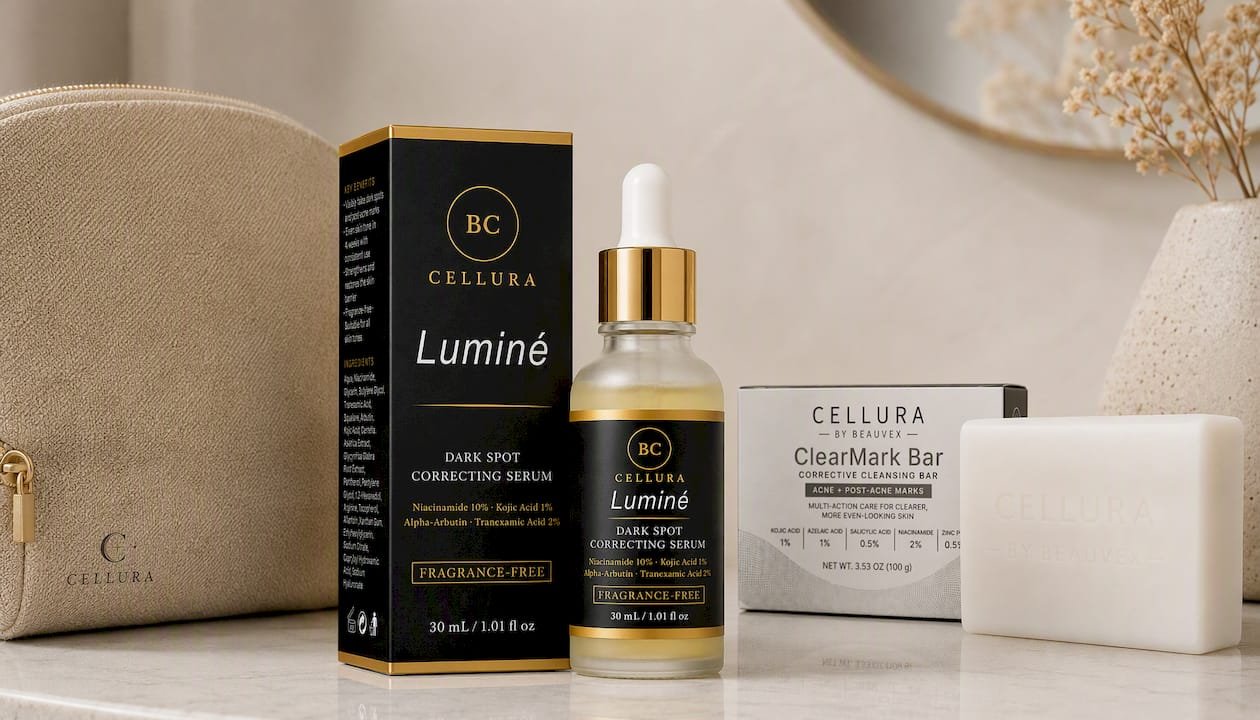
The Cellura Luminé Brightening Serum combines alpha arbutin with tranexamic acid, kojic acid, and niacinamide in one formula, built for exactly the post-acne marks this article covers. Pair it with the Cellura ClearMark Bar, which uses salicylic, azelaic, and kojic acids to keep new breakouts from creating fresh pigment in the first place. Start with a patch test, apply once daily for the first week, and never skip sunscreen the next morning. Beauvex LLC publishes exact ingredient concentrations for both products, so you know precisely what percentage of each active you’re applying rather than guessing from a vague ingredient list. Check both products on the Beauvex product page to see current pricing and start your routine.
Where to Verify These Claims
For deeper reading beyond this guide, the European Commission’s safety review on alpha and beta arbutin covers concentration limits in full. The PMC review on topical vitamin C details its chemistry and clinical uses, while the PMC review on hyperpigmentation management explains combination-therapy outcomes. NHS guidance and the American Academy of Dermatology both offer patient-facing advice on sun protection and when to see a specialist.
Sources
- Safety of alpha-arbutin and beta-arbutin in cosmetic products — European Commission
- Topical vitamin C and its clinical uses — PMC review
- NHS public guidance
FAQ
What Should I Apply First, Vitamin C or Alpha Arbutin?
Apply pure L-ascorbic acid vitamin C first on clean, dry skin, then follow with alpha arbutin. If you’re using a gentler vitamin C derivative, the order matters far less.
What Are the Disadvantages of Alpha Arbutin for Skin?
Alpha arbutin works slowly, typically taking 8 to 12 weeks for visible fading, and it doesn’t reach deep dermal pigment like melasma. It can occasionally cause mild redness or small bumps on very reactive skin.
What Is Better Than Alpha Arbutin?
Nothing beats it outright. It’s often paired with complementary actives like niacinamide, tranexamic acid, or kojic acid, which is the approach the Luminé Brightening Serum takes, since combination formulas tend to outperform single ingredients for stubborn pigment.
What Should I Not Mix With Alpha Arbutin?
Alpha arbutin is broadly compatible with most actives, including vitamin C, retinoids, and niacinamide. The main caution is stacking it with several strong exfoliating acids at once, which raises irritation risk without adding brightening benefit.
Can You Mix Arbutin and Vitamin C in the Same Routine?
Yes. They target pigment through different mechanisms, tyrosinase inhibition versus antioxidant action, and dermatology guidance supports using them together for better results than either alone.