
Yes, retinol fades many forms of hyperpigmentation, particularly post-acne marks and sun-related dark spots, when you introduce it gradually and pair it with daily sunscreen. It works best on post-inflammatory hyperpigmentation and mottled discoloration, less reliably on deep melasma. Combining it with a pigment inhibitor like niacinamide or tranexamic acid tends to speed results and reduce the irritation that can otherwise make dark spots worse.
TL;DR:
- Retinol effectively fades hyperpigmentation within four to twelve weeks, especially post-inflammatory hyperpigmentation and sun spots, but less reliably on deep melasma.
- Combining retinol with tyrosinase inhibitors like niacinamide, tranexamic acid, or kojic acid accelerates results and minimizes irritation.
- Starting with a gentle concentration between 0.05% and 0.1%, and increasing gradually while carefully managing irritation, maximizes effectiveness and reduces risks.
- Consistent daily sunscreen with SPF 30 or higher is critical, as retinol increases photosensitivity and UV exposure worsens pigmentation.
- Long-term progress depends on patience, proper routine adjustments at 8 to 12 weeks, and possibly adding targeted products or professional treatments if dark spots plateau.
Table of Contents
- How Retinol Fades Hyperpigmentation at the Cellular Level
- What the Clinical Research Actually Shows
- Picking the Right Retinol Strength and Formula
- How to Start Retinol Without Triggering More Dark Spots
- Building a Pigment-Fighting Routine Around Retinol
- Mistakes That Make Dark Spots Worse, Not Better
- When to Expect Results and What Comes Next
- How Beauvex’s Ritual Reflects the Science
- What I’ve Learned Editing Hundreds of Pigment Routines
- Try an Evidence-Backed Option for Your Ritual
- Sources
- FAQ
How Retinol Fades Hyperpigmentation at the Cellular Level
Retinol doesn’t bleach skin. It changes how your skin builds and sheds cells, and that process is what eventually pushes pigmented cells out of the picture.
Retinol converts to retinoic acid inside skin cells, where it binds retinoic acid receptors and speeds up epidermal turnover. Skin cells that carry excess melanin get shed faster instead of lingering on the surface for weeks. A 2024 review of cosmetic retinoids describes this accelerated cell cycling as one of the core reasons retinol improves photoaging and mottled hyperpigmentation over sustained use.
There’s a second, less talked about mechanism happening below the surface. Melanocytes, the cells that produce pigment, pass melanin granules called melanosomes to surrounding keratinocytes through finger like projections called dendrites. Retinol appears to interrupt this melanosome transfer, so less pigment reaches the visible layers of skin in the first place. That’s a meaningfully different action from just sloughing off pigmented cells faster.
Retinol also has a modest effect on tyrosinase, the enzyme that kickstarts melanin production from tyrosine. This modulation is weaker than what you get from a dedicated tyrosinase inhibitor, which is exactly why pairing the two makes biological sense rather than being a marketing gimmick.
Not every dark spot responds the same way, and this is where a lot of frustration comes from:
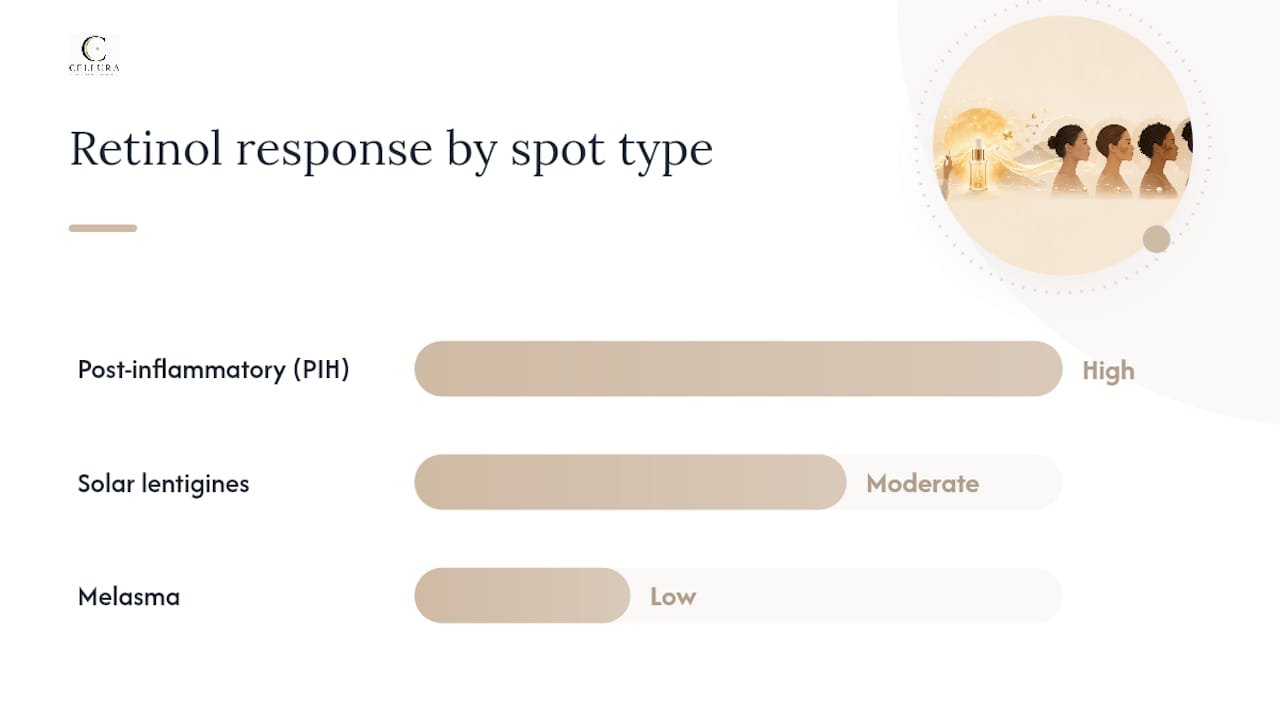
- Post-inflammatory hyperpigmentation (PIH) from acne or injury tends to respond well since it sits mostly in the epidermis, where retinol’s turnover effect reaches easily.
- Solar lentigines and sun spots respond reasonably well because they, too, are largely epidermal and driven by cumulative UV melanocyte stimulation.
- Melasma is trickier. Its pigment often extends deeper into the dermis and is hormonally influenced, so retinol alone rarely clears it and can occasionally aggravate it if irritation triggers more pigment production.
Knowing which category your dark spots fall into changes how much you should expect from retinol alone, and how much you need a tyrosinase inhibitor doing the other half of the work.
What the Clinical Research Actually Shows
The timelines matter more than most product marketing suggests, and the data is more specific than “give it a few months.”
A 2024 pooled analysis of six vehicle-controlled studies tracked 237 people using topical 0.1% stabilized retinol against a placebo vehicle. Improvements in brown spots were measurable by about one month, with consistent improvement continuing through roughly three months of continued use. That’s a useful benchmark: if you see zero change by the one-month mark, something in your routine (concentration, consistency, sun exposure) likely needs adjusting rather than the ingredient itself failing.
Older data backs up the mechanism with harder numbers, even if the formulations were less refined. A classic randomized trial of 0.1% tretinoin cream in Black patients with PIH found lightening of lesions as early as about one month, with significant improvement toward normal skin tone by around 10 months, compared to a smaller improvement in the vehicle group. That’s a real gap, and it’s one of the better documented efficacy comparisons in skin of color specifically.
The same trial is a good reminder that efficacy and tolerability are two separate conversations. Approximately half of the actively treated participants experienced some cutaneous irritation, which was managed through moisturizers or dosing adjustments rather than stopping treatment outright. This is the tradeoff retinoid users have navigated for decades: stronger formulations clear pigment faster but ask more of your skin barrier along the way.
A 2021 clinical review on topical retinoids and post-inflammatory hyperpigmentation reinforces that retinoids are both anti-inflammatory and comedolytic, two properties that matter specifically for acne-driven PIH, since they address new breakouts while also fading the marks old ones left behind. The review notes that retinoids are safe and effective across skin types, including skin of color, provided irritation is actively managed rather than ignored. It also found that combination therapy consistently outperforms retinol used alone.
Key data points worth remembering:
- Measurable brightening by 4 weeks in multiple controlled trials.
- Continued, not diminishing, improvement through 12 weeks in the pooled retinol analysis.
- Roughly double the improvement rate with tretinoin versus vehicle at 40 weeks in the classic Black-patient PIH trial.
- Reviews spanning up to 52 weeks show progressive gains with cosmeceutical retinoids, according to the 2024 photoaging review.
Key data point: the pooled 2024 analysis found meaningful pigment improvement starting at 4 weeks, sustained through 12 weeks, in a treatment group of 237 people using 0.1% stabilized retinol.
Picking the Right Retinol Strength and Formula
Not all retinoids are equal in potency, and confusing them is where a lot of people either waste money or overdo it.
Tretinoin is the prescription-strength retinoic acid your skin uses directly. Retinol has to convert to retinoic acid through two enzymatic steps before it becomes active, so it’s meaningfully gentler and slower acting. Retinaldehyde sits in between, converting in a single step. As a rough rule of thumb, over-the-counter retinol needs a noticeably higher concentration than tretinoin to achieve a comparable effect, which is exactly why product labels range so widely.
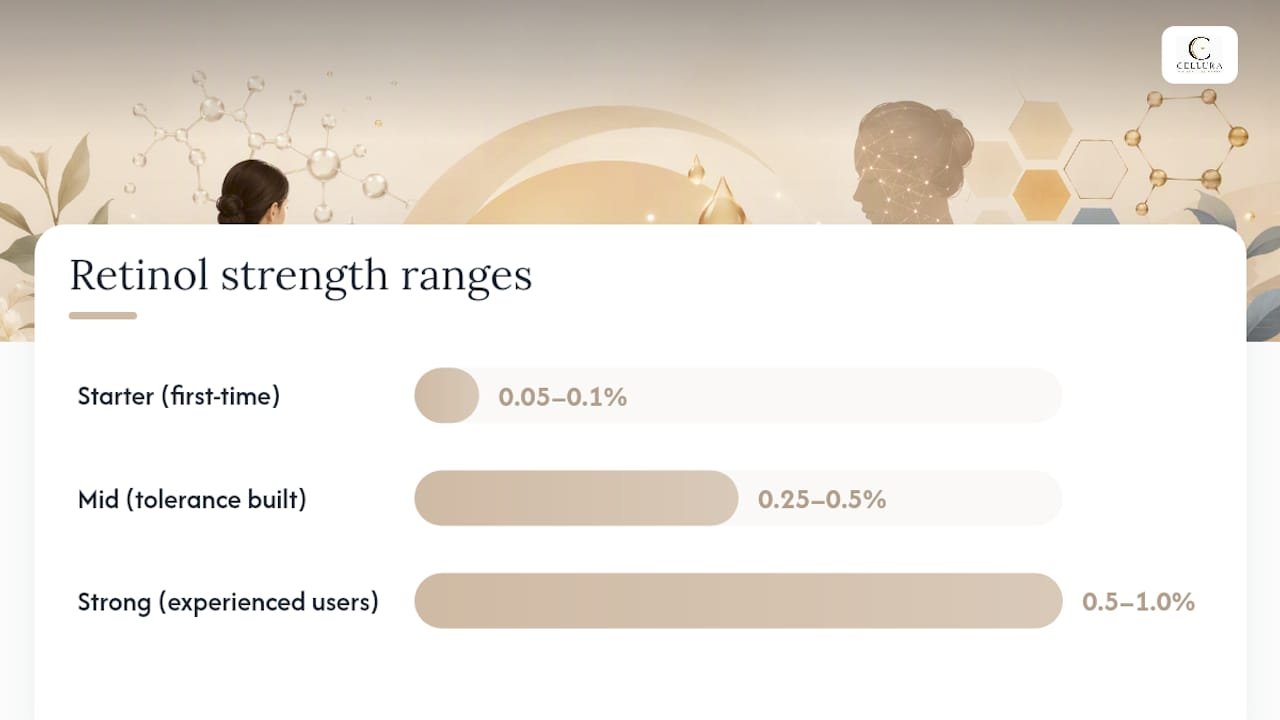
Most over-the-counter products land somewhere between 0.05% and 1.0% retinol. Here’s roughly what to expect at different points on that range:
- 0.05% to 0.1%: a sensible starting point for first-time users or anyone with reactive, easily irritated skin.
- 0.25% to 0.5%: a solid mid-tier strength once your skin has built some tolerance, often the sweet spot for visible pigment fading without excessive flaking.
- 0.5% to 1.0%: stronger formulations generally reserved for experienced users chasing faster results on stubborn discoloration.
Concentration alone doesn’t tell the whole story. Formulation quality affects how much of that percentage actually reaches active skin cells. Stabilized or encapsulated retinol resists the oxidation that degrades unprotected retinol in the jar, meaning what’s on the label is closer to what your skin actually gets. A hydrating base with ceramides, glycerin, or squalane counteracts retinol’s drying tendency, and co-actives like niacinamide help calm the inflammation that can otherwise tip PIH-prone skin into more discoloration rather than less. Clinical trial data comparing retinol formulations against tretinoin consistently points to stabilization and delivery system as the deciding factor between a product that performs and one that just sits on skin unused.
How to Start Retinol Without Triggering More Dark Spots
The single biggest mistake with retinol for hyperpigmentation is moving too fast because you’re impatient to see results. Ironically, that impatience is what causes the irritation that produces new pigment.
- Weeks 1 to 2: apply a pea-sized amount twice weekly, at night, after your skin is fully dry. Buffer it by applying moisturizer first if your skin runs sensitive.
- Weeks 3 to 4: move to every other night if your skin shows no more than mild, brief flaking or redness.
- Week 5 onward: apply nightly, tapering back to every other night any time you notice persistent redness, tightness, or peeling that lasts into the next day.
- Ongoing: reassess concentration every 8 to 12 weeks. If your skin fully tolerates your current strength with no sensitivity, that’s the signal to consider stepping up, not a reason to rush earlier.
Buffering matters more for people managing PIH than for general anti-aging users, since irritation itself can restart the pigment cycle you’re trying to fix. Mixing a rice-grain amount of retinol directly into your nightly moisturizer, rather than applying it neat, dilutes the dose without diluting your commitment to consistency. Some people find alternating retinol nights with a plain moisturizing night keeps their barrier intact through the adjustment period, an approach layering rules for niacinamide and retinol cover in more practical detail.
Sunscreen is not optional here. Retinol increases photosensitivity, and unprotected sun exposure directly stimulates the melanocytes you’re trying to calm down. A broad-spectrum SPF 30 or higher every morning, reapplied if you’re outside for extended periods, protects the progress retinol is making overnight. Research on sunscreen’s role in fading dark spots shows daily SPF use alone measurably improves discoloration outcomes, independent of any other treatment.
Pro Tip: Apply retinol to fully dry skin, not damp skin straight out of the shower. Water on the skin surface increases retinol’s penetration and irritation potential, which is a common, avoidable reason people react badly the first few weeks.
Building a Pigment-Fighting Routine Around Retinol
Retinol’s exit strategy for old pigment works faster when something else is stopping new pigment from being made in the first place. That’s the logic behind combination regimens, and it’s backed by more than intuition.
Studies on retinoid and hydroquinone combinations consistently show larger, faster reductions in hyperpigmentation than either ingredient used alone, according to a review of retinoid therapy for pigmentary disorders. Hydroquinone itself carries regulatory restrictions and usage guidance that vary by country, so it’s worth treating as a conversation to have with a dermatologist rather than a shelf product to self-prescribe long term.
For an over-the-counter approach, several ingredients pair well with retinol without that complexity:
- Niacinamide calms inflammation and mildly inhibits melanosome transfer, making it one of the gentlest, most compatible retinol partners.
- Tranexamic acid blocks pigment signaling pathways and works well alongside retinol’s turnover effect, detailed further in Beauvex’s breakdown of tranexamic acid mechanisms.
- Kojic acid inhibits tyrosinase directly, though it can be irritating layered aggressively with retinol on sensitive skin.
- Azelaic acid offers both anti-inflammatory and tyrosinase-inhibiting action, and tends to be one of the better-tolerated options for reactive or rosacea-prone skin.
A reasonable sequencing approach: retinol at night, since that’s when cell turnover ramps up and light sensitivity matters least; tyrosinase inhibitors like niacinamide or tranexamic acid in the morning, or on alternating nights if your skin can’t tolerate layering everything at once. Anyone pregnant or breastfeeding should treat this whole section as a conversation for a doctor first, since retinoids carry usage advisories during pregnancy that this article won’t substitute for individual medical guidance.
Mistakes That Make Dark Spots Worse, Not Better
Retinol-induced irritation is the number one reason hyperpigmentation treatments backfire, and it’s almost always avoidable.
The most common error is combining retinol with aggressive exfoliants, like high-percentage AHAs or physical scrubs, in the same routine. Stacking actives that all increase cell turnover overwhelms the skin barrier and produces exactly the inflammation that triggers new PIH. A close second is skipping sunscreen on days you don’t apply retinol, on the assumption that only active treatment days need protection. UV exposure affects pigment production regardless of what you put on the night before.
Starting at too high a concentration is another frequent misstep, particularly among people who assume faster equals better. Skin of color is particularly prone to reactive hyperpigmentation following any inflammatory trigger, which makes gradual titration less of a suggestion and more of a requirement for anyone with deeper skin tones.
If irritation shows up anyway, here’s the troubleshooting order:
- Drop back to your previous frequency (nightly to every other night, or every other night to twice weekly).
- Add a plain, fragrance-free moisturizer as a buffer layer before retinol.
- Step down to a lower concentration product rather than pushing through.
- Pause entirely for a few days if you see peeling, cracking, or persistent burning.
Pro Tip: Redness that fades within an hour of application is normal adjustment. Redness, swelling, or peeling that persists into the next day is your skin asking you to slow down, not a sign you need a stronger product.
Severe dermatitis, blistering, or a sudden and dramatic worsening of pigment after starting retinol are red flags that warrant a dermatology visit rather than continued self-management.
When to Expect Results and What Comes Next
Set your expectations around weeks, not days. Early, subtle brightening tends to show up around 4 weeks into consistent use, matching what the pooled retinol trials observed. Clearer, more confident improvement generally shows by 8 to 12 weeks, and continued use often keeps producing gradual gains well beyond that window.
- Take a photo under the same lighting, same angle, and same time of day every two weeks. Memory is a poor judge of gradual change; side-by-side photos aren’t.
- Track texture and tone separately from spot intensity. Retinol often smooths texture before it visibly lightens deep pigment, and that’s a sign the mechanism is working even if spots haven’t caught up yet.
- Reassess at the 12-week mark. If pigment has plateaued with no further change over several weeks, that’s your cue to add a targeted inhibitor rather than simply increasing retinol strength.
- If dark spots persist past 4 to 6 months of a consistent, well-tolerated routine, a dermatologist can evaluate whether a prescription retinoid, chemical peel, or a procedure like microneedling makes sense as a next step.
Plateaus are common and not a sign that retinol has stopped working. They’re usually a sign the remaining pigment needs a second mechanism, not a stronger dose of the first one.
How Beauvex’s Ritual Reflects the Science
The three-step ritual, cleanse, treat, and support, is built around the same two-pronged logic covered throughout this guide: clear existing pigment while blocking new pigment from forming.
The Cellura ClearMark Bar combines salicylic, azelaic, and kojic acids to gently exfoliate and inhibit tyrosinase from the first step, rather than leaving all the work to a single serum. The Cellura Luminé Brightening Serum layers niacinamide, tranexamic acid, and alpha-arbutin, mirroring a combination approach supported by evidence: one ingredient calming inflammation, two others interrupting melanin production through different pathways.
- Niacinamide reduces the inflammatory signaling that can restart pigment production.
- Tranexamic acid blocks plasmin-driven pathways linked to melanocyte activation, detailed further in Beauvex’s tranexamic acid research.
- Alpha-arbutin provides a gentler tyrosinase-inhibiting action than hydroquinone, without the same regulatory caveats.
Concentrations are published on the product pages rather than hidden behind proprietary blend labels, an approach consistent with clinical literature encouraging consumers to evaluate skincare by ingredient and dose.
What I’ve Learned Editing Hundreds of Pigment Routines
Most people treat retinol like a race against their dark spots, and that mindset is exactly what backfires. The research is clear that irritation, not insufficient strength, is the more common reason retinol fails to fade hyperpigmentation. A tolerability-first approach beats an aggressive one almost every time, because inflamed skin produces more pigment, not less.
If I had to name the single most underrated variable in this whole conversation, it’s sunscreen consistency, not retinol concentration. People will meticulously titrate their retinol percentage while wearing SPF only on sunny days, and then wonder why their sun spots aren’t budging. Daily broad-spectrum protection is doing at least as much work as the active ingredient sitting in your serum bottle.
The other pattern worth naming: people abandon a working routine at week six because they expected week two results. The data backs patience specifically, not indefinitely. If nothing has changed by 12 weeks of consistent, well-tolerated use, that’s a legitimate signal to adjust, not before.
And if you’re pregnant, dealing with melasma that keeps spreading, or noticing your skin getting worse rather than better, a dermatologist visit isn’t an admission that skincare failed. It’s the appropriate next step the evidence itself points toward.
— Beauvex LLC
Try an Evidence-Backed Option for Your Ritual
Unlike routines built from mismatched products picked off different shelves, this system is designed around the same combination logic this guide just walked through, resurfacing plus targeted pigment inhibitors plus barrier support, with active concentrations published rather than hidden.
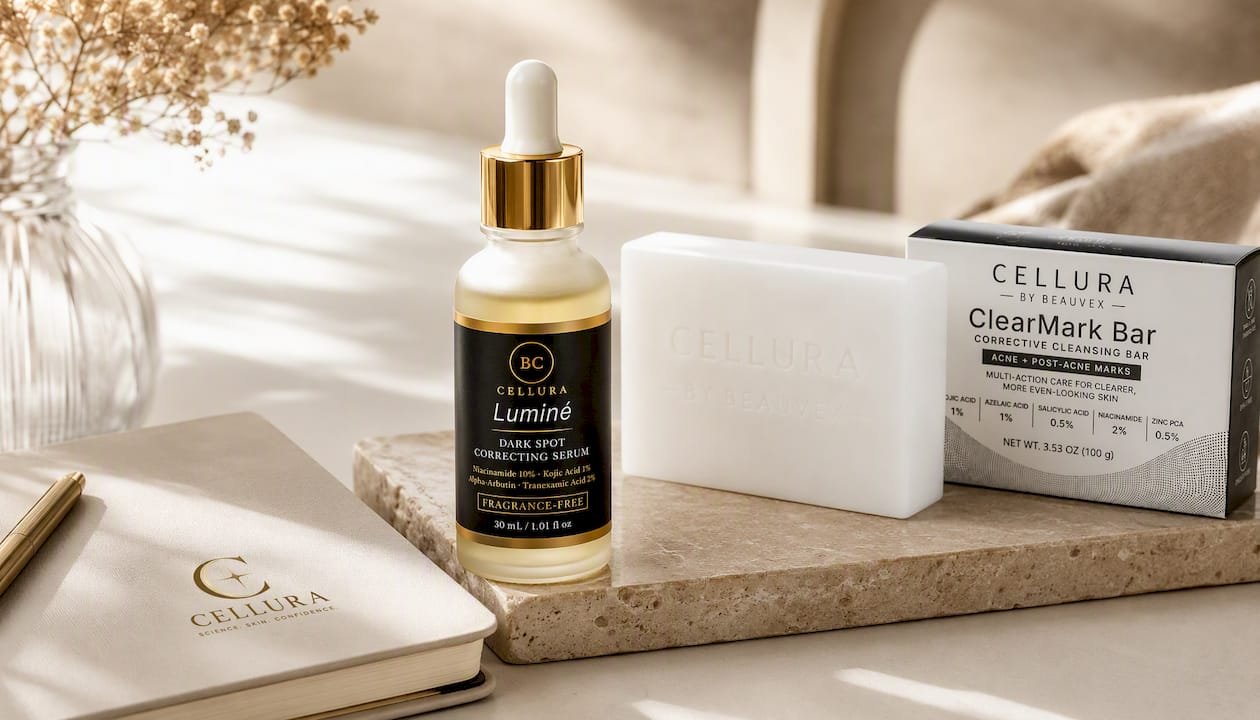
Start with the Cellura Luminé Brightening Serum at night, introduced gradually the same way this guide recommends for any retinol-adjacent active, and pair it with morning SPF for the sun protection covered earlier. If your skin also deals with active breakouts alongside old marks, the Cellura ClearMark Bar handles the cleansing step with the same tyrosinase-inhibiting logic built in, rather than a plain foaming cleanser that does nothing for pigment. Review the published ingredient concentrations and research references on each product page, then decide whether the full three-step ritual or a single product fits where you are in your routine right now.
Sources
The clinical evidence behind retinol’s effect on hyperpigmentation is well documented across peer-reviewed sources, and reading the primary research is worth the time if you want to verify any claim in this guide yourself.
Start with the 2024 pooled analysis of stabilized retinol for the clearest data on timelines and effect sizes. The 2021 clinical review on retinoids and PIH in skin of color covers safety and combination therapy in depth. For formulation and long-term efficacy data, the 2024 review of cosmetic retinoid compounds is the most comprehensive. Anyone weighing prescription strength options should also read the classic tretinoin PIH trial in Black patients and the review of retinoid combination therapy for pigmentary disorders.
This article is general information, not a substitute for advice from a qualified doctor. Consult a qualified healthcare professional about your own circumstances before acting on anything here.
- PubMed: Stabilized retinol pooled analysis (2024)
- Cosmetic retinoid use in photoaged skin: a review of the compounds, their use and mechanisms of action (2024)
FAQ
Does Retinol Really Help With Hyperpigmentation?
Yes. Controlled trials show measurable fading of brown spots starting around 4 weeks and continuing through 12 weeks and beyond, particularly for post-inflammatory hyperpigmentation and sun spots, though melasma responds less predictably.
What Fades Hyperpigmentation the Fastest?
Combination therapy, pairing retinol’s cell turnover effect with a tyrosinase inhibitor like tranexamic acid, niacinamide, or azelaic acid, consistently outperforms any single ingredient alone in clinical studies.
What Retinol Should I Use for Hyperpigmentation?
Start with a stabilized, encapsulated retinol between 0.05% and 0.1% in a hydrating base, then layer in a targeted pigment inhibitor like the one formulated into the Cellura Luminé Brightening Serum once your skin tolerates the retinol well.
Is Vitamin C or Retinol Better for Hyperpigmentation?
They work differently rather than competing: vitamin C is an antioxidant that mildly inhibits melanin production and works well in the morning, while retinol drives cell turnover and works best at night, so most dermatology guidance favors using both rather than choosing one.
How Does Azelaic Acid Compare to Retinol for Dark Spots?
Azelaic acid inhibits tyrosinase and calms inflammation with a lower irritation profile, while retinol clears existing pigmented cells faster through turnover, making the two complementary rather than interchangeable for most people managing dark spots.