
Post inflammatory hyperpigmentation is a flat, brown or gray mark that forms when melanin production spikes after skin injury or inflammation. It is not scarring and it is not permanent damage. Sunscreen and topical treatment are first-line care; procedures like lasers or peels are second-line, reserved for marks that do not respond. Deeper, dermal PIH takes far longer to fade than shallow, epidermal PIH, sometimes lingering for years.
TL;DR:
- Epidermal PIH responds faster to topical treatments and typically fades within 6 to 12 months, while dermal PIH can last for years or become permanent.
- Darker skin types (Fitzpatrick III to VI) are more prone to persistent PIH and require conservative, early intervention to prevent long-lasting marks.
- Correctly distinguishing PIH from post-inflammatory erythema using the glass test is crucial, as improper treatment can worsen vascular issues.
- Topical therapies with tyrosinase inhibitors, tranexamic acid, niacinamide, and retinoids should be used first, along with daily broad-spectrum sunscreen, before considering procedures.
- Severe or persistent marks should prompt consultation with a dermatologist, especially if they do not respond after several months of consistent topical care.
Table of Contents
- What Is Post Inflammatory Hyperpigmentation, Really?
- What Causes PIH and Who Gets It Most
- PIH vs PIE: How to Tell Them Apart
- How to Treat PIH: A Step-by-Step Approach
- How Long Does PIH Take to Fade?
- Everyday Steps to Prevent New Dark Marks
- Where Beauvex Fits Into a Conservative PIH Routine
- The Inflammation Connection Nobody Explains Well
- What’s New in PIH Treatment
- A Realistic Take on Living With PIH
- Cellura Luminé Serum: A Topical Fit for Conservative PIH Care
- Sources
What Is Post Inflammatory Hyperpigmentation, Really?
When skin gets injured, whether from a popped pimple, an eczema flare, or a laser treatment gone slightly too aggressive, the inflammatory response triggers melanocytes to ramp up pigment production. Those cells push excess melanin into surrounding keratinocytes, and the result is a mark that outlasts the original injury by months. This is post inflammatory hyperpigmentation, and where that pigment lands determines how stubborn it is.
Pigment deposited in the epidermis, the skin’s outer layer, shows up as brown and tends to respond well to topical treatment. Pigment that drops into the dermis reads as blue-gray and sits much deeper, out of easy reach of most creams and serums. Distinguishing the two matters because it sets expectations for how long treatment will actually take.
- Epidermal PIH: brown tone, responds faster to topical agents
- Dermal PIH: blue-gray tone, slower to fade, sometimes permanent
- Inflammatory mediators and oxidative stress both drive the melanocyte overactivity behind PIH
- Melanin transfer to keratinocytes is what makes the mark visible on the surface
What Causes PIH and Who Gets It Most
Acne is the most common trigger, but it is far from the only one. Eczema flares, insect bites, cuts, burns, infections, and even routine procedures like chemical peels or laser treatments can all set off the same melanocyte response if they cause enough inflammation.
- Acne, especially inflamed or picked-at lesions
- Eczema and other inflammatory skin conditions
- Physical trauma: cuts, burns, friction
- Cosmetic and medical procedures performed without proper preparation
- Insect bites and skin infections
- UV exposure, which worsens existing marks and can trigger new ones
- Certain medications that increase photosensitivity
Fitzpatrick skin type is the single biggest risk factor. People with Fitzpatrick types III through VI, generally those with medium to deep skin tones, develop PIH more frequently and see it persist longer than those with lighter skin. This is why dermatology guidance for skin of color puts so much weight on early, conservative intervention rather than aggressive procedures.
The mechanism explains the pattern: more baseline melanocyte activity means a bigger pigment response to the same amount of inflammation. Someone with fair skin and someone with deep skin can experience an identical breakout, and the deeper-skinned person is statistically more likely to walk away with a lingering mark.
PIH vs PIE: How to Tell Them Apart
Not every red or brown mark left behind by a breakout is PIH. Post inflammatory erythema, or PIE, is a separate condition caused by damaged capillaries rather than excess pigment, and it needs a completely different treatment approach. Confusing the two means wasting months on the wrong product.
- Check the color. PIH reads as brown, tan, or gray. PIE reads as pink or red, closer to the color of a fresh scar.
- Check how it responds to pressure. This is where the glass test, or diascopy, comes in. Press a clear glass slide firmly against the mark for two to three seconds. If it blanches, or turns pale, the color is coming from blood vessels, meaning it is PIE. If it stays put and does not lighten, you are looking at pigment, meaning it is PIH.
- Watch how it behaves in different light. Wood’s lamp examination can help a clinician judge how deep the pigment sits, which matters for choosing treatment.
- Know when to see a dermatologist. Any mark that is raised, irregular, rapidly changing, or accompanied by bleeding or pain needs professional evaluation, not a home diagnostic test.
Pro Tip: Do the glass test in natural daylight, not under a warm bathroom bulb. Artificial lighting can make a red PIE mark look brown, and that misread sends a lot of people shopping for the wrong serum.
Getting this distinction right early prevents wasted time on pigment-targeted actives applied to what is actually a vascular problem.
How to Treat PIH: A Step-by-Step Approach
Clinical guidance updated for 2026 is unambiguous on sequencing: topical therapy comes first, and procedures are second-line, used only when marks resist months of consistent topical care. That order exists for a reason. Procedures carry a real risk of triggering new PIH, especially in darker skin, so jumping straight to a laser without trying topicals first can make the problem worse instead of better.
Topical agents form the backbone of treatment. Tyrosinase inhibitors, hydroquinone, azelaic acid, kojic acid, and arbutin among them, work by blocking the enzyme that drives melanin production. Tranexamic acid interrupts a different part of the pigmentation pathway, while niacinamide slows the transfer of melanin from melanocytes into surface skin cells. Topical retinoids speed up cell turnover, helping pigmented cells shed faster. Combining these mechanisms rather than relying on one ingredient alone consistently outperforms single-ingredient approaches in clinical practice.
- Tyrosinase inhibitors reduce new pigment formation at the source
- Tranexamic acid and niacinamide interrupt pigment transfer and inflammation signaling
- Retinoids accelerate turnover of already-pigmented cells
- Daily broad-spectrum sunscreen is required, not optional, for any of this to work
Sunscreen is not a side note here. Skipping it while using active topicals is one of the most common reasons treatment plans fail, because UV exposure directly stimulates the same melanocyte pathway you are trying to calm down.
Before any procedure, skin needs priming. Chemical peels, Q-switched lasers, and picosecond lasers can all resolve stubborn PIH, but pre-treating with topical lightening agents for several weeks beforehand meaningfully lowers the risk of the procedure itself triggering a new round of pigmentation. Clinicians treating darker skin types generally favor conservative settings and longer intervals between sessions for exactly this reason.
Pro Tip: If a clinic offers you an aggressive laser setting as a first step for PIH with no mention of a topical priming period beforehand, that is worth questioning. Priming is not an optional upsell. It is guideline-recommended practice.
Expect measurable improvement after a few months of consistent topical treatment. Full resolution, particularly for anything sitting deeper than the epidermis, often takes considerably longer.
How Long Does PIH Take to Fade?
Epidermal PIH typically fades within 6 to 12 months once the underlying inflammation is controlled and sunscreen becomes a daily habit. That is the timeline StatPearls cites for surface-level pigment, and it lines up with what most dermatology practices observe.
Dermal PIH is a different story. It sits deeper, responds more slowly to everything, topicals and procedures alike, and in some cases never fully clears. Recurrence is common too, and it is almost always tied to the same triggers: unprotected UV exposure or inflammation that was never brought under control in the first place. If a mark is not shifting at all after several months of consistent care, that is the point to bring in a dermatologist rather than keep waiting.
Everyday Steps to Prevent New Dark Marks
- Wear broad-spectrum sunscreen daily and reapply regularly if outdoors. Sunscreen does more for pigment prevention than almost any single serum on the market.
- Skip the harsh scrubs. Aggressive exfoliation and stacking too many active ingredients irritates skin further and can restart the entire pigmentation cycle.
- Leave breakouts alone. Picking or popping a pimple is one of the most reliable ways to turn a temporary blemish into a mark that lasts a year.
- Treat acne and eczema early, and follow through on a clinician’s plan rather than stopping the moment redness fades, since the pigment response often continues after the visible flare calms down.
Where Beauvex Fits Into a Conservative PIH Routine
A three-step skincare ritual—cleanse, treat, support—follows sequencing logic aligned with guideline-based care: calm inflammation, target pigment topically, protect the skin barrier while it recovers. The Cellura Luminé Brightening Serum is the treatment step in that ritual, combining niacinamide, tranexamic acid, and alpha-arbutin in one formula.
- Niacinamide slows melanin transfer to surface skin cells
- Tranexamic acid interrupts pigment signaling at a different point in the pathway
- Alpha-arbutin inhibits tyrosinase, the enzyme driving new pigment production
- Ingredient concentrations and supporting research are published openly on product pages
None of this replaces sunscreen or clinical care for active inflammation. It is a topical layer designed to sit alongside daily photoprotection, which is exactly where guideline-based, conservative PIH management points.
The Inflammation Connection Nobody Explains Well
Most explanations of PIH skip the actual biology of why inflammation and pigment are so tightly linked. Here is the short version: when skin is injured, immune cells release signaling molecules called cytokines, and several of them, interleukin 1 and interleukin 6 among the most studied, directly stimulate melanocytes to ramp up production. This is not a side effect of healing. It is a direct chemical instruction telling pigment cells to work harder.
Oxidative stress compounds the problem. Inflamed tissue generates reactive oxygen species, unstable molecules that further activate the enzyme tyrosinase, the same enzyme most PIH-fighting ingredients are designed to block. That is not a coincidence. It is why so many effective topicals, azelaic acid, kojic acid, arbutin, target that one enzyme from different angles.
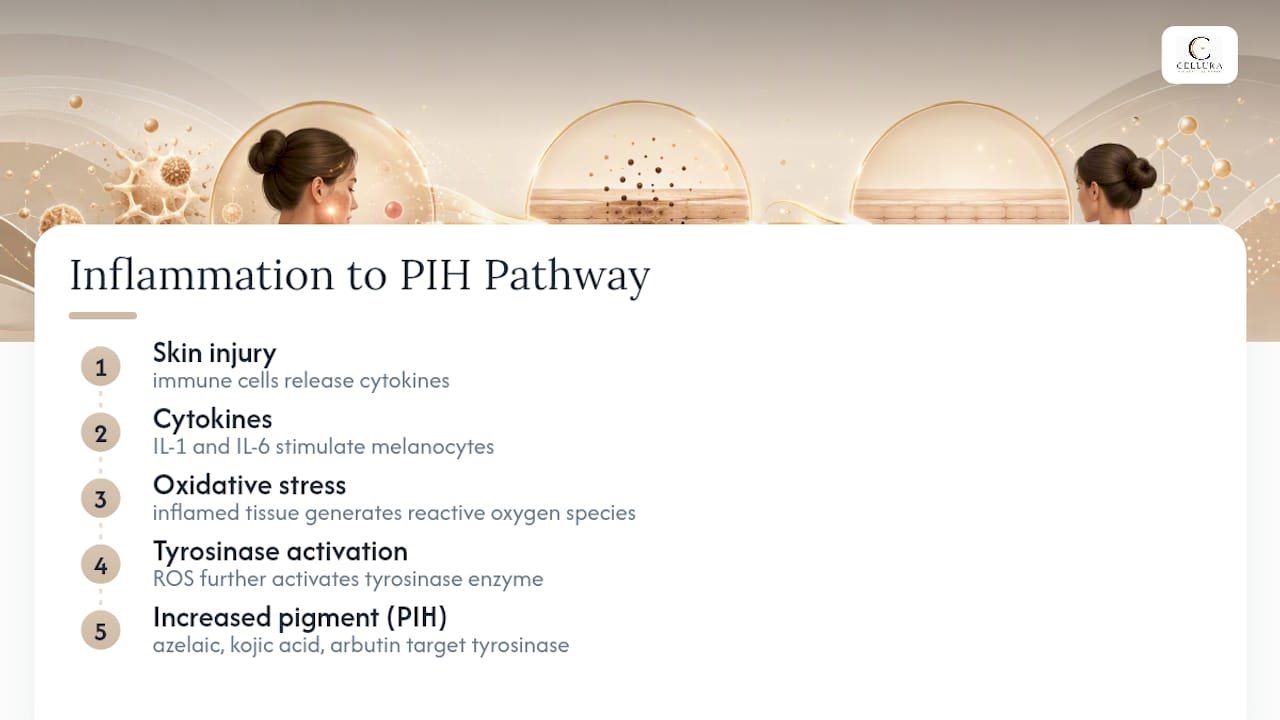
This also explains why longer or more severe inflammation tends to produce darker, more stubborn marks. A single mild breakout might trigger a short-lived cytokine response and a faint mark that clears in weeks. A cystic, inflamed lesion that lingers for days generates a much bigger and more sustained signal, which is part of why severe acne so often leaves deeper, longer-lasting pigmentation than mild acne does. Controlling the inflammation itself, not just treating the pigment after the fact, is what actually shortens the timeline.
What’s New in PIH Treatment
Topical therapy has been the backbone of PIH care for decades, but the ingredient list keeps expanding. Cysteamine, a topical antioxidant, has drawn attention as an alternative depigmenting agent for patients who cannot tolerate hydroquinone. Thiamidol, a newer tyrosinase inhibitor studied primarily for melasma, is increasingly discussed for overlapping pigmentation conditions like PIH.
Oral tranexamic acid, taken in low doses under medical supervision, is being used by some dermatologists for stubborn pigmentation that does not respond adequately to topical treatment alone. It is not a first choice and it carries its own screening requirements, particularly around clotting risk, so it belongs strictly in a clinician-directed plan rather than a self-directed routine.
On the procedural side, picosecond lasers have gained ground over older Q-switched devices because their ultra-short pulse duration generates less surrounding heat, which in theory lowers the odds of the treatment itself triggering new pigmentation. That advantage still depends heavily on the settings a clinician chooses and the skill applied to darker skin types specifically.
None of these newer options replace the fundamentals. They sit on top of a foundation that has not changed: consistent sunscreen, consistent topical therapy, and patience measured in months rather than weeks.
A Realistic Take on Living With PIH
PIH is frustrating precisely because it is slow, and that slowness has a real emotional toll that guides addressing pigment tend to underplay. The most useful thing a patient can do is stop chasing overnight fixes and instead build a routine around photoprotection and consistent topical care, looping in a dermatologist when a mark refuses to budge. Progress here is measured in months, not days.
— Beauvex LLC
Cellura Luminé Serum: A Topical Fit for Conservative PIH Care
If sunscreen and consistency are the two pillars of PIH treatment, the serum you layer underneath matters more than most people realize. The Cellura Luminé Brightening Serum combines niacinamide, tranexamic acid, and alpha-arbutin in one formula with published ingredient concentrations, so you are not guessing whether a “brightening serum” actually contains enough of an active ingredient to do anything.
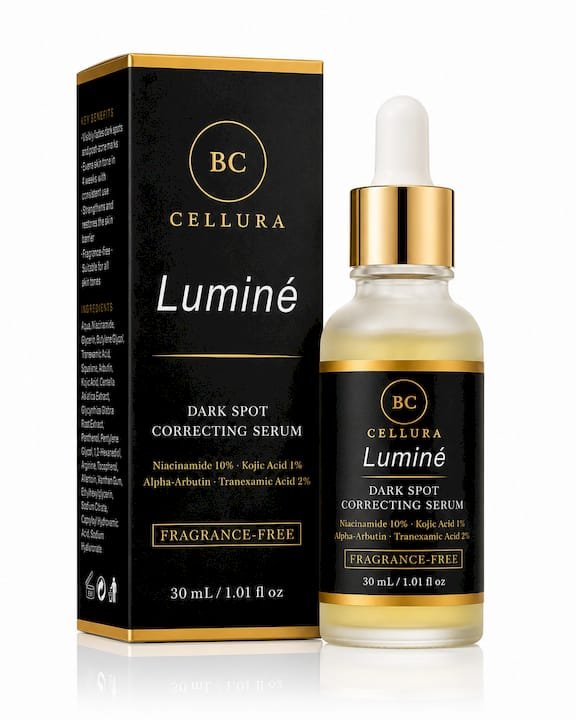
Each of those three actives interrupts pigment production at a different point in the pathway, which mirrors the combination-therapy approach that dermatology guidance already favors over single-ingredient treatment. That said, this serum is a topical treatment step, not a substitute for sunscreen, and not a replacement for medical care if you are dealing with active inflammation, cystic acne, or a mark that is not behaving the way ordinary PIH should.
For readers building out a full routine, Beauvex LLC’s guide to fading dark spots after acne walks through how to sequence treatment alongside acne control. If you are ready to add a targeted topical to your routine, the Luminé Serum’s product page lists full ingredient concentrations and the research behind each one, so you can check it against your own skin type and current regimen before you buy.
Sources
- Management: Melanin hyperpigmentation disorders — guideline summary (Medscape)
- Postinflammatory Hyperpigmentation – StatPearls – NCBI Bookshelf
- Post-inflammatory hyperpigmentation – Australasian College of Dermatologists (DermColl)