Kojic acid for dark spots is one of the most established brightening ingredients in cosmetic skincare, and it works by slowing the process that creates new pigment rather than bleaching pigment that is already there. That distinction explains almost everything about how it behaves: it is patient, it is preventative, and it only shows its value when you use it consistently and protect the results with sunscreen.
What Kojic Acid Actually Does
Kojic acid is produced during the fermentation of certain fungi, and it has a long history of use in Japanese skincare. In the skin, it interferes with tyrosinase, the enzyme responsible for converting tyrosine into melanin. Less tyrosinase activity means less new pigment deposited in the area where the product is applied.
Because it acts upstream of pigment formation, using kojic acid for dark spots does not remove existing marks on contact. The spots you can see already contain melanin that has to be shed through natural cell turnover. Kojic acid helps reduce what replaces it, which is why the appearance of dark spots improves gradually rather than overnight.
This also means the ingredient is most useful for pigmentation that is still being actively produced — post-acne marks, sun-triggered spots, and general unevenness — and less useful for scarring that is textural rather than pigmentary.
Safe Concentrations of Kojic Acid for Dark Spots
Regulators have looked closely at this ingredient. In the EU and UK, kojic acid is permitted in face and hand products at up to 1%, following the Scientific Committee on Consumer Safety opinion adopted under Regulation (EU) 2024/996. The Cosmetic Ingredient Review panel in the US has similarly pointed to 1% as an appropriate ceiling for leave-on use.
Higher is not better here. Formulas above roughly 2% have not been shown to deliver proportionally greater benefit, and the risk of irritation and contact dermatitis rises with concentration. The table below shows how kojic acid for dark spots tends to be used across common product formats.
| Format | Typical kojic acid level | What to expect |
|---|---|---|
| Cleansing bar or face wash (rinse-off) | Low, short contact time | Gentle daily exposure; supports the routine rather than driving it |
| Serum (leave-on) | Up to about 1% | The main workhorse format for uneven tone |
| Cream or moisturiser | Usually below 1% | Slower, well tolerated, easy to layer |
| Products above 2% | Not advisable | Higher irritation risk without a matching benefit |
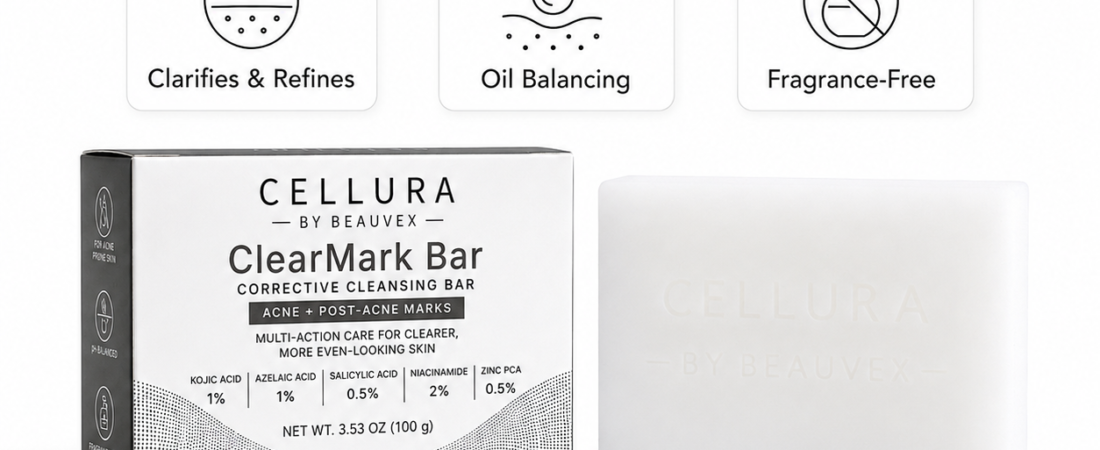
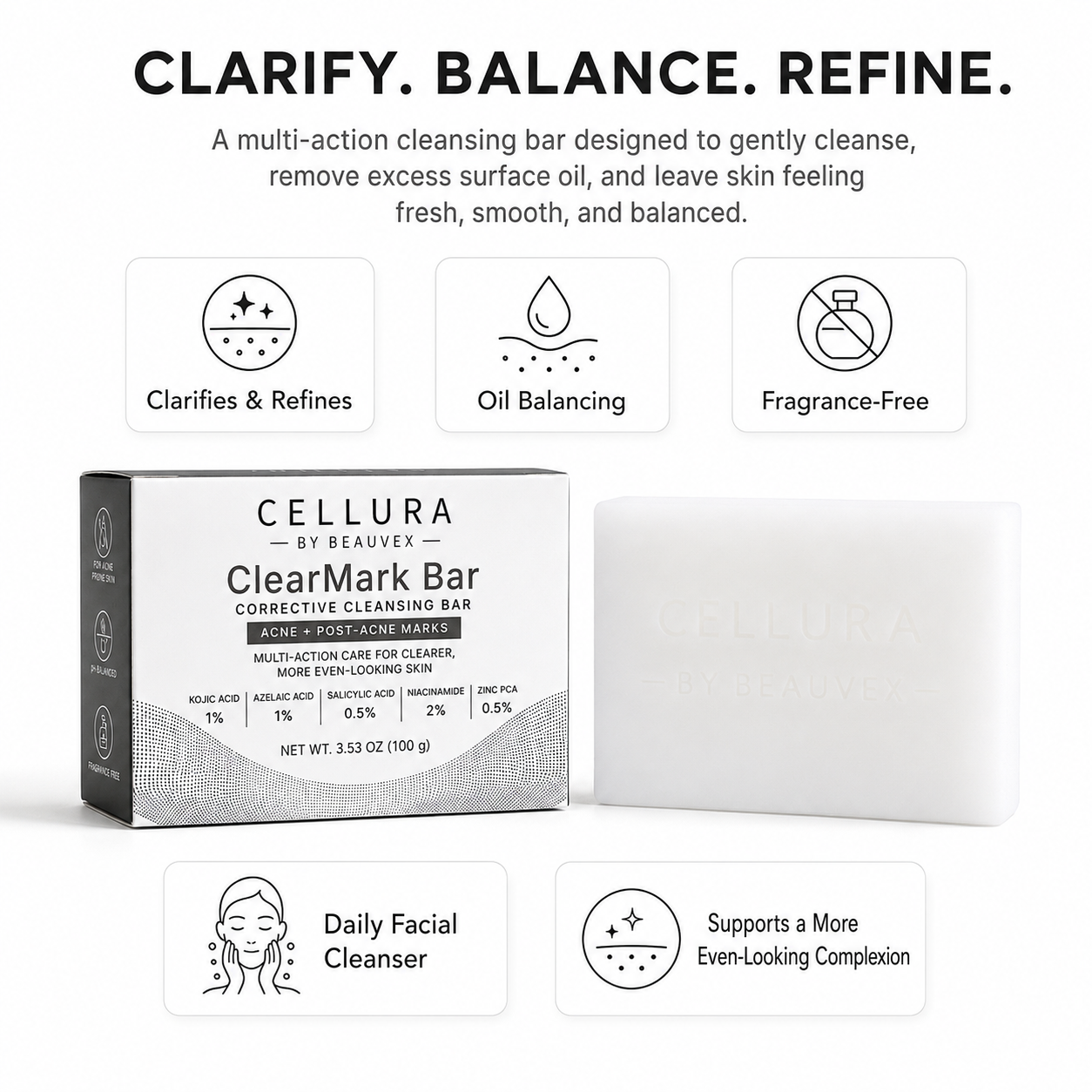
Our Cellura Luminé Brightening Serum uses kojic acid alongside niacinamide, alpha-arbutin and tranexamic acid, so no single active has to carry the formula on its own. The Cellura ClearMark Bar takes the rinse-off approach, pairing kojic acid with azelaic and salicylic acids for people who prefer to start slowly.
How Long Kojic Acid for Dark Spots Takes to Work
Set expectations at months, not weeks. Most people need at least eight to twelve weeks of consistent use before the appearance of dark spots visibly changes, because that timeline reflects how long skin takes to cycle pigmented cells to the surface and shed them.
Two things shorten that timeline in practice, and neither of them is a stronger formula. The first is daily broad-spectrum sunscreen: UV exposure stimulates the exact enzyme kojic acid is trying to quiet, so skipping SPF means working against yourself. The second is consistency. An active used four times a week for three months will outperform one used daily for two weeks and then abandoned.
Many people also find it sensible to cycle a brightening routine — a sustained run of two to three months, then a short break — especially if skin starts to feel tight or reactive.
Layering Kojic Acid for Dark Spots With Other Actives
- Niacinamide — a comfortable pairing. It supports the skin barrier and targets pigment transfer through a different route.
- Alpha-arbutin — complementary, since it also acts on tyrosinase. If you want the detail, see our guide to alpha-arbutin benefits for skin.
- Vitamin C — workable, but use them at opposite ends of the day if your skin is easily irritated.
- Retinoids and strong exfoliating acids — alternate nights rather than stacking. Combining several actives in one sitting is the most common cause of the irritation people blame on kojic acid.
Who Should Be Cautious
Irritation, dryness and contact dermatitis are the issues most commonly reported with this ingredient, and they show up most often in people using it too frequently or alongside several other actives. If you have very sensitive or compromised skin, start kojic acid for dark spots at twice weekly and build up from there.
Patch test on the inner forearm or along the jaw for a few days before applying to the whole face. And if you are treating pigmentation linked to a medical condition, or you are pregnant or breastfeeding, check with a clinician before adding any brightening active to your routine. Nothing in this article is medical advice.
Frequently Asked Questions
Can I use kojic acid for dark spots every day?
Most people tolerate a well-formulated leave-on product once daily, but if you are new to brightening actives, start two or three times a week and increase as your skin adjusts.
How long until I see my dark spots fade?
Plan on eight to twelve weeks of consistent use before you judge the results, and take photographs in the same lighting so you have something reliable to compare against.
Can I use kojic acid if I have acne-prone skin?
Yes, and it is a common pairing, since post-acne marks are one of the main reasons people reach for it. Introduce it slowly if you are already using salicylic acid or a retinoid.
Do I really need sunscreen with it?
Yes. Sun exposure drives new pigment production directly, so daily broad-spectrum SPF is the single most important part of any routine aimed at uneven tone.
Is kojic acid the same as hydroquinone?
No. They are different molecules with different regulatory status — hydroquinone is not permitted in cosmetic products in the EU, while kojic acid is allowed in face and hand products up to 1%.
Should I use a serum or a cleansing bar?
A leave-on serum gives the active far more contact time and does the heavier lifting. A cleansing bar is a gentler entry point, and many people use both when they want kojic acid for dark spots working at more than one step of the routine.